Which Four Brushes a Collie Owner Needs
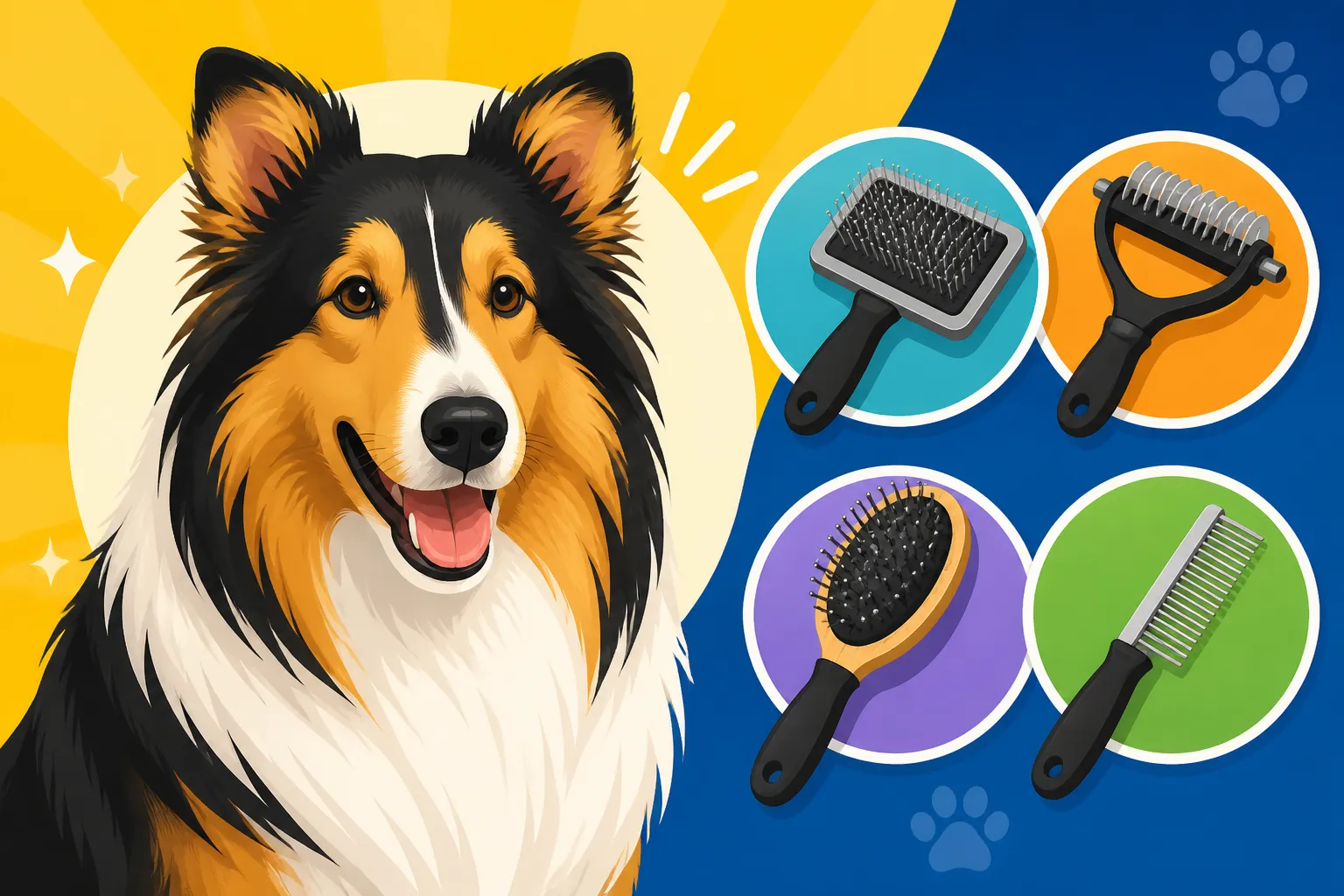
It can feel incredibly daunting, standing in the pet aisle or scrolling through endless online options, wondering which of the hundreds of brushes is actually going to work on that magnificent Collie coat. Many new Collie owners get completely overwhelmed, end up buying something that rips at the hair or doesn't reach the undercoat, and then think they're just bad at grooming. But the truth is, you don't need every single tool out there. To properly maintain your Collie's stunning double coat, you really only need four core brushes in your arsenal, and understanding their purpose is key to making grooming a positive, effective experience for both of you.
The Foundation: A Good Pin Brush
When you're first starting your grooming session, or even just doing a quick once-over, your pin brush is going to be your absolute best friend. Think of it as the general manager of your Collie's coat – it's there to handle the big picture before you dive into the nitty-gritty. Without it, you're trying to detangle with tools meant for deeper work, which is not only ineffective but can be downright painful for your dog.
Why a Pin Brush is Your Starting Point
The pin brush is designed with widely spaced, stiff wire pins, often tipped with plastic or rubber beads, that glide through the top layers of your Collie's coat. Its primary job is to gently separate the longer guard hairs and to find any surface tangles or loose bits of debris that might be caught in the outer coat. You'll use this brush to open up the coat, much like you'd use a wide-tooth comb on your own hair before moving to a finer brush. It helps to lift the hair, allowing air to circulate and giving you a better view of what's happening underneath. Many a grooming session has been saved by starting with a good pin brush, preventing pulling and making the experience more comfortable for your sensitive Collie.
Choosing the Right Pin Brush
Not all pin brushes are created equal, and for a Collie, you want one that's sturdy and has pins long enough to reach through their dense topcoat. Look for brushes with pins that are set into a flexible rubber base, as this allows them to contour to your dog's body and reduces harsh pulling. Some prefer a brush with beaded tips, which can feel gentler on the skin, while others find plain pins penetrate the coat better. It often comes down to personal preference and your individual Collie's coat texture. When browsing online retailers like Chewy or Amazon, you'll see a range of options, but prioritize durability and pin length over fancy handles or colors. A good quality pin brush, though it might seem basic, is truly an investment in comfortable grooming.
Proper Pin Brush Technique
Using a pin brush correctly involves a technique called "line brushing." This isn't just a quick swipe over the top of the coat; it's a methodical approach that ensures you reach all the way down to the skin. You'll want to start at the bottom of your Collie's leg, or perhaps a lower flank, and part the hair horizontally. Brush the hair up and away from that part line, working in small sections, allowing the pins to gently brush through to the skin. Once that section is tangle-free, you move up an inch or two, part the hair again, and repeat. This layered approach ensures you're not missing any areas and are effectively separating the coat. It’s what helps prevent those insidious mats that start deep down. You can find more detailed instructions in articles like How to Line Brush a Collie.
Getting Down to Business: The Slicker Brush
Once your pin brush has done its work, the slicker brush steps in to tackle the slightly more stubborn tangles and to help remove dead undercoat. This is where you really start to make progress on those tricky areas. While incredibly effective, it's also the tool that can cause discomfort if not used properly, especially given a Collie's sensitive skin.
When to Reach for the Slicker
The slicker brush is characterized by its densely packed, fine wire bristles that are bent at an angle. It excels at breaking up smaller mats, removing dead hair from both the outer coat and the undercoat, and fluffing the coat to prevent tangles from reforming. You'll typically use this after the pin brush has opened up the coat, allowing the slicker's shorter, firmer bristles to get closer to the skin without immediately snagging on larger knots. It’s particularly useful for areas where mats tend to form, such as behind the ears, under the legs, and around the "petticoat" and "frill" – those luxurious ruffs of hair that make Collies so distinctive. These are the spots Where a Collie Mats First and the slicker brush can be a lifesaver.
Slicker Brush Risks and How to Avoid Them
Because of its design, a slicker brush can be quite sharp if used with too much pressure. Dragging it roughly over your Collie’s skin can cause brush burn, which is painful and can lead to skin irritation. The key is a light, flicking motion – a gentle stroke that lifts through the hair rather than pressing down onto the skin. You should always be brushing away from the skin, using just the tips of the bristles. If you encounter a mat that resists this gentle approach, do not force it. Instead, work around it with your pin brush, or gently pick it apart with your fingers, or even use the very tips of a metal comb to tease it out before returning with the slicker. Remember, the goal is always comfort for your dog. If you ever wonder about the appropriate pressure, think about how it feels on your own forearm – if it’s uncomfortable for you, it’s definitely uncomfortable for your Collie. This delicate balance is why Whether a Slicker Brush Scratches a Collie's Skin is a common concern.
Combining Slicker and Pin Brush Use
These two brushes work in tandem, creating a powerful grooming duo. After using the pin brush to broadly separate and lift the coat, you can follow with the slicker in the same line-brushing method to target smaller tangles and loosen more of the dead undercoat. Some groomers even alternate, using the pin brush to lift and then the slicker to smooth and de-shed, moving from section to section. This ensures thoroughness without over-stressing any single part of the coat or skin. For a very dense or matted coat, you might find yourself switching back and forth frequently, always prioritizing gentle, deliberate strokes over speed. This comprehensive approach is part of the "twenty minutes" mentioned in Four Tools and Twenty Minutes: Brushing a Rough Collie.
Tackling the Undercoat: The Undercoat Rake
The Collie's impressive double coat isn't just for show; it's a functional marvel designed to protect them from the elements. But that dense undercoat, if not managed, is also the primary culprit behind those epic shedding seasons and stubborn mats. This is where the undercoat rake, sometimes called a de-shedding rake or V-rake, becomes indispensable.
Understanding the Collie's Double Coat
Collies possess a magnificent double coat consisting of two distinct layers. The outer layer is made up of long, coarse guard hairs that are relatively straight and weatherproof, providing protection from rain, snow, and sun. Beneath this lies a soft, dense, and fluffy undercoat. This undercoat acts as insulation, keeping them warm in winter and helping to regulate their body temperature in summer. However, this undercoat sheds heavily, especially twice a year during what Collie owners affectionately (or perhaps resignedly) call "blowing coat." If this dead undercoat isn't removed, it can become trapped, leading to painful mats and skin issues, and of course, a house covered in dog hair. During these intense shedding periods, like those described in The Three Weeks Twice a Year When a Collie Buries Your House, the undercoat rake truly earns its place.
How an Undercoat Rake Works Its Magic
An undercoat rake features a single or double row of widely spaced, blunt teeth that are designed to penetrate the dense topcoat and gently pull out the loose, dead undercoat without cutting or damaging the healthy guard hairs. Unlike a slicker brush, which often works on the surface and middle layers, the rake goes straight for the fluffiest, deepest part of the coat. When you use an undercoat rake, you'll be amazed at the sheer volume of hair it removes, especially during shedding season. It effectively "thins" the coat by removing only what's already detached, preventing it from forming felt-like mats that can pull on the skin and cause discomfort. Finding a good quality rake, perhaps from brands like Chewy or readily available on Amazon, makes a huge difference in its effectiveness and comfort for your dog.
Seasonal Shedding and the Undercoat Rake
While regular brushing is always important, the undercoat rake becomes a daily necessity during your Collie's seasonal coat blows. This is when they shed their old undercoat to make way for new growth. Without regular raking, the dead undercoat can quickly become a suffocating blanket, hindering air circulation and trapping moisture, which can lead to skin problems. Using the undercoat rake in conjunction with your pin and slicker brushes ensures that you're systematically addressing all layers of the coat. Start by opening up the coat with the pin brush, then work through with the slicker, and finally, use the undercoat rake with long, smooth strokes in the direction of hair growth. Be mindful not to press too hard, letting the teeth do the work. Understanding What a V Rake Does on a Collie can demystify this powerful tool and transform your grooming routine.
The Finishing Touch: The Metal Greyhound Comb
After all the brushing, it's time for the final inspection and detail work, and for that, nothing beats a good metal greyhound comb. This isn't just any comb; it's specifically designed to check your work and ensure every last tangle has been addressed.
The Comb's Role in Detail Work
The metal greyhound comb is characterized by having both wide and fine teeth. The wide-toothed side is perfect for initially separating the coat and checking for any larger, missed mats that the brushes might have just glided over. The finer-toothed side is invaluable for smaller, delicate areas or for finding those tiny, sneaky knots that hide deep within the feathering. This comb is your quality control tool, guaranteeing that when you're done, your Collie's coat is truly free of snarls from skin to tip. Without it, you might think you've got everything, only to find a stubborn mat developing a week later because a tiny knot was overlooked. It's especially useful in areas like the mane and the 'skirts' where the coat is particularly profuse. Which Comb Reaches a Collie's Undercoat is often the fine-toothed side of this comb, or sometimes a specialized smaller comb.
Checking for Missed Mats and Knots
The ultimate test of a thorough grooming session is whether a fine-toothed comb can glide effortlessly through your Collie's coat from root to tip. Starting from the skin, work the comb through small sections of hair, much like you would with line brushing. If the comb snags, it means there’s a mat or tangle that your brushes missed. Don't pull through it! Instead, use the very tip of the comb to gently tease the knot apart, holding the hair closer to the skin to minimize pulling. You can also use the comb to check areas prone to matting, like the feathering on the legs, the armpits, and behind the ears. This diligent check is crucial because even small, hidden tangles can quickly become larger, more painful mats if left unchecked. It's often in these moments you realize Whether a Collie's Coat Mats If You Skip a Week.
Everyday Use and Trouble Spots
Beyond full grooming sessions, the metal comb is excellent for quick daily checks, especially on those "trouble spots" that tend to knot up faster. A quick comb behind the ears, under the chin, and in the armpits can prevent minor tangles from escalating into major problems. For these spots, the finer side of the comb is often ideal. If you keep your Collie active, running through fields or playing in brush, a quick comb-through can also remove burrs, twigs, and other debris before they become embedded in the coat. It's a small habit that can save you a lot of time and your Collie a lot of discomfort in the long run. Keeping it handy, perhaps near where you usually groom, makes these quick checks simple and effective.
Beyond the Big Four: What Else Might You Need
While the pin brush, slicker brush, undercoat rake, and metal greyhound comb form the core of your Collie grooming kit, there are a few other tools that, while not "brushes," are absolutely essential for comprehensive care. These are usually items you'll already have or can easily acquire.
Nail Trimmers and Ear Cleaners: The Essentials You Already Know
Beyond the coat, a Collie's overall well-being depends on attention to their nails and ears. Long nails can cause discomfort, alter their gait, and even lead to painful splayed toes or ingrown nails if left unchecked. A good pair of nail clippers (either scissor-style or guillotine-style, depending on your preference) or a Dremel-style rotary tool for grinding is paramount. Introduce these tools early and make nail care a positive, regular experience. Similarly, Collies, like many breeds, can be prone to ear infections if their ears aren't kept clean and dry. A gentle ear cleaning solution and cotton balls or pads are vital. While their ears are usually erect or semi-erect, which allows for better airflow than floppy ears, regular checks are still needed to prevent wax buildup or address any signs of irritation.
Specialized Tools for Specific Problems
Sometimes, despite your best efforts, a mat can become too tight or too close to the skin to safely brush or comb out. For these rare, extreme cases, a mat splitter or a pair of blunt-nosed scissors can be a necessary evil. These tools should be used with extreme caution and, ideally, only after consulting a professional groomer or vet. The golden rule is: when in doubt, cut it out carefully or seek professional help, rather than causing your dog pain. Always use scissors parallel to the skin, never pointing towards it, and try to slip a comb between the skin and the mat before cutting. For very dense coats, a good quality high-velocity dryer, potentially from a brand like Chewy, can also significantly cut down drying time after a bath and help blow out loose undercoat, making brushing easier. However, it's not strictly a "brush."
Making Grooming a Positive Experience for Your Collie
Grooming isn't just about keeping your Collie looking fabulous; it's a vital part of their health and well-being. But for many dogs, it can be a source of anxiety. Turning grooming into a calm, positive experience is just as important as having the right tools.
Starting Early and Positive Reinforcement
The key to a well-behaved Collie on the grooming table (or floor!) is to start early, even when they’re tiny puppies. Introduce each brush slowly, allowing them to sniff and investigate. Use gentle strokes for very short periods, gradually increasing the duration as your puppy becomes comfortable. Pair every grooming session with positive reinforcement: treats, praise, and gentle petting. Make it a game, not a chore. If your puppy nips at the brush, redirect with a toy. The goal is to build a positive association, so they learn that grooming means good things happen. Establishing this foundation early will pay dividends throughout their life, turning what could be a wrestling match into a peaceful bonding experience. How to Teach a Collie Puppy to Lie Still for Grooming offers excellent guidance on this.
Creating a Routine and a Calm Environment
Collies thrive on routine, and grooming should be no exception. Try to establish a regular schedule – whether it's daily quick brushes or dedicated weekly sessions. Consistency helps your Collie understand what to expect and reduces anxiety. Choose a quiet, calm space where you won't be interrupted. A non-slip mat or a grooming table (as suggested in Whether a Grooming Table Helps With a Collie) can provide stability and comfort. Play soft music or keep the television low. If your Collie is particularly nervous, break grooming sessions into smaller chunks, focusing on one area at a time. A few minutes of positive grooming is far more effective than forcing a long, stressful session. Your patience and calm demeanor will be mirrored by your Collie, making the entire process smoother and more enjoyable for both of you.
In summary, don't let the overwhelming world of dog grooming tools deter you. With the right pin brush, slicker brush, undercoat rake, and metal greyhound comb, along with a dash of patience and positive reinforcement, you'll be well-equipped to keep your Collie's magnificent coat in pristine condition, turning grooming into a cherished bonding ritual rather than a dreaded chore. And remember, Whether a Collie Needs Daily Brushing in Full Coat really depends on your dog's individual coat and the season, but regular attention with these four tools is always beneficial.
Disclaimer
This article is for general informational purposes only and does not constitute professional advice. Laws, prices and regulations vary by location and change over time. Consult a qualified professional for guidance on your specific situation.