Which Comb Reaches a Collie’s Undercoat
Oh, the legendary Collie undercoat! If you've ever found yourself battling with a standard brush, feeling like you're just skimming the surface of that magnificent mane, you are absolutely not alone. It's a common frustration for Collie owners – that feeling of knowing there's a whole world of dense, fluffy undercoat lurking beneath the sleek topcoat, just waiting to become a felted mat. This guide is all about cutting through that frustration (and that undercoat!) to help you find the right tools and techniques to keep your Collie's coat healthy and tangle-free.
The Marvel and Mystery of Your Collie's Double Coat
Before we dive into the nitty-gritty of tools, let's take a moment to appreciate what we're up against: the Collie's incredible double coat. It's not just for show; it's a marvel of natural engineering, designed to protect your dog from all sorts of weather extremes, from biting cold to scorching sun.
This double coat consists of two distinct layers. The outer coat, or guard hairs, are longer, coarser, and somewhat waterproof, giving your Collie that flowing, elegant silhouette we all adore. They're designed to shed water and dirt, and to lie smoothly. But underneath? That's where the magic – and the challenge – lies. The undercoat is a thick, soft, dense layer of fine hair, almost like wool. Its primary job is insulation, trapping air to keep your Collie warm in winter and helping to regulate body temperature in summer.
The sheer volume and texture of this undercoat mean it can become incredibly packed and matted if not properly managed. During seasonal shedding, particularly when your Collie is "blowing coat" – which feels like The Three Weeks Twice a Year When a Collie Buries Your House – this dead undercoat needs to be removed. If it isn't, it can create a dense barrier against the skin, leading to hot spots, skin infections, and uncomfortable mats that pull at the skin. It's truly a labor of love, but so worth it for your Collie's comfort and health.
Demystifying the Tools: Which Comb Really Reaches?
So, you've got your beautiful Collie, and a regular pin brush just isn't cutting it. What do you need? When it comes to reaching that deep undercoat, you need specialized tools. Forget the flimsy plastic combs or the soft slicker brushes for the top layer; we're talking about heavy-duty gear designed to penetrate.
The Mighty Undercoat Rake
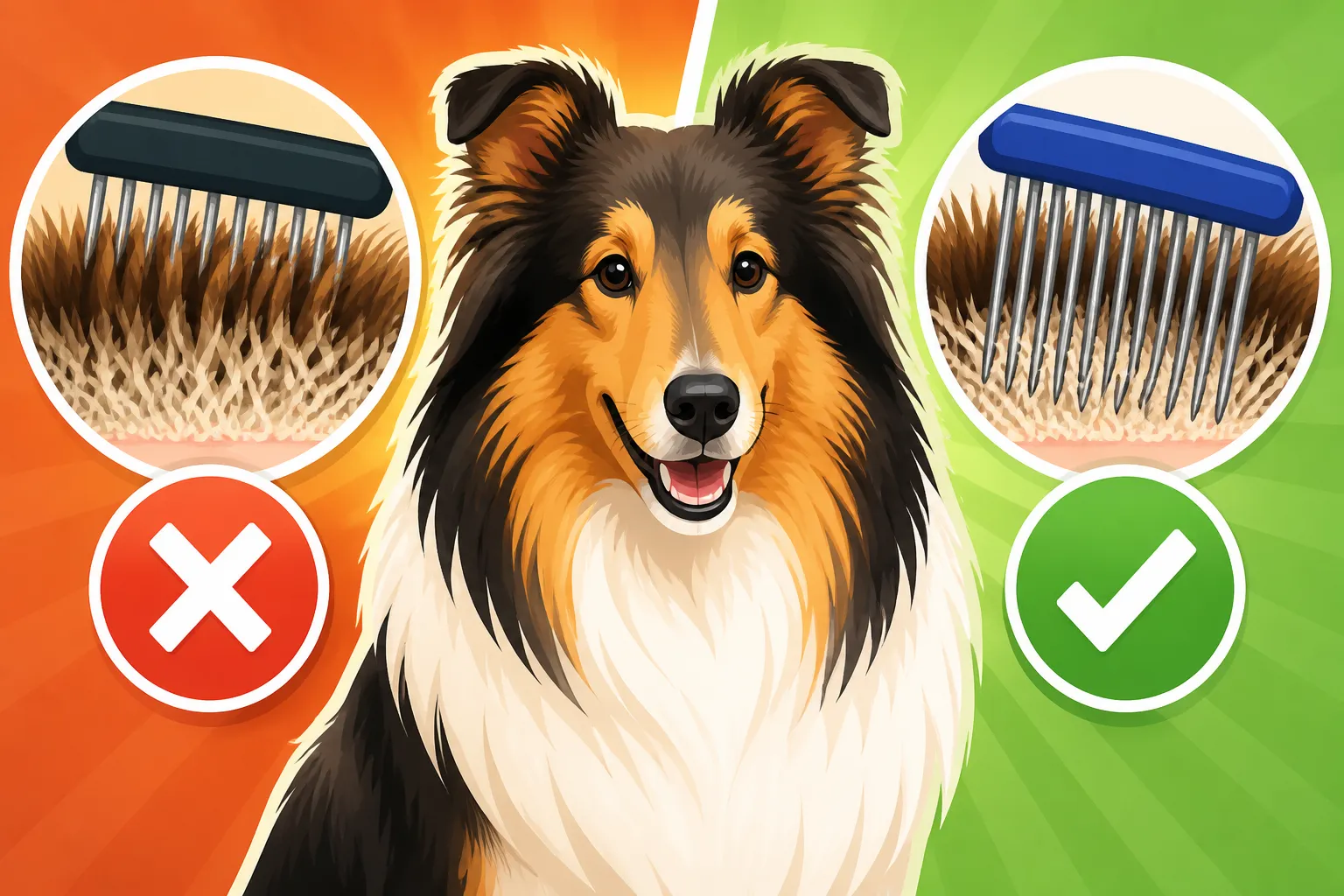
The undercoat rake is, hands down, one of the most essential tools for any Rough Collie owner. It looks a bit like a small garden rake, with a single or double row of strong, widely spaced teeth that are often curved or hooked at the ends. These teeth are specifically designed to delve deep into the dense undercoat without damaging the topcoat or scratching the skin.
This tool is your best friend during shedding season. As you gently pull the rake through the coat, it effectively grabs and pulls out the loose, dead undercoat that would otherwise accumulate and create mats. It’s particularly effective for breaking up those initial clumps of shedding hair and preventing them from becoming solid felt. There are various types of undercoat rakes available, some with rotating teeth which can be helpful in minimizing pulling, and others with different tooth lengths to suit different coat densities. What a V Rake Does on a Collie is a great example of a specialized rake that really gets down to business. You can often find a good selection of these on sites like Amazon or Chewy.
The Indispensable Long-Toothed Metal Comb
While the undercoat rake does the heavy lifting, a robust, long-toothed metal comb is crucial for both initial penetration and for ensuring you've got everything out. Look for a comb with long, sturdy teeth – at least 1.5 to 2 inches long – with both wide and narrow spacing.
The wider-spaced teeth are fantastic for getting through the main body of the coat, checking for larger tangles, and working through the bulk of the undercoat loosened by the rake. The narrower-spaced teeth are then used for more refined work, especially in areas prone to mats like behind the ears, the "armpits," and the feathery britches. This comb allows you to feel resistance and locate tangles that the rake might have missed. It's also excellent for line brushing, which we'll discuss shortly, to ensure you're combing right down to the skin. This isn't just a finishing tool; it's a detective for mats and a closer for loose undercoat.
Tools That Complement (But Don't Substitute)
It's worth noting that while a pin brush and a slicker brush are vital components of your overall grooming kit, they typically don't reach the undercoat adequately on their own.
- Pin Brush: Great for daily maintenance, fluffing, and gently detangling the outer coat, but its pins usually aren't long or stiff enough to get deep into the undercoat. It's excellent for keeping the outer coat smooth and helping to distribute oils.
- Slicker Brush: Effective for removing small mats and shedding hair from the top layer and for general tidying, but its fine, bent wires often only scratch the surface of a dense undercoat, or worse, they can pull at the topcoat painfully without actually clearing the under layer.
For a comprehensive look at all the tools, you might want to check out Which Four Brushes a Collie Owner Needs to build your full grooming arsenal.
Here's a quick comparison of key grooming tools and their primary use for a Collie's coat:
| Tool | Primary Purpose (Collie Coat) | Undercoat Effectiveness | Best For |
|---|---|---|---|
| Undercoat Rake | Removing massive amounts of loose undercoat | High | Heavy shedding, initial dematting |
| Long-Toothed Metal Comb | Penetrating deep, finding hidden mats, detail work | High | Post-rake check, line brushing, delicate areas |
| Pin Brush | General detangling of topcoat, fluffing, daily shine | Low | Daily upkeep, distributing oils |
| Slicker Brush | Removing small mats/tangles from topcoat, finishing | Medium (top layer) | Surface shedding, smoothing |
| Dematting Tool | Cutting through severe mats (use with extreme caution) | N/A (cuts, doesn't comb) | Emergency mat removal only |
Mastering the Technique: How to Get Down to Business
Having the right tools is only half the battle; knowing how to use them effectively is the other. It takes patience, consistency, and a gentle touch to work through that magnificent coat.
Set the Stage for Success
Before you even pick up a comb, create a positive grooming environment. Find a quiet spot where your Collie can be comfortable – a non-slip surface on a grooming table or even the floor. Having treats on hand is always a good idea to make it a pleasant experience. Some owners find that lightly misting the coat with a detangling spray or water conditioner helps prevent static and makes the coat easier to work through without breakage. This is especially true if you are concerned about Whether Brushing a Dry Collie Damages the Coat.
The Art of Line Brushing
This is the golden rule for tackling a Collie's undercoat. You cannot simply brush over the top. Line brushing ensures you reach all the way down to the skin.
Here's how you do it:
- Sectioning: Start by parting the coat horizontally, typically near the bottom of a leg or flank. Hold the top portion of the coat up and out of the way with one hand, exposing a small section of skin and the roots of the hair.
- Combing in Layers: With your other hand, take your undercoat rake or long-toothed metal comb and gently comb down from the skin, through that exposed section of hair. You're working in small, manageable "lines" across your Collie's body, hence "line brushing."
- Work Your Way Up: Once you've thoroughly combed out that first line, drop a small portion of the held-up hair into the section you just finished. Repeat the process, combing down from the skin again. Continue this systematic method, moving upwards across the body, slowly releasing more hair into the section you're working on.
- Listen to Your Comb: You'll feel the comb glide smoothly when a section is clear. If you hit resistance, stop, identify the tangle, and gently work it out with the wider teeth of your metal comb or even your fingers before continuing. Do not rip through tangles – this hurts your Collie and damages the coat.
This methodical approach ensures you're not missing any spots and that the undercoat is thoroughly loosened and removed. For a more visual guide, you might find How to Line Brush a Collie helpful.
Tackling Those Pesky Problem Areas
Collies have specific "hot spots" where mats love to form. These include:
- Behind the Ears: This area is notorious for fine, fluffy hair that mats easily. Use the narrow end of your long-toothed metal comb with extreme gentleness here.
- Armpits/Elbows: Friction from movement causes mats. Lift the leg to get good access.
- Britches (Feathering on the Rear Legs): The long, flowing hair here can quickly become dense and matted.
- Tail: The thick hair on the tail base and plume also requires careful attention.
When working in these sensitive areas, proceed with extra care and patience. A good detangling spray can be a real lifesaver here. If you encounter a significant mat, remember: patience is key. For really stubborn tangles, check out How to Work Out a Mat Behind a Collie's Ear for targeted advice.
Consistency is Your Best Friend
You might feel like How Long Brushing a Collie in Full Coat Takes is a full-time job, but regular, thorough grooming sessions are much easier than trying to tackle a severely matted coat. During heavy shedding seasons, you might need to use your undercoat rake several times a week. During lighter shedding periods, a weekly or bi-weekly deep comb-through with your long-toothed metal comb, alongside daily topcoat brushing with a pin brush, should suffice. Remember, When a Collie Blows Its Coat means serious business!
Avoiding Common Pitfalls and Ensuring Comfort
Grooming your Collie should be a bonding experience, not a wrestling match. Avoiding common mistakes will make it more pleasant for both of you.
Don't Skip the Undercoat
The biggest mistake Collie owners make is neglecting the undercoat. It’s easy to get lost in the beauty of the flowing topcoat and forget the dense layer beneath. But if you only brush the surface, you’re creating a perfect storm for skin issues and painful mats. That trapped undercoat can't breathe, leading to irritation, and when it clumps up, it pulls on your Collie's skin every time they move. This isn't just uncomfortable; it can lead to costly vet visits for skin infections or sedated dematting. A Collie's coat is truly A Collie's Coat Is the Bill That Arrives Every Eight Weeks if not properly maintained.
Don't Use the Wrong Tool for the Wrong Job
As we discussed, a slicker brush or a pin brush simply won't penetrate deeply enough to be effective on the undercoat. Trying to force these tools through the dense underlayer can pull and break the topcoat, irritate the skin, and teach your Collie to dread grooming sessions. Always use the undercoat rake and a sturdy metal comb for that deep work. Similarly, resist the urge to use scissors or clippers to cut out mats unless you are absolutely sure of what you are doing, as it's very easy to accidentally nick the skin hidden beneath the mat.
Never Brush a Dry, Matted Coat
If your Collie has mats, trying to comb them out dry is a recipe for pain and coat damage. The hair strands will snag and break, and it will be incredibly uncomfortable for your dog. Instead, use a good quality detangling spray or a conditioning mist. Spritz the matted area, let it sit for a minute, and then gently try to tease the mat apart with your fingers before carefully using the wide teeth of your metal comb. This adds lubrication and helps the strands slide past each other. This is critical because Whether Brushing a Dry Collie Damages the Coat is a real concern and can lead to breakage.
Patience, Always Patience
You wouldn't want someone yanking at your hair, and your Collie doesn't either. If you encounter a knot, take a breath. Gently work around it, starting from the outside edges of the mat and slowly working inwards. Use short, soft strokes. If your Collie gets antsy, take a break. A few short, positive grooming sessions are far better than one long, stressful one. Consistency and positive reinforcement, perhaps with treats, will make grooming a much more pleasant experience for both of you.
Consider your Collie's overall health, too. A healthy coat starts from the inside. Feeding a high-quality diet, perhaps one from a brand like Ollie, can contribute to a strong, healthy coat that is less prone to excessive shedding and matting. Good nutrition means stronger hair shafts and healthier skin, which makes grooming much more effective in the long run.
Ultimately, reaching your Collie's undercoat effectively boils down to understanding their unique coat structure and equipping yourself with the right tools – primarily a good undercoat rake and a long-toothed metal comb. Then, it's about applying gentle, consistent techniques like line brushing, paying close attention to problem areas, and always prioritizing your Collie's comfort. It's a commitment, but the reward is a comfortable, healthy, and stunningly beautiful Collie who loves being pampered by you.
Disclaimer
This article is for general informational purposes only and does not constitute professional advice. Laws, prices and regulations vary by location and change over time. Consult a qualified professional for guidance on your specific situation.