Whether a CERF or OFA Eye Exam Suits a Collie
Bringing a Collie into your life is a joyful experience, but it also comes with the responsibility of understanding their unique health needs, especially when it comes to their eyes. Many new and even experienced Collie owners find themselves scratching their heads when confronted with terms like CERF or OFA, wondering which eye exam is the right one for their beloved dog, or why they're even necessary at all. This guide aims to clear up that confusion, explaining the history, the current standards, and what you really need to know about eye health certifications for Collies.
Understanding Collie Eye Anomaly First
Before we dive into the specifics of various eye exams, it's absolutely crucial to grasp the primary reason Collies need them: Collie Eye Anomaly (CEA). This isn't just a minor inconvenience; it's a serious genetic condition that can range from a very mild, barely noticeable issue to severe blindness, and it's something every Collie owner needs to be aware of from day one. The frustration often comes from how widespread it is and how complex its manifestations can be.
Why CEA is So Important for Collies
Collie Eye Anomaly is an inherited developmental disorder of the eye that affects Collies, Shetland Sheepdogs, Australian Shepherds, and a few other breeds. It's an autosomal recessive trait, meaning a puppy needs to inherit a copy of the gene from both parents to be affected. However, dogs carrying just one copy of the gene can still pass it on, making careful breeding and screening paramount. What makes CEA particularly challenging is that its severity can vary wildly, even within the same litter. Some puppies might have a mild form, known as choroidal hypoplasia (CH), which affects the choroid layer of the eye and often doesn't impact vision significantly. Others might develop more severe issues like colobomas (holes or defects in the optic disc or retina), retinal detachments, or even intraocular hemorrhages, all of which can lead to partial or complete blindness. This condition is present from birth, and while some aspects can progress, the underlying structural abnormalities are there from the start. This makes early detection critical for both individual puppy health and for responsible breeding practices. It's a fundamental part of understanding what the three genetic tests a Collie breeder owes you are, as it’s one of the big ones.
The Limitations of DNA Testing for CEA
In our modern world, we often lean heavily on DNA tests for genetic conditions, and for CEA, there is a DNA test available. It detects the NHEJ1 gene mutation, which is responsible for choroidal hypoplasia (CH). This is incredibly useful for breeders to identify carriers and affected dogs, helping them make informed decisions to reduce the incidence of CH in future generations. However, and this is where many people get confused, the DNA test alone doesn't tell the whole story for CEA. The NHEJ1 gene test primarily identifies CH. It does not detect other, potentially more severe, components of CEA such as colobomas or retinal detachments. This means a dog could test genetically "clear" for the NHEJ1 mutation but still have a coloboma or another non-CH related CEA manifestation that could impact their vision. This crucial distinction is why a thorough physical eye examination by a board-certified veterinary ophthalmologist remains an indispensable tool for truly assessing a Collie's eye health. It’s a classic example of why Whether the DNA Test Catches Every Affected Collie is a common question, and the answer is not a simple yes.
The Role of Eye Exams in Collies: From CERF to OFA CAER
For decades, eye certifications have been a cornerstone of responsible breeding, especially for breeds prone to inherited eye conditions like Collies. The landscape of these certifications has evolved, but the underlying goal remains the same: to identify and track eye diseases to promote healthier dogs. Many people still refer to "CERF exams," which speaks to its historical significance, but understanding the current system is key.
What CERF Was and Why It Changed
For many years, the Canine Eye Registration Foundation (CERF) was the gold standard for certifying dogs free of inherited eye diseases. CERF wasn't actually the exam itself, but rather a central registry that collected and maintained data from eye examinations performed by board-certified veterinary ophthalmologists (DACVOs). Owners would take their dogs to a DACVO, who would perform a comprehensive eye exam and then submit the findings to CERF. If the dog was found free of significant inherited eye disease, CERF would issue a certificate, valid for one year. This annual re-examination was important because some conditions can develop or progress with age. The CERF registry provided a vital database for breeders to check the eye health of potential breeding stock and for puppy buyers to verify the health clearances of parent dogs.
However, in 2012, CERF ceased its operations. Its functions, along with its extensive database, were transitioned to the Orthopedic Foundation for Animals (OFA) and integrated into their new Companion Animal Eye Registry, or CAER. This move aimed to centralize canine health databases under one comprehensive umbrella, streamlining the process for breeders and owners alike. So, while you might still hear people talk about "CERF exams," they are almost certainly referring to the same type of examination now registered through OFA's CAER program. The European equivalent, for those looking at international pedigrees, is the European College of Veterinary Ophthalmologists (ECVO) eye certification scheme, which operates on a similar principle.
What to Expect from an OFA CAER Eye Examination
The actual eye examination, whether it was submitted to CERF or now to OFA CAER, is a detailed process performed exclusively by a board-certified veterinary ophthalmologist. These specialists have extensive training in diagnosing and treating eye conditions.
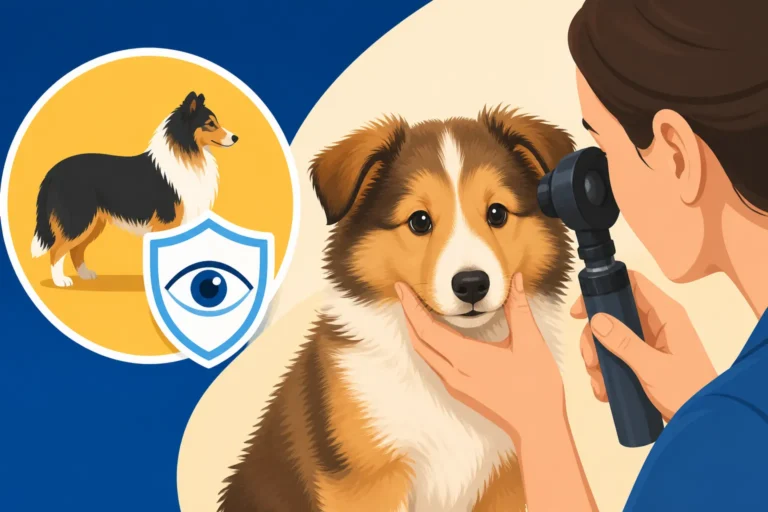
First, the ophthalmologist will typically discuss your dog's history and any concerns you might have. Then, they will dilate your Collie's pupils using special eye drops. This usually takes about 20-30 minutes, allowing the vet to get a clear view of the retina and the back of the eye. During this waiting period, your Collie might experience some temporary light sensitivity, but it's generally not painful.
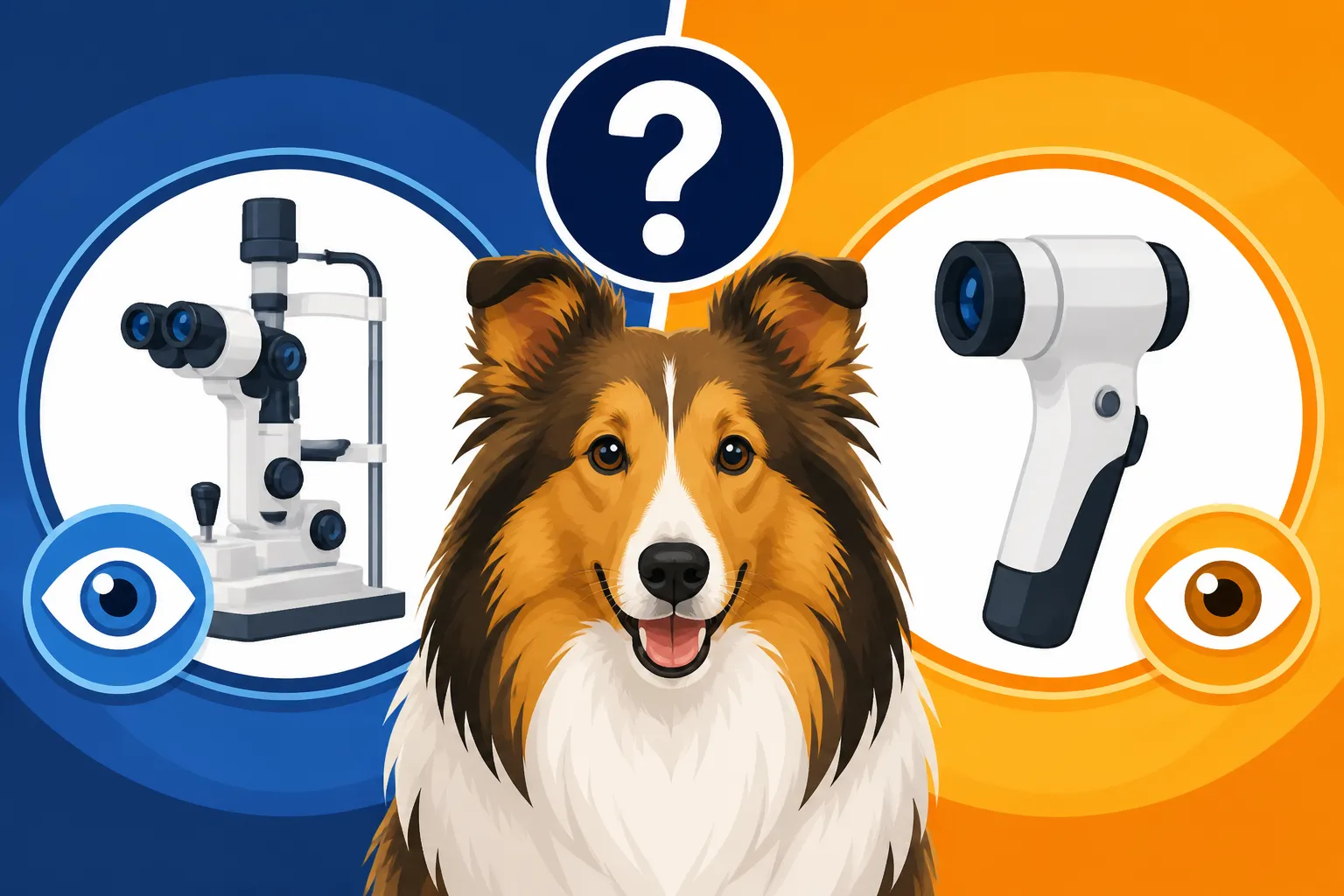
Once the pupils are fully dilated, the ophthalmologist will use an indirect ophthalmoscope (a special light and lens system worn on their head) to carefully examine all parts of the eye, including the cornea, lens, vitreous, optic nerve, and most importantly for Collies, the retina and choroid. They are looking for any abnormalities, subtle or obvious, that indicate inherited eye disease. This includes searching for signs of choroidal hypoplasia, which looks like an abnormal thinning or paleness in the choroid, or the often more serious colobomas, which appear as "holes" or depressions, usually near the optic disc. They will also check for retinal folds, detachments, cataracts, and other issues.
After the examination, the ophthalmologist will complete a CAER exam form, detailing their findings. If the eyes are deemed healthy for breeding, the dog receives a CAER certification number. This certification is usually valid for one year, emphasizing the need for annual re-evaluation for breeding dogs to detect any late-onset conditions. For puppies, the exam is typically performed at 5-7 weeks of age before their adult coat fully grows in, as this allows for the clearest view of the developing eye structures and is the best time to catch issues like CEA. This early exam is precisely Why a Collie Puppy Is Eye Checked at Five to Seven Weeks.
Making Sense of Eye Exam Results for Your Collie Puppy
Navigating the results of your Collie's eye exam can be a bit like learning a new language. You'll encounter specific terms and classifications, and understanding what they mean for your puppy's health and potential breeding status is paramount. This information empowers you to make informed decisions and ensures you're bringing a truly healthy companion into your home. It’s also important context for broader discussions, like What Collie Eye Anomaly Does to the Back of the Eye.
Understanding the "Go Normal" Designation
One of the most reassuring phrases you can hear regarding a Collie puppy's eye exam is "go normal." This term specifically refers to the finding related to choroidal hypoplasia (CH), the most common manifestation of Collie Eye Anomaly. When an ophthalmologist examines a Collie puppy between 5 and 7 weeks of age, they are looking for specific changes in the choroid, the vascular layer that nourishes the retina. In puppies with mild CH, the abnormal appearance of the choroid can sometimes be masked by pigment as the puppy matures, making it appear "normal" in later exams. This phenomenon is called "go normal" or "masked CEA."
A puppy that "goes normal" technically does have choroidal hypoplasia, but the condition is so mild that it's visually insignificant and their vision is unlikely to be affected. However, from a genetic standpoint, a "go normal" Collie is still considered affected with CEA and can pass the gene on. This is why it's so important that the initial eye exam happens during that crucial 5-7 week window. An older Collie tested for CEA might appear clear due to pigment masking, leading to a false sense of security for breeders who rely solely on adult examinations without knowing the puppy history. This is why What Go Normal Means in a Collie's Eye Exam is so critical for understanding inherited conditions.
Interpreting Abnormal Findings
If a Collie puppy's eye exam reveals abnormalities beyond "go normal" CH, it's vital to understand the implications. The ophthalmologist might identify more severe forms of CEA, such as colobomas or retinal detachments.
- Colobomas: These are defects or "holes" in the optic disc or adjacent retina. They can vary greatly in size and location. Small colobomas may not significantly affect vision, but larger ones, especially those involving the optic nerve, can cause blindness or visual impairment. Unlike CH, colobomas do not "go normal" and are permanently visible. They also represent a higher risk for retinal detachment later in life.
- Retinal Detachment: This is a very serious condition where the retina separates from the underlying choroid. It typically leads to severe vision loss or blindness in the affected eye. Retinal detachments can occur secondary to large colobomas or spontaneously due to the weakened ocular structures associated with CEA.
- Other Issues: While less common or not directly part of the "core" CEA complex, an ophthalmologist might also find other inherited eye diseases, such as cataracts, progressive retinal atrophy (PRA), or persistent pupillary membranes. PRA is a separate genetic disease that causes gradual blindness, and while less prevalent in Collies than CEA, it's still something to be aware of. Whether a Mildly Affected Collie Goes Blind often depends on the specific abnormalities found and their severity.
Understanding these findings allows you to provide appropriate care for your Collie and, if you are a breeder, make responsible decisions to improve the health of the breed. Reputable breeders will always be transparent about these results and should provide you with Whether a Collie Breeder Provides an Eye Certificate for your puppy and its parents.
Deciding Which Exam is "Better" for Your Collie
The question of "CERF or OFA" is a common one, but as we've explored, the landscape has changed. The key isn't choosing between two different types of exams, but understanding the current standard and prioritizing the quality of the examination.
The Current Standard: OFA CAER
To be clear, the choice isn't really between CERF or OFA anymore. CERF, as a standalone registry, no longer exists. Its functions were absorbed by the Orthopedic Foundation for Animals (OFA) under its Companion Animal Eye Registry (CAER) program. Therefore, when you seek an eye certification for your Collie today, you will be getting an OFA CAER examination. This is performed by a board-certified veterinary ophthalmologist, and the results are then submitted to the OFA database.
This centralization under OFA is actually a benefit. OFA has long been a trusted name in canine health clearances, including hip and elbow evaluations, and bringing eye certifications under their umbrella creates a more comprehensive and accessible record for canine health. It means that when you are researching a Collie puppy or a breeding dog, you can often find all their health clearances – hips, elbows, and eyes – in one place on the OFA public database. This enhances transparency and makes it easier to verify health claims. For instance, reputable breeders will openly share their OFA results, demonstrating their commitment to the breed's health. You should certainly assume that if a puppy's parents don't have these clearances, you should Assume Your Collie Has the MDR1 Mutation and other health concerns.
The Importance of a Board-Certified Veterinary Ophthalmologist
Regardless of the registry, the absolute most critical component of an eye exam for a Collie is that it's performed by a board-certified veterinary ophthalmologist (DACVO). These veterinarians have undergone extensive additional training, residencies, and rigorous examinations to specialize in the diagnosis and treatment of animal eye diseases.
Why is this so important for Collies? Because CEA can be incredibly subtle, especially in its milder forms or in puppies that are "going normal." A general practitioner veterinarian, while excellent in many areas, may not have the specialized equipment or the depth of experience required to detect the nuances of CEA or other inherited eye conditions. A DACVO is trained to spot the tiniest choroidal abnormalities, nascent colobomas, or early signs of retinal issues that could be missed by a less specialized eye exam. Their expertise ensures an accurate diagnosis, which is fundamental for both the individual dog's health management and for informed breeding decisions. When a Collie puppy is brought to a DACVO at 5-7 weeks of age, this specialist can accurately identify conditions like choroidal hypoplasia before the masking effect of pigment can obscure the findings. This attention to detail can be the difference between understanding your dog's true eye health status and unknowingly propagating a genetic condition. Furthermore, having the exam performed by a DACVO is a requirement for official OFA CAER certification.
Practical Advice for Collie Owners
For current Collie owners, if your dog is part of a breeding program, annual OFA CAER exams are highly recommended to monitor for any late-onset conditions. For pet owners, if you acquired your Collie from a reputable breeder, they should have provided you with proof of OFA CAER eye clearances for both parents, and ideally for your puppy at 5-7 weeks. If you adopted a Collie from a rescue or are unsure of its background, it's a wise investment to have a DACVO perform an OFA CAER eye exam to establish a baseline of its eye health. This is a key step to ensuring you know everything possible about your new companion's well-being. Knowing the health status of a rescue Collie, including their eye health, is invaluable for their long-term care and helps with peace of mind. While pet insurance companies like Healthy Paws can help with unexpected veterinary costs, understanding your Collie's predispositions upfront is always the best approach.
It's also worth noting that while A Collie's Eye Test Can Be Done by DNA Instead for the NHEJ1 mutation, this DNA test does not replace the comprehensive physical examination by a DACVO for the full spectrum of CEA and other eye conditions. Both methods provide different, complementary pieces of information vital for a complete picture of your Collie's eye health.
Here's a quick comparison of the historical CERF and current OFA CAER:
| Feature | CERF (Historical) | OFA CAER (Current) |
|---|---|---|
| Operating Entity | Canine Eye Registration Foundation | Orthopedic Foundation for Animals (OFA) |
| Primary Function | Registry for inherited canine eye diseases | Comprehensive registry for all canine health clearances |
| Exam Provider | Board-certified veterinary ophthalmologist (DACVO) | Board-certified veterinary ophthalmologist (DACVO) |
| Exam Process | Pupils dilated, indirect ophthalmoscopy | Pupils dilated, indirect ophthalmoscopy |
| Certificate Validity | 1 year, recommended annual re-exam | 1 year, recommended annual re-exam |
| Database Access | Publicly accessible (historical records) | Publicly accessible, integrated with other OFA clearances |
| Puppy Exam Age | Crucial at 5-7 weeks for CEA | Crucial at 5-7 weeks for CEA |
| Key Distinction | Registry ceased operations in 2012 | Successor to CERF's eye certification program |
Disclaimer
The information provided in this guide is for general educational purposes only and should not be considered a substitute for professional veterinary advice. Always consult with a qualified veterinarian or board-certified veterinary ophthalmologist regarding your Collie's specific health concerns and before making any decisions about medical care or breeding.