Whether a Mildly Affected Collie Goes Blind
One of the most heart-stopping moments for any Collie owner is hearing the words "Collie Eye Anomaly" or CEA. It instantly conjures up images of vision loss, and understandably, a wave of panic sets in. However, the reality is far more nuanced, especially for Collies described as "mildly affected." This comprehensive guide aims to demystify what a mild CEA diagnosis truly means for your beloved companion's long-term vision and to offer peace of mind where appropriate.
Understanding Collie Eye Anomaly (CEA) and Its Spectrum
Collie Eye Anomaly, also known as Choroidal Hypoplasia (CH), is a genetic, inherited eye condition that is incredibly common within the Collie breed, as well as several other herding breeds like the Shetland Sheepdog and Australian Shepherds. When a veterinarian delivers this diagnosis, it's crucial to understand that CEA isn't a single, uniform condition; it exists on a spectrum of severity, from very mild to profoundly debilitating. Many owners feel overwhelmed by the medical terminology, and it's easy to jump to the worst-case scenario, imagining a future where their active, intelligent Collie can no longer see.
The Genetic Basis of CEA in Collies
At its core, CEA is an autosomal recessive genetic disorder. This means that a Collie must inherit two copies of the defective gene – one from each parent – to actually express the condition. If a dog inherits only one copy, it's considered a carrier and typically won't show symptoms, but can pass the gene to its offspring. The specific gene mutation responsible for CEA has been identified, which has been a monumental step forward for responsible breeders. It allows for DNA testing that can tell a breeder if their dogs are clear, carriers, or affected, regardless of whether they show the condition on an eye exam. Understanding this genetic component is vital because it explains why the condition is so prevalent in the breed; it's deeply woven into the Collie's genetic fabric due to past breeding practices that unknowingly propagated the gene.
Why Collies Are Particularly Prone to CEA
The historical prevalence of CEA in Collies is a testament to how complex genetic health can be in purebred dogs. Before the advent of modern genetic testing and widespread awareness, the CEA gene was unknowingly passed down through generations. It's estimated that a significant portion of the Collie population worldwide carries or is affected by this gene. This high incidence means that How Many Collies Are Affected by Collie Eye Anomaly is a question many prospective owners grapple with. The condition specifically affects the choroid, a layer of tissue rich in blood vessels that provides nourishment to the retina. In affected Collies, this choroid doesn't develop correctly, leading to a thinning or underdevelopment, which is what we call choroidal hypoplasia. This anatomical defect can then lead to further complications in more severe cases.
The Different Grades of CEA: From Mild to Severe
When your Collie puppy has their routine eye examination, usually between five to seven weeks of age, the veterinary ophthalmologist isn't just looking for the presence of CEA; they're assessing its grade or severity. This initial eye check, often performed by a board-certified specialist, is paramount because a puppy's eyes are still developing, and some signs of CEA can become obscured by normal retinal pigmentation as they mature – a phenomenon known as "going normal."
The Typical Eye Exam and Grading System
During the ophthalmological exam, the specialist uses an ophthalmoscope to examine the back of the puppy's eye, specifically looking at the retina, choroid, and optic nerve. They're looking for tell-tale signs of CEA. The grading system typically ranges from mild choroidal hypoplasia (CH) to more severe manifestations like colobomas, retinal detachment, and intraocular hemorrhage. A responsible breeder will provide you with a certificate from this examination, detailing the findings. This certificate is crucial for understanding your puppy's specific diagnosis. For instance, Why a Collie Puppy Is Eye Checked at Five to Seven Weeks is precisely because this brief window allows for the most accurate diagnosis before some signs disappear visually.
Description of Mild vs. Severe Indicators
Let's break down what these different indicators actually mean:
- Choroidal Hypoplasia (CH): This is the mildest form of CEA, and the most common. It means the choroid layer is thinner than it should be. On examination, the ophthalmologist might see pale areas or visible blood vessels due to this thinning.
- Coloboma: This is a more serious indicator, representing a defect or hole in the optic nerve head, or sometimes the retina itself. Colobomas can range in size and position, and their impact on vision is directly related to these factors.
- Retinal Detachment: The most severe form, where the retina separates from the underlying choroid. This can be partial or complete and often leads to significant or total blindness in the affected eye.
- Intraocular Hemorrhage: Bleeding inside the eye, which can occur as a secondary complication, particularly in cases with large colobomas, and can also lead to vision loss.
What Collie Eye Anomaly Does to the Back of the Eye is essentially a progressive degradation of these structures, with CH being the starting point. It's vital to remember that a Collie might have CH in one eye and a small coloboma in the other, or CH in both. The diagnosis describes the most severe finding.
| Severity Grade | Ocular Manifestation | Typical Vision Impact (Adult) | Prognosis for Blindness |
|---|---|---|---|
| Mild | Choroidal Hypoplasia (CH) | Usually none; excellent vision | Extremely low |
| Moderate | Small Coloboma (non-detaching) | Minimal to no impact, possible blind spot | Very low |
| Severe | Large Coloboma (detaching risk) | Moderate impairment, blind spots | Moderate to high |
| Very Severe | Retinal Detachment / Hemorrhage | Significant to total blindness | High |
Choroidal Hypoplasia: The Mildest Form of CEA
When a Collie is described as "mildly affected" by CEA, it almost always refers to a diagnosis of Choroidal Hypoplasia (CH). This is the most common manifestation of CEA, and it's the one that causes the most confusion and unnecessary worry for new Collie owners. Let's delve into why CH, despite sounding alarming, is usually benign.
Detailed Explanation of CH
Choroidal Hypoplasia means there's an underdeveloped or thinned choroid, the vascular layer that sits between the retina and the sclera (the white outer layer of the eye). This thinning means the normal pigment and blood vessels of the choroid are reduced or absent in certain areas. When an ophthalmologist looks into the eye of a puppy with CH, they might see a "window" effect, where the underlying white sclera is more visible than it should be, or the blood vessels of the retina might appear more prominent. This visual difference is what flags the condition. However, it's a structural anomaly, not necessarily a functional one that impedes sight. The retina itself, which is responsible for detecting light and sending signals to the brain, is typically otherwise normal in these mild cases.
Why CH Rarely Impacts Vision
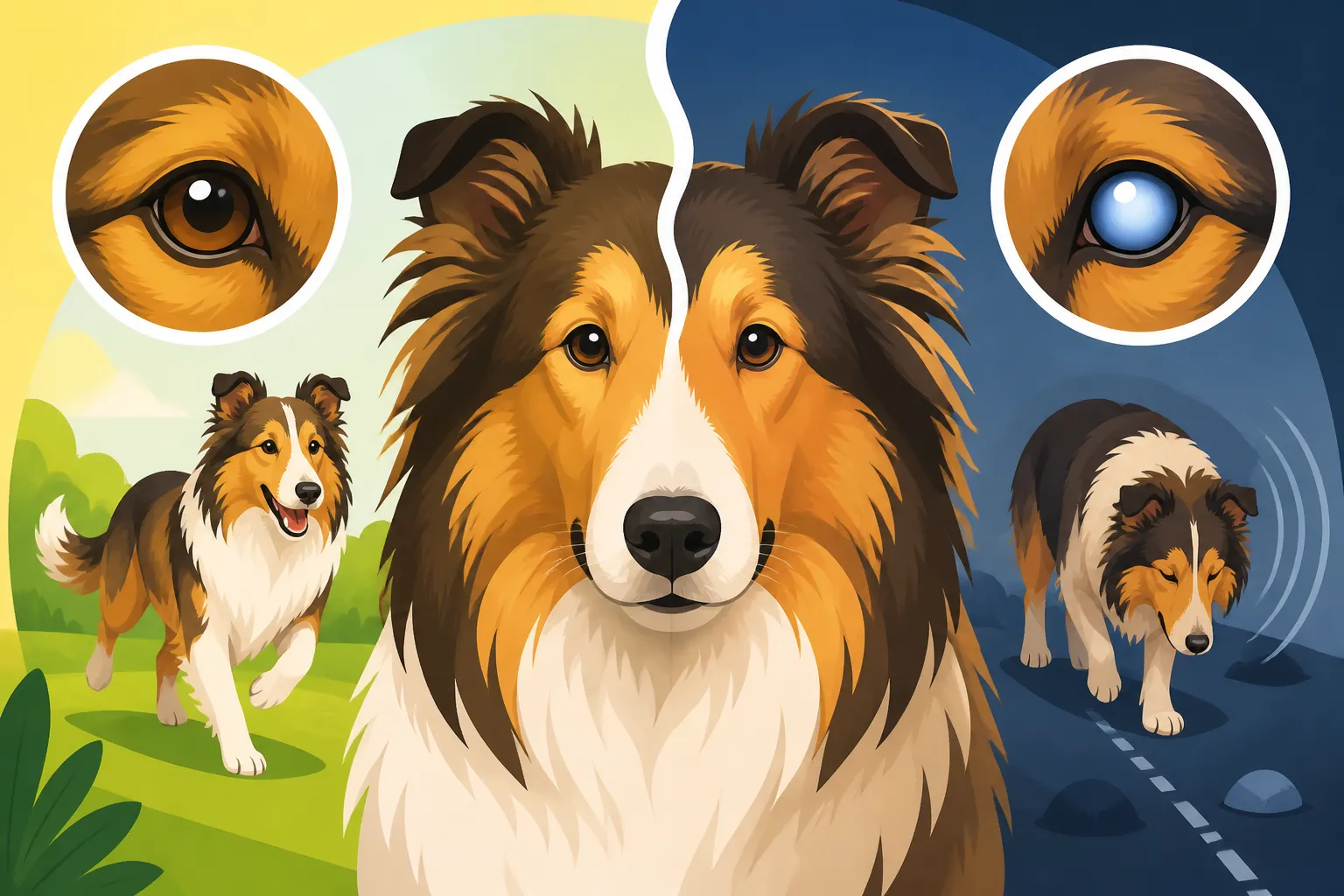
The key takeaway for Choroidal Hypoplasia is that it's generally considered non-progressive and non-blinding. The visual impact is usually negligible, if it exists at all. Imagine a faded spot on the wall behind a projector screen – it might look different, but it doesn't stop the image from projecting clearly. Similarly, the thinned choroid might be structurally abnormal, but it typically does not interfere with the retina's ability to function normally and capture light. Most Collies diagnosed solely with CH will live long, full lives with excellent vision, never showing any signs of being vision-impaired. They navigate the world, chase balls, and herd imaginary sheep with perfect clarity, and you would never know they had this mild condition without the eye exam.
When It Might Have a Subtle Impact
While CH rarely causes significant vision problems, there are extremely rare instances where a very widespread or unusually severe form of CH might theoretically lead to a subtle reduction in night vision or vision in very dim light. This is because the choroid plays a role in overall retinal health and nutrient supply, and a severely compromised choroid could, in theory, impact these functions. However, this is more of a theoretical concern than a practical one for the vast majority of Collies with CH. Owners typically report no observable difference in their dog's vision under any circumstances. It's important to distinguish this mild form from more severe expressions of CEA like colobomas, which do have a higher potential for vision compromise. Whether Colobomas Are Worse Than Choroidal Hypoplasia in a Collie is a question that highlights this important distinction, with colobomas carrying a much greater risk.
Assessing the Risk of Vision Loss in Mildly Affected Collies
The initial diagnosis of CEA can be alarming, but for a "mildly affected" Collie, the risk of vision loss is incredibly low. Understanding why this is the case requires a deeper dive into how the condition presents and what those early puppy eye exams truly tell us.
Interpreting the Eye Exam Results
When your puppy's ophthalmologist says they have mild CH, it's critical to listen to their specific explanation. They're distinguishing this from more severe findings. Sometimes, a puppy might be diagnosed with CH, but then at a later recheck, appear "go normal." What Go Normal Means in a Collie's Eye Exam is that the abnormal choroidal vessels and tissues become obscured by normal retinal pigment as the puppy matures, making the condition visually undetectable without knowing its history. This doesn't mean the condition went away genetically, but visually, the signs are no longer apparent. For Collies with simple, non-complicated CH, the professional opinion is almost universally that their vision will be unaffected throughout their lives. The fear of blindness in these cases is largely unfounded based on current veterinary understanding and decades of observation.
The Slim Chances of Progression for CH
One of the biggest concerns for owners is whether a mild condition will worsen over time. With Choroidal Hypoplasia, the good news is that it is a non-progressive condition. This means the thinning of the choroid doesn't typically get worse as the dog ages. Unlike some degenerative eye diseases, the initial structural anomaly of CH is usually stable. This is a crucial point of differentiation from more severe forms of CEA where complications like retinal detachment can occur later in life, particularly if a large coloboma is present. For a Collie with a diagnosis of only CH, the chances of developing a retinal detachment later in life due to the CH itself are exceedingly remote. However, it's still prudent to understand that Whether a Collie's Retina Can Detach Later can happen due to trauma or other unrelated eye conditions, but not typically as a direct progression of isolated CH.
Factors That Could Exacerbate Minimal Issues
While pure CH itself rarely causes problems, it's important to consider a Collie's overall eye health. If a Collie has CH and develops another unrelated eye condition, like glaucoma, cataracts, or a corneal injury, then the combined effect could potentially be more impactful. However, CH does not predispose them to these other conditions. It's simply that any dog's eyes are subject to general wear and tear or disease processes over a lifetime. Furthermore, a Collie with CH might also be genetically predisposed to other issues that are important to be aware of, even if unrelated to their vision. A good pet insurance plan, like those offered by Healthy Paws, can provide peace of mind for unexpected veterinary costs that arise from any health issue, whether related to CEA or not. It’s always smart to consider how you’d handle unforeseen medical expenses for your furry family member.
Managing and Living with a Mildly Affected Collie
Bringing a mildly affected Collie home often comes with lingering questions about their future and how best to care for them. The good news is that for most Collies with simple Choroidal Hypoplasia, "management" largely means treating them like any other healthy dog, with a few sensible precautions.
Regular Vet Check-ups and Monitoring
Even if your Collie has been diagnosed with mild CH and shows no signs of vision impairment, regular veterinary check-ups are still essential. During their annual wellness exam, discuss their eye health with your general practitioner. While a specialist ophthalmologist isn't usually needed for annual CH rechecks, your vet can keep an eye out for any new or unrelated eye conditions that might arise as your dog ages. Observing your Collie's behavior for any subtle changes in how they navigate, especially in low light or unfamiliar environments, is always a good practice for any dog owner. If you ever notice squinting, pawing at eyes, discharge, or bumping into things, that warrants an immediate vet visit, regardless of their CEA status. It's often reassuring to know you're doing everything you can to stay proactive.
Creating a Safe and Predictable Environment
For Collies with mild CH, significant changes to their environment aren't usually necessary because their vision is functionally normal. They don't typically need accommodations like baby gates to mark stairs or special lighting. However, maintaining a consistent home environment is a good practice for any dog, and especially beneficial as they enter their senior years. Collies thrive on routine and predictability, and this can help them feel secure whether their vision is perfect or if it subtly declines with age for unrelated reasons. As your Collie ages, you might start noticing changes in their behavior or mobility. Learning about Caring for a Collie Past Nine can offer valuable insights into supporting their overall well-being as they get older, including any age-related sensory declines.
Ensuring Support for Future Health Concerns
While mild CEA isn't expected to cause future vision problems, life with a beloved dog inevitably brings other health considerations. Accidents happen, and other illnesses can arise. Having a plan for these unexpected events is crucial. This is where pet insurance can be incredibly valuable. Companies like Healthy Paws offer comprehensive coverage that can help offset the costs of unforeseen veterinary care, from accidents to illnesses. It means you can make decisions based on what's best for your Collie, rather than being solely driven by financial constraints. While CEA might be a pre-existing condition and thus not covered by insurance, having a policy in place before any other issues develop can be a real lifesaver, covering everything from emergency surgeries to chronic disease management.
The Role of Responsible Breeding and Genetic Testing
The prevalence of Collie Eye Anomaly underscores the immense responsibility that comes with breeding Collies. While a "mildly affected" status usually means a good visual prognosis for an individual dog, responsible breeding practices are critical for reducing the overall incidence and severity of CEA in future generations.
The Importance of Early Eye Checks
The initial eye check by a board-certified veterinary ophthalmologist, performed on Collie puppies between 5 and 7 weeks of age, remains the gold standard for diagnosing the physical manifestation of CEA. This early screening is crucial because it identifies puppies with more severe forms (colobomas, retinal detachments) that require immediate attention, and it ensures that breeders are aware of the status of their litter. Even with genetic testing, the physical eye exam provides real-world confirmation of the condition's expression. This is why The Three Genetic Tests a Collie Breeder Owes You often includes an eye exam certificate, even though a DNA test is also available for CEA.
Understanding the DNA Test for CEA
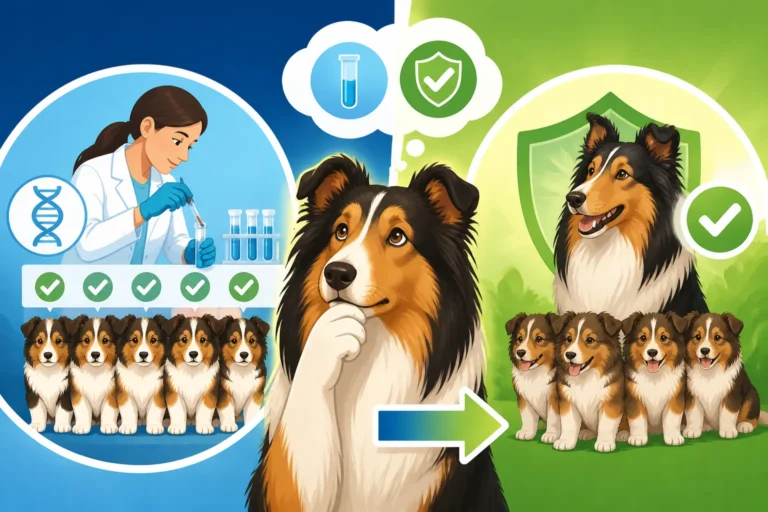
Thanks to scientific advancements, there's now a DNA test that can identify the specific genetic mutation responsible for CEA. This test can determine if a dog is genetically clear (does not carry the gene), a carrier (carries one copy but is typically unaffected), or affected (carries two copies and will express the condition to some degree). The DNA test is incredibly valuable because it can be done at any age and provides definitive genetic information, even for adult Collies who might have "gone normal" on an eye exam. This test helps breeders make informed decisions about pairings, aiming to produce fewer affected puppies, especially those with severe forms. What the Collie DNA Health Panel Covers typically includes the CEA genetic test, alongside other vital screenings.
Breeding Decisions to Reduce CEA Prevalence
Responsible breeders use both the physical eye exam results and the DNA test results to guide their breeding programs. The goal isn't necessarily to eradicate CEA entirely from the gene pool overnight, as the gene is so widespread and doing so too quickly could severely limit genetic diversity. Instead, the focus is on avoiding breeding two affected dogs together, and ideally, pairing carriers with clear dogs to reduce the number of affected puppies while still maintaining genetic health.
For example, a breeder might have a valuable dog that is a carrier for CEA. They can still responsibly breed this dog by carefully selecting a mate that is genetically clear of CEA. All puppies from such a pairing would be either clear or carriers, but none would be affected. This strategy allows breeders to maintain desirable traits in their lines while slowly reducing the prevalence of the affected gene. It's a long-term commitment that requires diligence and transparency. For anyone considering breeding, it's worth exploring Whether a Collie With Choroidal Hypoplasia Can Be Bred to understand the ethical considerations and genetic implications fully.
Disclaimer
This article is for general informational purposes only and does not constitute professional advice. Laws, prices and regulations vary by location and change over time. Consult a qualified professional for guidance on your specific situation.