How Many Collies Are Affected by Collie Eye Anomaly
The worry that comes with knowing your beloved Collie might inherit a serious health condition is a heavy burden. Many Collie owners, or those hoping to welcome a Collie into their family, are understandably concerned about Collie Eye Anomaly (CEA) and just how common it really is. This guide aims to shed light on the prevalence of this condition, what it means for our wonderful Collies, and how we, as dedicated owners, can navigate its complexities.
Understanding Collie Eye Anomaly and Its Prevalence
Collie Eye Anomaly, or CEA, is a congenital, inherited eye disease that affects Collies and several related breeds. It's a condition that has been intertwined with the breed for a long time, and understanding its widespread nature is the first step toward responsible ownership and breeding. It's not just a minor issue; it can range from very mild vision impairment to severe blindness, and it’s something every Collie owner needs to be aware of.
The Startling Statistics on CEA in Collies
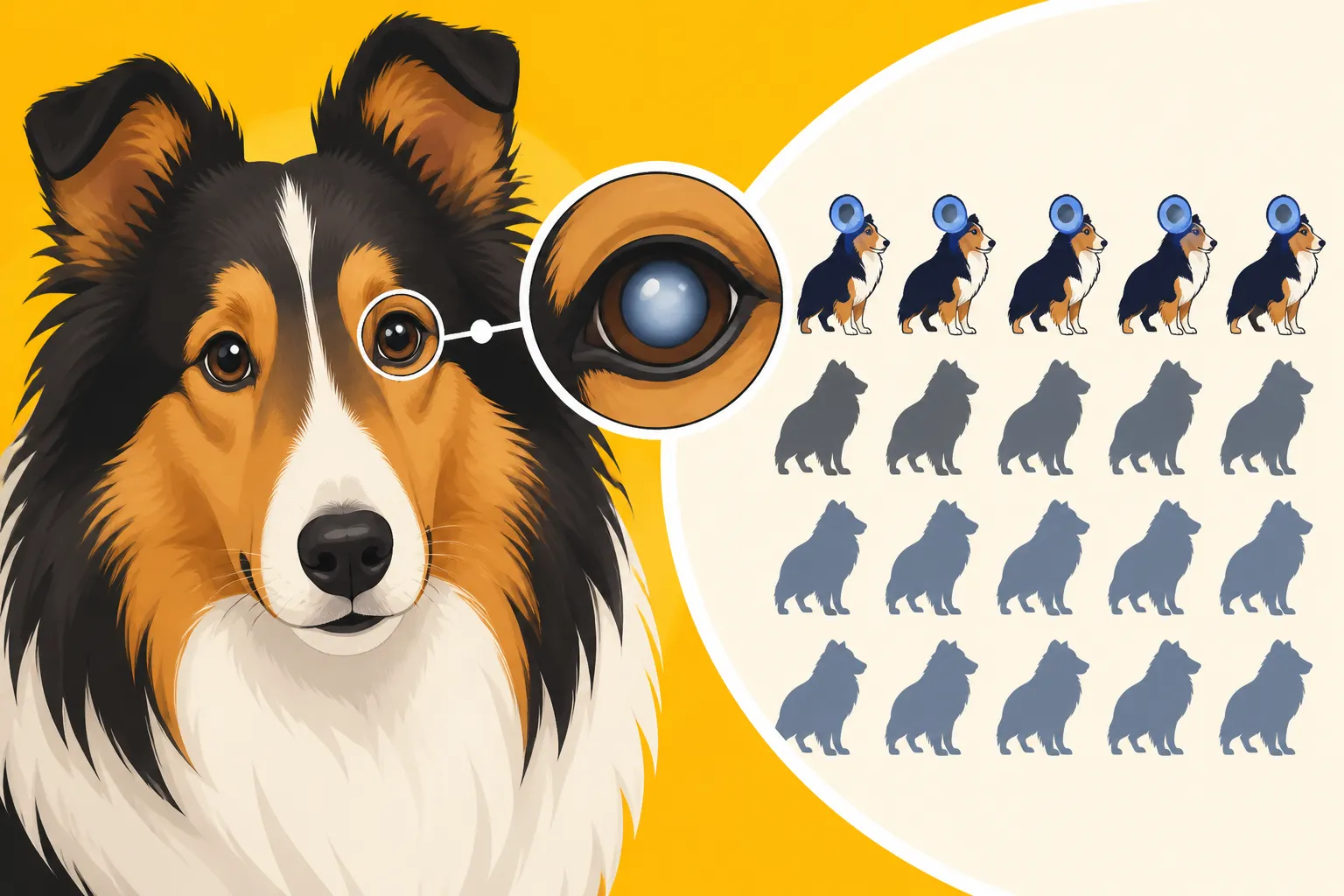
When you first start researching Collies, one of the most common and often alarming facts you'll encounter is the high prevalence of CEA. Historically, studies and breeder observations pointed to an incredibly high percentage of Collies being affected—some sources cite numbers as high as 60% to 90% in earlier decades, especially before widespread genetic testing and careful breeding practices became more common. This means that for a long time, it was almost guaranteed that a Collie puppy would have some degree of CEA.
Even today, despite significant advancements in genetic screening and dedicated efforts by responsible breeders, CEA remains a prevalent concern. While the numbers have thankfully decreased from those historical highs in well-bred lines, it's still not uncommon for a significant portion of a litter to be affected, even from seemingly healthy parents who are carriers. For example, in some regions, it can still be 20-50% in the general Collie population, depending on how rigorously breeders have been screening and selecting. This ongoing presence is a testament to how deeply embedded this recessive gene is within the breed's genetic makeup, making it a persistent challenge for anyone involved with Collies. Knowing this high likelihood can certainly be a source of anxiety for prospective owners, but it also underscores the importance of choosing a breeder who is transparent and actively working to minimize its impact.
Why CEA Remains So Widespread
The persistence of CEA within the Collie breed can be attributed to several factors, primarily its genetic inheritance pattern and the challenges breeders face in eradicating it completely without severely limiting the gene pool. CEA is an autosomal recessive condition, which means a puppy must inherit two copies of the affected gene—one from each parent—to be clinically affected. However, dogs carrying just one copy are carriers and appear perfectly healthy themselves, yet can pass the gene on to their offspring. This makes it incredibly difficult to eliminate, as carriers don't show symptoms and can unwittingly perpetuate the condition if not properly tested.
Furthermore, CEA isn't a single "grade" of disease; it manifests along a spectrum. The primary defect, choroidal hypoplasia (CH), is what the current DNA tests identify. However, more severe manifestations like colobomas and retinal detachment can occur even in dogs with only mild CH, and these aren't always directly predicted by the current DNA test for CH alone. This complexity means that even with careful DNA screening, thorough eye exams by a board-certified veterinary ophthalmologist remain critical. The goal isn't necessarily to eliminate CEA entirely, which could drastically narrow the breed's genetic diversity and introduce other health issues, but rather to breed away from severe forms and manage its prevalence responsibly. Many breeders are focused on producing dogs with mild, non-vision-impairing forms of CEA, or ideally, unaffected dogs, while maintaining other important breed characteristics. This balance is a constant, uphill battle for ethical breeders.
What a CEA Diagnosis Means for Your Collie
Receiving a diagnosis of CEA for your Collie puppy can be unsettling, but it's crucial to understand that not all diagnoses are created equal. The severity varies widely, and many Collies live full, happy lives with mild forms of the condition without any significant visual impairment. It's truly a spectrum, and understanding where your dog falls on that spectrum is key to managing expectations and providing the best care.
The Spectrum of CEA: From Mild to Severe
CEA is not a single disease but a constellation of ocular defects stemming from abnormal development of the choroid, a vascular layer behind the retina. The most common and usually mildest form is choroidal hypoplasia (CH), where the choroid is thinner than it should be. Many Collies with only CH might have excellent vision their entire lives, showing no outward signs of a problem. Their vision might be slightly affected in low light conditions, but often, owners never notice any functional impairment. This is why a diagnosis of "mild CEA" or "CH" shouldn't immediately cause panic. For many, it's more of a genetic footnote than a life-altering condition.
However, the condition can progress to more serious defects. A coloboma, which is an indentation or hole in the optic nerve or retina, is a more severe manifestation. These can vary in size; small ones might not affect vision much, but larger colobomas can lead to blind spots, distorted vision, or even be precursors to retinal detachment. Imagine having a permanent blur or blank spot in your central vision – that’s akin to what a significant coloboma might feel like for your dog. For these cases, even with good pet insurance like Healthy Paws, treatment options for vision restoration can be limited and expensive, focusing more on managing secondary issues or adapting to vision loss.
The most severe, and thankfully less common, complication is retinal detachment. This occurs when the retina separates from the underlying tissues, leading to sudden and often irreversible blindness in the affected eye. A collie with a severe coloboma is at a higher risk for this. A dog experiencing a retinal detachment might suddenly bump into furniture, seem disoriented, or stop playing fetch with the same enthusiasm. This is an absolute emergency, and while surgery can sometimes reattach the retina, the success rate is variable, and complete vision restoration isn't guaranteed. This highlights the importance of understanding the grade of CEA your Collie has, as detailed in articles like What Collie Eye Anomaly Does to the Back of the Eye.
Living with a Collie Affected by CEA
For Collies diagnosed with mild choroidal hypoplasia, life usually continues without any noticeable changes. You might not even realize they have CEA unless you’ve had their eyes examined by a specialist. Owners of these dogs often report no issues with their dog's sight, whether it’s navigating their home, playing outdoors, or interacting with family. The key is to remain vigilant and ensure routine veterinary check-ups include discussions about eye health, but largely, these dogs are indistinguishable from their unaffected counterparts. The only real practical implication might be ensuring their breeder knows for future breeding decisions to avoid multiplying the gene.
If your Collie has a more moderate form, such as a small to medium coloboma, you might notice some subtle signs, especially as they age or in dimly lit environments. They might hesitate briefly before stepping off a curb, or be a little less confident on unfamiliar stairs. Keeping their environment consistent, avoiding moving furniture unnecessarily, and using consistent verbal cues can help them navigate. Regular follow-up appointments with a veterinary ophthalmologist are crucial to monitor for any changes, like progression of the coloboma or signs of retinal thinning that could precede a detachment. Ensuring their overall health, including proper nutrition and regular exercise, supports their well-being.
For Collies with severe CEA, including large colobomas or a history of retinal detachment, significant adaptations might be necessary. A blind or severely vision-impaired Collie can absolutely lead a rich, fulfilling life, but it requires patience and specific considerations from their human companions. This includes creating a safe, consistent home environment, using scent markers, and relying heavily on verbal cues and touch. They learn to map their environment and use their other senses remarkably well. Articles like How a Blind Collie Learns a House offer fantastic advice on helping your dog adjust. It's a journey that requires commitment, but the bond you form with a resilient Collie facing these challenges is incredibly profound. Pet insurance from providers like Healthy Paws can be invaluable in these severe cases, as specialist care, potential surgeries, or ongoing management for secondary issues can become quite costly.
Navigating Testing and Responsible Breeding Practices
The battle against CEA isn't fought by owners alone; it begins with responsible breeding. Understanding the various testing methods available and how they contribute to reducing the prevalence and severity of CEA is paramount, whether you're a prospective puppy buyer or a breeder. It’s about being proactive and informed.
The Crucial Role of OFA Eye Exams
For many years, and still critically important today, the primary method for diagnosing CEA has been a thorough eye examination performed by a board-certified veterinary ophthalmologist. This exam, often referred to as an OFA Eye Exam (part of the Orthopedic Foundation for Animals eye certification program, which used to be CERF), is typically performed on Collie puppies between five and seven weeks of age. This specific window is crucial because as the puppy grows, a phenomenon called "go normal" can occur. This is where blood vessels in the back of the eye develop over the choroidal hypoplasia, obscuring the view and making it appear as if the puppy is unaffected, even if they have mild CEA. This concept is thoroughly explored in What Go Normal Means in a Collie's Eye Exam.
During the exam, the specialist dilates the puppy's pupils and uses an ophthalmoscope to inspect the back of the eye, looking for abnormalities in the choroid, optic nerve, and retina. They will grade any observed CEA, noting the presence and severity of choroidal hypoplasia, colobomas, or retinal folds. This early screening is vital because it catches the condition before the "go normal" effect sets in, providing an accurate assessment of the puppy's eye health. A responsible breeder will provide you with a copy of this eye certificate for your puppy, outlining the findings. If you are considering purchasing a Collie puppy, always ask to see the eye certificates for both the puppy and its parents.
The table below provides a simplified overview of common CEA grades found during these eye exams:
| CEA Grade/Condition | Description | Potential Impact on Vision |
|---|---|---|
| CH (Choroidal Hypoplasia) | Thinning of the choroid, the vascular layer under the retina. Most common form. | Often none, or mild impairment in low light. Vision typically remains functional for life. |
| CEA/CH with Coloboma | CH present, plus a defect/hole in the optic nerve head or adjacent retina. Varies in size. | Varies from mild blind spots to significant vision loss, depending on size and location. |
| Retinal Fold | A fold or kink in the retina. Can sometimes resolve as the puppy grows. | Usually resolves without impact. If persistent, can cause minor vision distortion. |
| Retinal Detachment | The retina separates from its underlying support structures. Often secondary to severe coloboma. | Acute, often complete and irreversible blindness in the affected eye. |
| Go Normal | Clinical signs of mild CH are masked by pigmentation as the puppy ages, appearing unaffected on later exam. | The dog still has CH, but it's no longer visible. DNA test remains accurate for CH status. |
How DNA Testing Supplements Eye Exams
In recent years, DNA testing has become an invaluable tool for breeders in their efforts to reduce CEA. A specific DNA test is available that identifies the genetic mutation responsible for choroidal hypoplasia (CH). This test can tell you if a Collie is "clear" (two normal genes), a "carrier" (one normal, one affected gene), or "affected" (two affected genes) for CH. This is a game-changer because it means breeders can know the genetic status of their breeding stock even before breeding, and can make informed decisions to avoid producing clinically affected puppies. The Three Genetic Tests a Collie Breeder Owes You delves into this and other crucial genetic screenings.
While the DNA test is highly accurate for CH, it's vital to understand its limitations. It only detects the CH mutation. It does not detect colobomas or predict the likelihood of retinal detachment. This is a critical piece of information that sometimes gets misunderstood. A Collie could test DNA "clear" for CH, but still potentially develop a coloboma if other, currently unknown, genetic factors are at play, or if there's a sporadic developmental issue. Therefore, the DNA test is a powerful tool, but it doesn't replace the need for the veterinary ophthalmologist's eye exam for puppies. The DNA test tells you about the CH status, while the eye exam checks for all manifestations, especially the more severe ones like colobomas that might not be directly linked to the CH gene in a simple way.
Responsible breeders use both tools in conjunction. They will DNA test their breeding dogs for CEA (CH type) to ensure they are making sound genetic choices. Then, they will have their puppies eye-checked by a veterinary ophthalmologist at 5-7 weeks to catch any physical manifestations, especially colobomas, that the DNA test might miss. This dual approach gives the most comprehensive picture of a Collie's eye health. If you're looking for a puppy, ask the breeder about both parents' DNA test results for CEA and inquire about the puppy's individual eye exam certificate. Some insurance providers, such as Healthy Paws, might even offer benefits or require certain health clearances, making these tests a wise investment for long-term peace of mind and financial security against potential health issues. Understanding Whether the DNA Test Catches Every Affected Collie and Whether a Collie's Eye Test Can Be Done by DNA Instead can further clarify these testing nuances.
Disclaimer
The information provided in this guide is for general educational purposes only and should not be considered a substitute for professional veterinary advice. Always consult with a qualified veterinarian or veterinary ophthalmologist regarding your Collie's specific health concerns and treatment options.