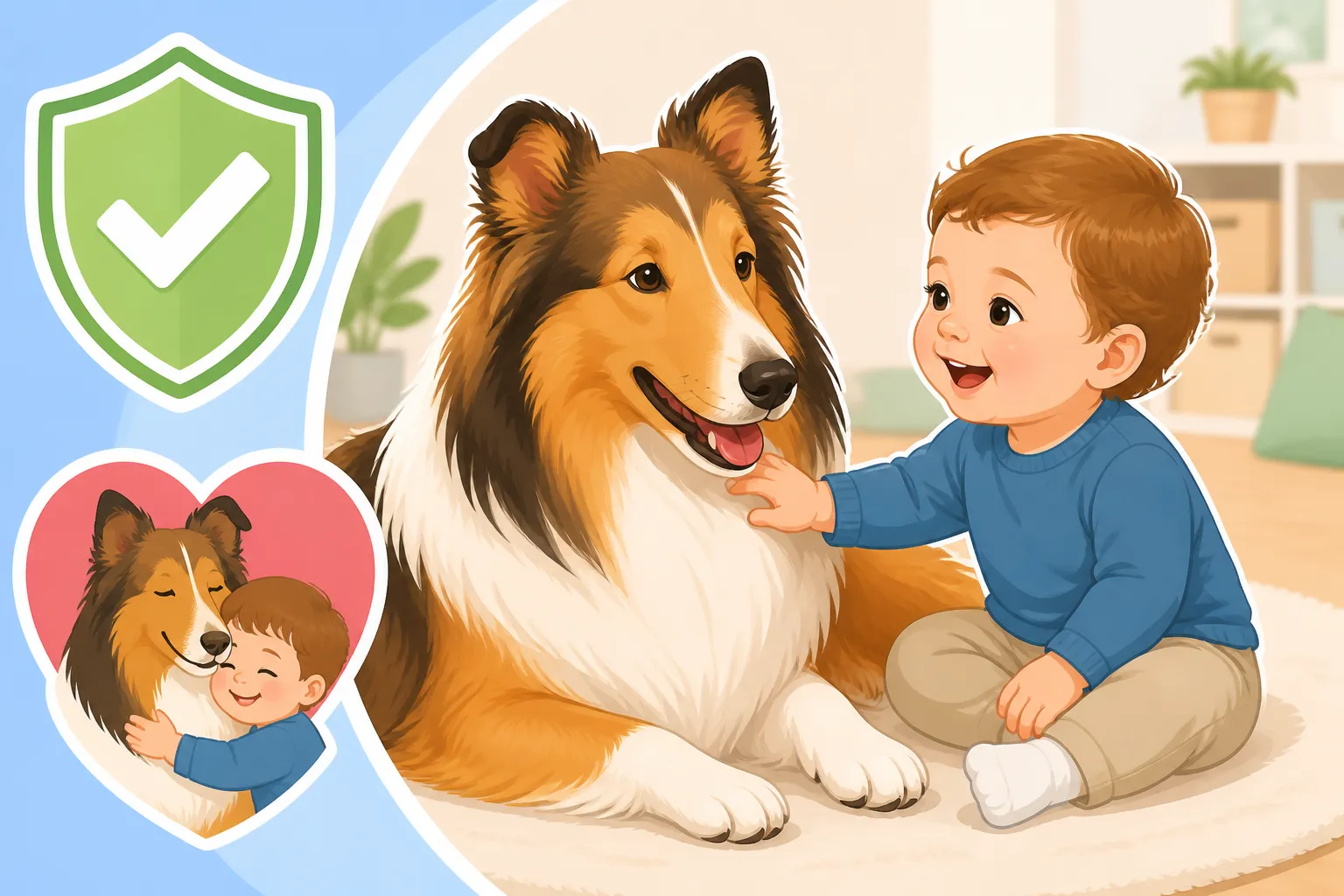
Whether a Collie Is Safe With a Toddler
Bringing a new dog into a home, especially one with a curious, energetic toddler, is a big decision that comes with a lot of "what ifs." Parents often worry about how a dog known for its herding instincts, like the beautiful Collie, will interact with a small child who is still learning boundaries and impulse control. This comprehensive guide aims to ease those anxieties by exploring the Collie's natural temperament, how it typically responds to toddler behavior, and, most importantly, the practical strategies and essential training that can create a safe, harmonious home for everyone.
Understanding the Collie Temperament Around Children
Collies are renowned for their striking beauty, but it's their gentle and devoted nature that truly captures the hearts of families. However, like all breeds, they come with a set of instincts and characteristics that need to be understood, especially when sharing a home with the unpredictable whirlwind that is a toddler.
The Collie's Gentle Nature and Herding Instincts
At their core, Collies are deeply affectionate and loyal dogs. They form strong bonds with their families and are often described as being sensitive and empathetic to human emotions. This inherent gentleness is one of the primary reasons they are often considered excellent family dogs. They thrive on companionship and genuinely want to be part of all family activities, often shadowing their favorite people from room to room. Many Collie owners will tell you their dogs are like intelligent, furry shadows, always keeping a watchful eye on their human charges.
However, we can't ignore the elephant in the room: their herding heritage. Collies were bred for centuries to gather and move livestock, and while modern Collies might not have seen a sheep in their life, that instinct is still there, lying dormant or expressed in different ways. When a toddler is running, squealing, or moving erratically – which, let's face it, is a toddler's natural state – a Collie's brain might register this as something that needs to be "managed" or "rounded up." This isn't aggression; it's an ingrained, ancestral job description. Understanding this distinction is absolutely critical for successful integration. The worry that this instinct will lead to problems is entirely valid, and it’s something every parent considering a Collie needs to be prepared to address.
Patience and Sensitivity: Hallmarks of the Breed
Collies are famously patient dogs, which is a huge asset when it comes to living with small children. They often display a remarkable tolerance for the clumsy pats, accidental tail pulls, and general chaos that toddlers can bring. It's not uncommon to see a well-adjusted Collie simply shift away from a persistent toddler rather than react defensively. This patience stems from their keen intelligence and their desire to please their family. They often seem to understand when a small human doesn't quite know better.
That said, their sensitivity is a double-edged sword. Collies are often highly attuned to their environment and can be sensitive to loud noises, sudden movements, and changes in household tension. A toddler's sudden scream, a dropped toy, or a burst of frantic running could startle a sensitive Collie. It's not that the Collie will necessarily react negatively, but it's important to recognize that these events can cause stress for the dog. A calm, predictable home environment, as much as possible with a toddler around, is beneficial for both the child and the Collie. For more on this, consider reading Whether a Collie Is Sensitive to Household Tension. This sensitivity means that while they are generally gentle, consistent supervision and creating quiet spaces for the dog are essential.
Socialization from Puppyhood
The foundation of a safe and happy relationship between a Collie and a toddler begins long before they ever meet, through proper socialization during puppyhood. A well-socialized Collie puppy is one that has been exposed to a wide variety of sights, sounds, people, and experiences in a positive and controlled manner. This includes gentle, supervised interactions with children of all ages. It's not enough for a puppy to just "see" children; they need to learn that children are fun, non-threatening, and bring good things (like treats and gentle pets).
A Collie that hasn't received adequate socialization might be more fearful or uncertain around toddlers, which could lead to defensive behaviors. For example, a puppy raised in a quiet adult-only home, suddenly thrust into a bustling house with a toddler, might find the experience overwhelming. Responsible breeders often start this process, but it's the owner's responsibility to continue it diligently once the puppy comes home. This early exposure helps shape a Collie's outlook, making them more resilient and accepting of the dynamic nature of a toddler-filled household. Resources like BAXTER & Bella offer online puppy training programs that can guide new owners through comprehensive socialization and basic obedience, which are invaluable for setting a strong foundation.
Common Toddler Behaviors and How a Collie Might React
Toddlers are a force of nature, and their typical developmental behaviors can sometimes clash with a dog's instincts and need for personal space. Understanding these potential conflicts is the first step in managing them safely.
The Unpredictable Nature of Toddlers
Let's be real: toddlers are gloriously, wonderfully, and sometimes terrifyingly unpredictable. One moment they're quietly stacking blocks, the next they're shrieking with joy, bolting across the room, or exploring the dog's ears with surprising strength. They lack fine motor control, impulse control, and a full understanding of cause and effect. This means they might grab a handful of fur, fall on the dog, or suddenly let out a piercing cry right next to the Collie's head.
For any dog, regardless of breed, this level of unpredictability can be stressful. Dogs, especially those like Collies who are sensitive, thrive on routine and clear signals. A toddler provides neither. It's a genuine concern for parents that these sudden, uncoordinated actions could provoke a startled or defensive reaction from their dog. This isn't about the Collie being "bad"; it's about two different species with vastly different ways of perceiving and interacting with the world, forced into close quarters. Validating this concern allows us to implement effective management strategies.
Herding Nips and Their Misinterpretation
As we touched on earlier, the Collie's instinct to herd is a strong one. When a toddler runs or moves quickly, particularly with a jerky, erratic motion, a Collie might instinctively try to "gather" or "control" that movement. This can manifest as a gentle nudge with their nose, a body block, or, most concerning for parents, a quick nip at the heels or clothing. It's important to understand that these are usually herding nips, not aggressive bites aimed at causing harm. They are meant to redirect movement, much like their ancestors would have done with sheep.
However, to a toddler and their parent, any nip or mouth contact is frightening and unacceptable. It's easy to misinterpret this as aggression, leading to fear and potentially punitive measures that can damage the dog-child bond. The key is to recognize the behavior for what it is – an instinctual, albeit undesirable, expression of their breed trait – and to redirect it appropriately. This is why supervision and proactive training are paramount. For deeper insight, you might want to read Whether a Collie Nips a Child Who Runs or Whether a Collie Herds Children. These behaviors require management, not punishment.
Resource Guarding and Boundaries
Resource guarding is when a dog protects its food, toys, bed, or even a specific person from perceived threats. While not all Collies are prone to intense resource guarding, it's a possibility with any breed, and the presence of a curious toddler can certainly heighten the stakes. A toddler might innocently reach for a dog's chew toy, try to get into their food bowl, or attempt to join them in their bed. If the dog perceives this as a threat to their resources, they might growl, stiffen, or snap as a warning.
Establishing clear boundaries for both the dog and the child is crucial to prevent these situations. The dog needs a safe space where they can eat, chew, and rest undisturbed, and the child needs to be taught from a very young age that certain items or areas are "off-limits" when the dog is present. This is not about letting the dog rule the roost, but about preventing conflicts before they start. Ignoring this potential can lead to dangerous encounters. For more on this, see Whether a Collie Guards Anything.
Strategies for a Harmonious Home with a Collie and Toddler
Creating a safe and happy environment for both your Collie and your toddler requires proactive planning, consistent effort, and a deep commitment to managing their interactions.
Constant Supervision is Non-Negotiable
This is the golden rule, the absolute cornerstone of safety: never leave a Collie and a toddler unsupervised, even for a second. This means if you have to step away to answer the door, use the restroom, or grab something from another room, either the child or the dog (or both) needs to be safely separated. Use baby gates, exercise pens, or crates to achieve this. It only takes a split second for an accidental bump, a misunderstood gesture, or a sudden noise to lead to an undesirable interaction.
Active supervision isn't just about watching; it's about managing the environment and anticipating potential issues. It means being close enough to intervene instantly, whether that's redirecting the toddler, calling the dog, or physically separating them. Think of yourself as a referee, constantly monitoring the play and ready to step in at any sign of trouble. This level of diligence can be exhausting, but it's the single most effective way to ensure safety. For more on how important this is, check out Whether a Collie Should Be Supervised With Toddlers.
Teaching Respectful Interactions for Both
Safety is a two-way street. Both your Collie and your toddler need to learn how to interact respectfully. For your toddler, this means teaching gentle hands from the very beginning. Show them how to stroke the dog's fur gently, avoid pulling ears or tails, and respect the dog's space. Use simple, consistent commands like "gentle" and "nice touch." If a toddler is too young to understand these commands, then their interactions with the dog must be entirely managed by an adult.
For your Collie, it means reinforcing calm, polite behavior around the toddler. Reward them generously with treats and praise when they lie calmly while the toddler is nearby, or when they walk away from an over-enthusiastic child. Teach a "leave it" command for when the toddler is interacting with something the dog wants, and a "go to your place" cue for when they need a break from the action. This positive reinforcement builds a positive association with the child, making the Collie view the toddler as a source of good things, not just chaos.
Providing an Outlet for Herding Instincts
Since herding instincts are natural, it's unfair to expect a Collie to simply suppress them without an alternative outlet. Providing appropriate ways for your Collie to exercise their brain and body, including their innate drives, can significantly reduce the likelihood of them "herding" your children. Consider enrolling your Collie in dog sports like treibball, where they learn to push large balls, or even a beginner herding class if available. This can be incredibly fulfilling for a Collie. Whether a Pet Collie Should Try Herding explores this in more detail.
Beyond formal activities, engaging puzzle toys, interactive feeders, and regular training sessions can provide mental stimulation. Physical exercise like brisk walks, controlled off-leash play in a secure area, and fetch sessions can help burn off excess energy. A tired, mentally stimulated Collie is generally a calmer Collie, less likely to feel the urge to manage a running toddler. You can find a great selection of these enrichment toys on platforms like Amazon.
Training and Management Tools for Success
Successful integration of a Collie and a toddler relies heavily on consistent training and smart management techniques. These tools aren't just about controlling your dog; they're about fostering a safe and respectful relationship.
Obedience Training and Desensitization
A solid foundation in basic obedience is paramount for any family dog, but it's absolutely non-negotiable when toddlers are in the picture. Commands like "sit," "stay," "down," "come," and "leave it" become critical safety cues. A "go to your bed" or "place" command, taught as a positive retreat, allows you to confidently send your dog to a safe spot when things get too boisterous or if you need to manage a sudden situation. The goal is a dog that reliably responds to your voice, even amidst the cheerful chaos of a toddler.
Beyond basic commands, active desensitization can be incredibly helpful. This involves gradually exposing your Collie to typical toddler sounds and movements in a controlled, positive way. Play recordings of children laughing, crying, and shrieking at low volumes while your dog is relaxed and receiving treats. Gradually increase the volume over time. Practice having your dog remain calm while you make sudden movements or drop objects. This helps your Collie build a positive association with these stimuli, rather than being startled or stressed by them. Online puppy training programs, such as those offered by BAXTER & Bella, can provide structured lessons and support for developing these crucial skills from an early age, making them a fantastic resource for new Collie owners.
Creating Safe Spaces
Every member of the household, including your Collie and your toddler, needs a designated safe space where they can retreat and feel secure. For your dog, this might be a crate, a comfy bed in a quiet room, or an exercise pen sectioned off with baby gates. This is their sanctuary, a place where they know they won't be bothered and can truly relax without having to be "on guard" for tiny hands or unpredictable movements. It’s also a place where they can chew a bone or enjoy a special treat without fear of having it taken by a curious toddler.
For your toddler, their safe space might be a playpen or a gated area where they can play freely without inadvertently bothering the dog. Baby gates are your best friend in a mixed-species household, allowing you to easily separate spaces and manage interactions without constantly having to physically hold or direct either party. For instance, placing a baby gate at the kitchen door allows your Collie to relax nearby while you cook, without having to worry about your toddler getting underfoot or interacting with the dog's space. Companies like Amazon offer a wide variety of sturdy and easy-to-install baby gates and playpens suitable for different home layouts.
Recognizing and Responding to Stress Signals
One of the most powerful tools a parent can have is the ability to read their dog's body language. Dogs communicate their feelings constantly, and learning to recognize the subtle (and not-so-subtle) signs of stress or discomfort in your Collie is vital for preventing problems. Before a dog resorts to growling or snapping, they often display a ladder of calming signals or stress indicators.
These might include:
- Lip licking: Not after food, but a quick lick of the nose or air.
- Yawning: When not tired.
- Turning head or body away: Trying to disengage.
- Stiffening body: Becoming rigid, tense.
- Whale eye: Seeing the whites of their eyes, indicating tension.
- Pinned ears: Ears flattened against the head.
- Crowding: Trying to get closer to their owner for reassurance.
- Tucking tail: A clear sign of anxiety.
If you observe any of these signals, it's a clear indication that your Collie is feeling uncomfortable. Your immediate response should be to intervene by creating distance between the dog and the toddler, redirecting the child, or moving the dog to its safe space. Learning to spot these early warnings allows you to de-escalate situations long before they become problematic, keeping everyone safe and reinforcing your Collie's trust in you as their protector.
Preparing for a Collie's Arrival with Toddlers Already Present (or vice versa)
Whether you're bringing a new Collie puppy into a home with a toddler, or welcoming a new toddler into a home with an established adult Collie, careful planning and execution are crucial for a smooth and safe transition.
Introducing a Puppy to a Toddler
Bringing home a new Collie puppy when you already have a toddler is a delicate balance of excitement and extreme caution. Puppies are bundles of energy, sharp teeth, and boundless curiosity, which can be overwhelming for a small child, and vice versa. It's essential to manage interactions from day one. Keep initial meetings short, positive, and always under direct supervision. Have the toddler sit on your lap or next to you, providing gentle pets while the puppy is on a leash or safely contained in a playpen. Reward the puppy for calm behavior around the toddler with treats and praise.
Teach your toddler simple rules like "gentle hands" and "no chasing." More importantly, teach the puppy appropriate interaction. Discourage nipping and jumping on the toddler by redirecting with toys and positive reinforcement. Ensure the puppy has plenty of age-appropriate chew toys to satisfy their need to mouth. Remember that a puppy's energy levels can be intense, and they require a lot of sleep. Provide a safe, quiet crate for the puppy to rest undisturbed. The first year with a Collie puppy is a period of rapid development and learning, and consistency during this time is key. For more on this, read The First Year With a Collie Puppy.
Introducing a Toddler to an Adult Collie
If your Collie is already an established member of your family and a new toddler is arriving (either a newborn growing into toddlerhood or a visiting child), the focus shifts to respecting your adult dog's routine and established space while gradually introducing the new dynamics. An adult Collie may be more set in their ways and less tolerant of abrupt changes than a puppy, so patience is key.
Before the toddler becomes mobile, ensure your Collie has a strong "place" command and is comfortable with separation. As the toddler begins to crawl and walk, introduce them gradually. Allow the Collie to observe the toddler from a distance, rewarding calm behavior. Use baby gates to create physical barriers, allowing the dog to still be part of the family but preventing direct, unsupervised interactions. Never force interactions. If your Collie seems stressed or retreats, respect their decision and give them space. Sometimes, consulting with a professional dog trainer certified in positive reinforcement can provide tailored advice and hands-on guidance for this specific transition. They can help you identify subtle stress signals and implement a plan for harmonious integration.
Long-Term Management and Continued Education
The work doesn't stop once your Collie and toddler seem to be getting along. Both child and dog are constantly growing and changing, and their relationship will evolve. As your toddler becomes older, they will be capable of understanding more complex rules and respecting boundaries more consistently. Continue to teach them about dog behavior and how to interact appropriately. Explain that the dog needs space, especially when eating or sleeping.
For your Collie, reinforcement of training and consistent management of their environment are lifelong commitments. Continue to provide them with outlets for their energy and mental stimulation. Regularly assess their comfort levels with your growing child and make adjustments as needed. This ongoing dedication to safety, respect, and mutual understanding will foster a strong, loving bond between your Collie and your child for years to come. Remember that an old Collie can still be a patient and loving companion, but their needs change, and supervision remains important.
Here's a quick guide to some key considerations:
| Aspect | Collie Behavior Around Toddlers | Parent's Role | Key Management Strategy |
|---|---|---|---|
| Herding Instincts | May nudge, body block, or "nip" at running heels. (Not aggression) | Recognize this as instinct, not malice. Redirect with appropriate activities. | Provide outlets (fetch, structured play), use "leave it." |
| Sensitivity | Can be startled by sudden movements, loud noises, unpredictable play | Create calm spaces for dog. Teach toddler gentle interactions. | Desensitization training, designated "safe zones" for the dog. |
| Patience | Generally tolerant, may move away rather than react negatively. | Appreciate their patience, but don't take advantage. Intervene before dog becomes overwhelmed. | Supervise all interactions, ensure dog has easy escape routes. |
| Resource Guarding | May protect food, toys, bed. | Teach toddler boundaries. Ensure dog eats/chews in peace. | Feed dog in crate/separate room. Pick up dog toys when toddler is playing. |
| Energy Levels | Puppies are high energy; adults need consistent exercise. | Ensure physical & mental stimulation to prevent boredom-driven problem behaviors. | Daily walks, puzzle toys, training sessions. |
| Body Language | Gives subtle stress signals (lip lick, yawn, turn away) before reacting | Learn to read these signals. | Intervene immediately upon seeing stress signs; separate dog and child. |
| Unpredictability | Toddlers are inherently unpredictable in movement and sound. | Constant, active supervision is critical. Never leave them alone. | Baby gates, crates, leashes for control during introductions. |
Disclaimer
This article is for general informational purposes only and does not constitute professional advice. Laws, prices and regulations vary by location and change over time. Consult a qualified professional for guidance on your specific situation.