How Hard a Collie Puppy Mouths
Few things are as endearing as a Collie puppy's soft nuzzles, but when those sweet gestures turn into sharp little shark bites, it can feel like a betrayal! Many new Collie owners find themselves asking, "Just how hard should my Collie puppy mouth?" and often, "When will it stop?!" This guide is here to shed some light on the perfectly normal, albeit sometimes painful, puppy mouthing phase, explaining why it happens and, most importantly, how to gently guide your smart little herding dog toward a soft mouth that truly befits the breed's reputation.
Understanding Collie Puppy Mouthing: Is It Just Puppy Play?
It's completely natural to feel a sting and wonder if your sweet, fluffy Collie puppy is secretly plotting to take off a finger. But let's take a deep breath together. The vast majority of the time, those sharp little nips are absolutely normal puppy behavior, not a sign of aggression. It’s their primary way of exploring the world and communicating, especially during those early, formative weeks.
The Instinct Behind the Nips and Nibbles
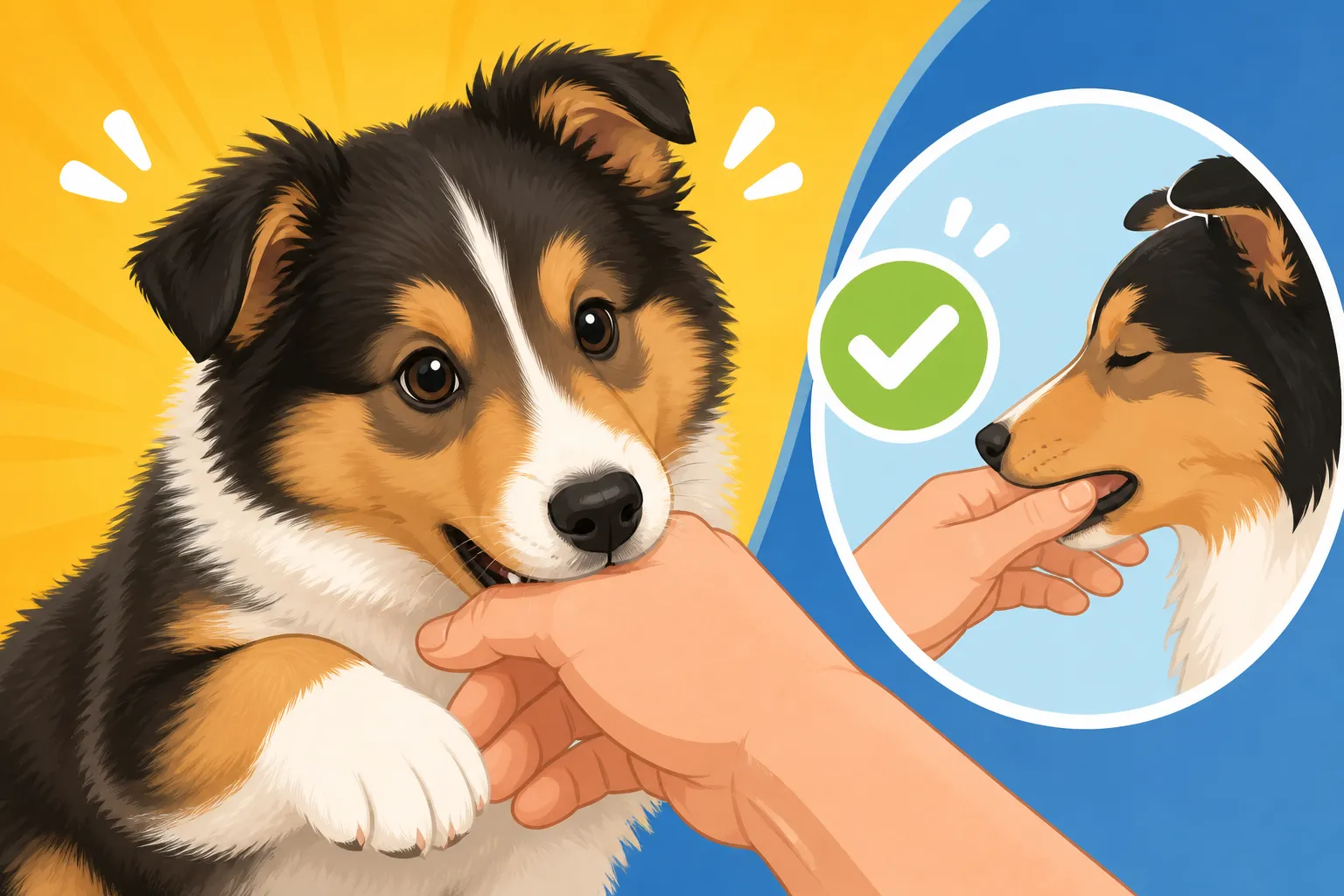
Imagine your Collie puppy in a litter. From the moment they're mobile, they're wrestling, tumbling, and yes, mouthing each other. This isn't malicious; it's how they learn the boundaries of play. When one puppy bites another too hard, the bitten puppy will yelp, pull away, and often stop playing. This immediate feedback teaches the mouthing puppy, "Oops, that was too much. If I want to keep playing, I need to be gentler." This is called bite inhibition, and it's a critical skill they start developing long before they come home with you.
Their mouths are their hands, their sensory organs, their tools for interaction. They explore new objects by mouthing them, much like human toddlers put everything in their mouths. A Collie, with its natural intelligence and curiosity, will use its mouth to investigate textures, temperatures, and how things (and people!) react to its playful nips. Understanding that this is a natural, developmental phase can help you approach it with patience rather than frustration.
Teething Troubles and Mouthy Stages
Beyond play, there's another major factor contributing to your Collie puppy's mouthing: teething. Just like human babies, puppies go through a period where their baby teeth fall out and their adult teeth emerge. This process can be quite uncomfortable for them, and chewing is their way of relieving the pressure and soreness in their gums.
A Collie puppy typically starts losing its baby teeth around 3-4 months of age, and the adult teeth continue to come in until they're about 6-7 months old. During this time, you might notice an increase in their desire to chew on everything – your hands, furniture legs, slippers, anything they can get their jaws around. This isn't just play mouthing; it's a genuine need to alleviate discomfort. Providing appropriate chew toys becomes paramount during this stage. If your puppy is particularly distressed, you might even try offering frozen treats or damp washcloths that have been twisted and frozen to soothe their aching gums. Remember, this intensely mouthy, teething phase is temporary, and with consistent guidance, your Collie will move past it.
Why Collie Puppies Mouth (and Why It Feels So Hard!)
It's one thing to know that mouthing is natural, but it's another to experience those needle-sharp puppy teeth on your skin. Collies, being bright and sensitive, quickly learn what works to get a reaction from you, and sometimes, those reactions inadvertently reinforce the very behavior we want to curb.
Communication and Attention Seeking
Collie puppies are highly social creatures, and they want to interact with you. Often, mouthing is their clumsy way of initiating play or seeking attention. Think about it: when your puppy lightly nips your hand, what's your immediate reaction? Usually, it's to pull your hand away, maybe say "no," or even just look at them. From a puppy's perspective, any reaction is attention. If they're bored, lonely, or just want to play, and a little nip gets your eye, they've learned something valuable (from their point of view).
This is why understanding your Collie's motivations is key. Are they bored? Have they not had enough mental stimulation or exercise for the day? Remember, Forty Five Minutes a Day, and Half of It in Its Head is a good rule of thumb for their activity needs. A tired, well-exercised, and mentally stimulated Collie puppy is far less likely to be a mouthy menace. Conversely, a puppy with pent-up energy might resort to mouthing as an outlet. They might jump up and mouth your clothes or hands as you walk by, or escalate their nips when you try to disengage. It's their way of saying, "Hey! I'm still here! Let's do something!"
Lack of Bite Inhibition
While puppies learn initial bite inhibition from their littermates, it's often not a perfect science. When they come to your home, it's your job to continue that education. Bite inhibition isn't about stopping them from biting entirely; it's about teaching them how hard they can bite without causing harm. A well-socialized adult Collie should be able to mouth a human hand gently, without breaking skin, even in play. This is a crucial life skill.
Without proper training, a Collie puppy might continue to bite with too much force because they haven't learned the consequences of hard bites from humans. Their skin is tougher than ours, so what feels like a painful nip to you might not even register as "too hard" for them. This is where your consistent and clear communication comes in. You need to simulate the feedback their littermates would have given, but in a way that your Collie understands without scaring them. Collies are intelligent and sensitive, so harsh punishment is not only ineffective but can be detrimental to their trust and development. Harsh Handling Breaks a Collie and It Does Not Come Back is absolutely true for this breed.
Gentle Mouth, Gentle Collie: Practical Strategies to Manage Mouthing
So, how do we teach our adorable, but sometimes toothy, Collie puppies to have a softer mouth? It comes down to consistency, redirection, and positive reinforcement. These strategies work beautifully with a Collie's intelligent and eager-to-please nature.
The "Yelp and Ignore" Method
This is perhaps the most classic and effective method for teaching bite inhibition, as it mimics how puppies learn from each other. When your Collie puppy mouths you too hard:
- Yelp: Let out a high-pitched "ouch!" or "yip!" immediately and loudly. Make it sound genuine, like you've been truly hurt.
- Withdraw Attention: Instantly remove your hand or body part from their mouth. If they continue to mouth, immediately stand up, turn your back, and completely disengage for 10-20 seconds. If they follow, calmly leave the room and close a door between you.
- Resume Interaction: Once your puppy is calm and quiet, or after the brief "time out," you can return and offer them a suitable chew toy. If they mouth gently, great! If they mouth too hard again, repeat the "yelp and ignore."
The key here is consistency. Everyone in the household needs to use this method, every single time. A single person allowing hard mouthing can undermine weeks of progress. Your Collie will quickly learn that gentle play continues, but hard bites mean the fun stops. This method respects the Collie's sensitivity and intelligence, teaching them cause and effect without fear or punishment.
Redirecting to Appropriate Chew Toys
Given that teething is a major factor, providing plenty of acceptable outlets for chewing is non-negotiable. Your Collie puppy needs to learn what is okay to chew on. Always have a variety of sturdy, puppy-safe chew toys readily available.
When your Collie puppy approaches with a mouthy intent, or if they start to nip, immediately redirect them to an appropriate chew toy. Praise them enthusiastically as soon as their mouth connects with the toy instead of your skin. This teaches them, "Ah, this is what I'm supposed to chew!"
Consider a range of textures and types. Some puppies love soft, plush toys, others prefer harder rubber or nylon chews. Puzzle toys, which dispense treats as your Collie works on them, are also excellent for mental stimulation and occupy their mouths. Brands readily available on sites like Amazon offer a huge selection of durable chew toys suitable for a growing Collie. Look for toys that are appropriately sized and durable enough to withstand sharp puppy teeth without breaking into small pieces.
| Chew Toy Type | Best For | Benefits | Considerations |
|---|---|---|---|
| Rubber Chew Toys | Moderate chewers, teething relief | Durable, can be filled with treats/peanut butter, bounce | Some can be too soft for power chewers |
| Nylon Chews | Heavy chewers, dental health | Long-lasting, different textures for gum massage | Can be hard, supervise to prevent splintering |
| Rope Toys | Playful tuggers, dental flossing | Interactive play, helps clean teeth | Avoid unsupervised chewing, can ingest strands |
| Puzzle Toys | Mental stimulation, boredom relief | Slows eating, redirects chewing energy | Requires supervision, choose appropriate difficulty |
| Frozen Treats | Soothing teething gums, short-term distraction | Provides relief, delicious! | Can be messy, offer only occasionally |
Positive Reinforcement for Calm Behavior
Collies thrive on positive reinforcement. They want to please you, and they respond incredibly well to praise, gentle petting, and treats. Don't just focus on stopping the unwanted behavior; actively reward the desired behavior.
When your Collie puppy is playing gently, or calmly accepting pets without mouthing, make a big deal about it! Use a happy, soft voice, offer a small, high-value treat, or give them a gentle scratch behind the ears. This reinforces that gentle interaction leads to good things. For instance, if you're sitting on the floor and your puppy comes over, reward them for just being near you without mouthing, or for licking your hand softly instead of nipping. This helps build a strong foundation of trust and understanding. Consider exploring online training programs, such as those offered by BAXTER & Bella, which often emphasize positive reinforcement techniques ideal for intelligent breeds like Collies, helping you to implement these strategies effectively at home.
Puppy Classes and Socialization
Enrolling your Collie puppy in a puppy kindergarten or socialization class is one of the best investments you can make. These classes provide a safe, structured environment for your puppy to interact with other puppies and learn crucial social skills, including bite inhibition. Under the watchful eye of a professional trainer, puppies can learn from each other in a way that's hard to replicate at home.
Trainers can also offer personalized advice and demonstrate techniques for managing mouthing. Furthermore, early and varied Where to Socialize a Collie Puppy experiences are vital for developing a well-adjusted and confident adult dog. The more positive experiences your puppy has with different people, sounds, sights, and other friendly dogs, the less likely they are to resort to excessive mouthing out of fear or over-excitement. These classes are not just about training commands; they're about teaching your Collie how to navigate the human world politely and confidently.
When Mouthing Becomes More Than Play: Recognizing Warning Signs
While most Collie puppy mouthing is normal, it's always wise to understand the subtle distinctions between enthusiastic puppy play and something more concerning. True aggression in a young Collie puppy is rare, but knowing the signs can help you address issues early if they arise.
Distinguishing Play Mouthing from Aggression
Play mouthing is generally accompanied by loose, wiggly body language, a relaxed open mouth, play bows, and often a soft gaze. The puppy might try to initiate games of chase or tug. Even if they nip a bit hard, they usually release quickly and respond to your "yelp." They might look surprised or even a little worried when you withdraw.
Aggressive biting, on the other hand, often involves different body language. You might see a stiff body, a direct hard stare, growling or snarling, baring of teeth (more than just an open mouth for play), or a reluctance to let go. The intent feels different; it's less about playful interaction and more about asserting dominance or fear. If your Collie puppy exhibits these more concerning behaviors, particularly if they are unresponsive to redirection or growl when you try to move them or take away an object, it's crucial to seek professional help immediately. A certified professional dog trainer or a veterinary behaviorist can help you assess the situation and develop a safe and effective plan. Remember, Collies are sensitive, and early intervention is key to resolving any behavioral issues.
Consistency and Management for Success
Managing a mouthy Collie puppy requires immense patience and unwavering consistency. It's a developmental phase, and they will grow out of the worst of the needle-teeth stage, but only with your guidance. Think of it as teaching a child manners – it doesn't happen overnight, but every consistent interaction builds on the last.
Beyond the specific training techniques, good overall management of your puppy's environment and routine can significantly reduce mouthing. Ensure your Collie puppy is getting enough age-appropriate exercise daily; How Much Exercise a Collie Needs Daily can vary, but regular activity helps drain that puppy energy. Mental stimulation through training sessions, puzzle toys, and new experiences is just as important as physical exercise. A bored Collie is often a mouthy Collie.
Also, establish a predictable routine. Whether a Collie Needs a Predictable Routine is an important question for any Collie owner, and the answer is usually yes! Structure and routine can provide comfort and confidence, reducing anxiety that might manifest as excessive mouthing. Use tools like baby gates or tethers to manage their access, especially when you can't give them your full attention. This prevents them from practicing unwanted behaviors on furniture or family members and teaches them to be calm when not actively engaged. The first year with your Collie puppy, as detailed in The First Year With a Collie Puppy, is a period of rapid development and learning, and consistent, gentle guidance during this time will shape them into the wonderful, well-mannered adult Collie you envision.
Disclaimer
This article is for general informational purposes only and does not constitute professional advice. Laws, prices and regulations vary by location and change over time. Consult a qualified professional for guidance on your specific situation.