What the Collie DNA Health Panel Covers
Bringing a Collie into your life is an incredible joy, but it also comes with a unique set of responsibilities, especially when it comes to their health. Many prospective and current owners feel overwhelmed by the sheer volume of information (and sometimes misinformation) regarding inherited conditions that can plague this beautiful breed. This comprehensive guide will meticulously walk you through what exactly a Collie DNA Health Panel covers, why each test is crucial, and how these insights empower you to provide the best possible care for your beloved companion.
Understanding the Importance of Genetic Testing for Collies
It's a tough truth that many purebred dogs, including our beloved Collies, are predisposed to certain genetic health conditions due to their breeding history. For generations, breeders focused on specific traits like temperament, appearance, and working ability, sometimes inadvertently concentrating genes that carry health risks. Genetic testing isn't about finding fault; it's about gaining knowledge, and knowledge truly is power when it comes to your dog's well-being. Knowing what lurks in their genetic code allows for proactive management, informed breeding decisions, and ensures you're never caught entirely off guard by a preventable crisis.
Why Genetic Testing Isn't Optional for Collies
For a Collie owner, especially if you're considering a puppy, genetic testing should be as fundamental as vaccination. It's not a luxury; it's a necessity. Unlike some breeds where genetic conditions might be minor or easily manageable, Collies carry a few particularly nasty genetic mutations that can have life-altering or even fatal consequences if ignored. Imagine taking your dog to the vet for a routine procedure or an unexpected illness, and a commonly prescribed medication turns out to be toxic because of an unknown genetic sensitivity. This isn't a hypothetical fear; it's a very real danger for Collies with the MDR1 mutation. Testing takes away the guesswork and replaces it with certainty, allowing you and your vet to make safe, informed decisions about their medical care.
Furthermore, responsible breeders view genetic testing as an ethical imperative. They don't just test their breeding stock to ensure healthy puppies; they use the results to make calculated pairing decisions that reduce the incidence of genetic diseases in future generations. If you're looking for a puppy, always ask about the parents' DNA health panel results. A reputable breeder will not only provide them but will also be eager to discuss what those results mean. This transparency is a hallmark of someone dedicated to the breed's long-term health, rather than just producing puppies for profit.
The Peace of Mind a Panel Offers
There's a quiet anxiety that often comes with loving a dog: the fear of the unknown, of what health challenges might lie ahead. While a DNA health panel can't predict every bump in the road, it can certainly eliminate a significant portion of that worry, particularly concerning inherited conditions. When you receive a "clear" result for a specific mutation, it means your dog doesn't carry that particular problematic gene, giving you tremendous relief. You no longer have to wonder if every stumble is the start of a neurological disorder or if a new medication will trigger a devastating reaction.
Even if your Collie tests as a "carrier" or "affected" for a condition, this isn't necessarily a death sentence or cause for despair. Instead, it provides a roadmap. For a carrier, it means they have one copy of the gene and usually won't show symptoms themselves, but passing it on is a possibility if bred. For an affected dog, it means they have two copies and are likely to develop the condition, but now you know what to look for and when to start proactive management or preventative care with your veterinarian. This foresight can literally add years of quality life to your dog and save you from countless emergency visits and emotional stress.
The Core Components of a Collie DNA Health Panel
When you order a comprehensive DNA health panel for a Collie, there are several key genetic conditions that will typically be screened. These are the "big hitters" that reputable breeders and knowledgeable owners are most concerned about due to their prevalence and potential impact on a Collie's quality of life. Understanding each of these tests and what they reveal is fundamental to truly grasping your Collie's genetic blueprint.
MDR1 Mutation: A Critical Concern
The Multi-Drug Resistance 1 (MDR1) gene mutation, also known as ABCB1, is arguably the most critical genetic test for any Collie. This mutation affects a protein called P-glycoprotein, which is responsible for pumping certain drugs and toxins out of the brain and other sensitive organs. When a Collie inherits two copies of this mutated gene (making them "affected"), this vital pump doesn't work correctly. This means that certain common medications, which are perfectly safe for other dogs, can build up to toxic levels in an MDR1-affected Collie's brain, leading to severe neurological symptoms, coma, or even death.
The list of drugs affected by the MDR1 mutation is extensive and includes common antiparasitics like Ivermectin (even in dosages found in some heartworm preventives), certain chemotherapy agents, pain medications like Loperamide, and even some sedatives and anesthetics. It's absolutely crucial that you know your Collie's MDR1 status before any medication is administered. If your dog is affected, your veterinarian needs to adjust dosages or select alternative drugs. Being aware of this can literally save your Collie's life, and it's why it's so important for your vet clinic to flag your Collie's chart at the clinic. For more in-depth information, you can read about what the MDR1 mutation actually does to a Collie and which drugs an MDR1 Collie must never have.
Collie Eye Anomaly CEA: More Than Just "Bad Eyes"
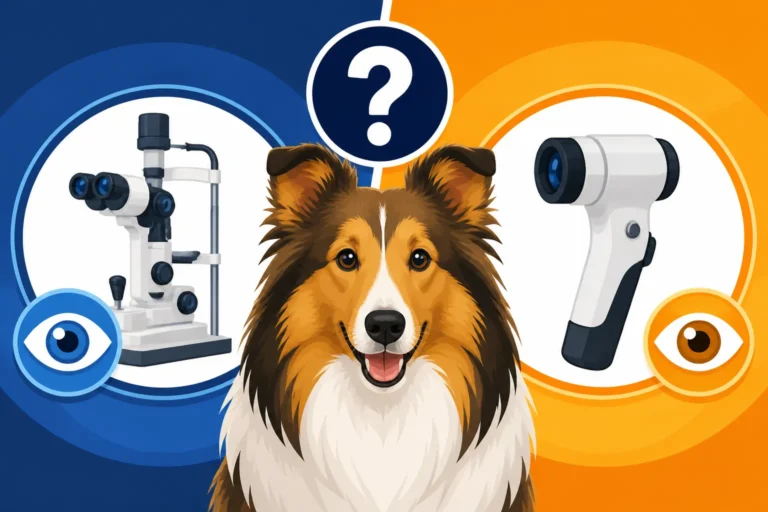
Collie Eye Anomaly (CEA), sometimes called Choroidal Hypoplasia (CH), is another prevalent genetic condition in the breed. This developmental defect affects the choroid, an important layer of tissue beneath the retina that supplies blood and nutrients to the eye. The severity of CEA can vary dramatically, from very mild cases that cause no vision impairment to severe cases leading to blindness. Unfortunately, a DNA test for CEA can only determine if a dog is genetically clear, a carrier, or affected, but it doesn't tell you the severity of the physical expression in an affected dog. For that, a physical eye exam by a board-certified veterinary ophthalmologist is essential, especially for puppies at 5-7 weeks of age before their adult coat fully develops, making examination difficult.
The spectrum of CEA ranges from subtle choroidal hypoplasia, which might go unnoticed by an untrained eye, to more serious conditions like colobomas (funnel-shaped defects in the optic nerve head), and even retinal detachments. While many Collies with mild CEA live full lives with excellent vision, those with severe colobomas or retinal detachments can experience significant vision loss or complete blindness. It's a common condition, affecting a significant portion of the breed, so understanding what Collie Eye Anomaly does to the back of the eye is truly important for every Collie owner.
Progressive Retinal Atrophy PRA: A Threat to Sight
Unlike CEA, which is a developmental anomaly, Progressive Retinal Atrophy (PRA) is a group of degenerative eye diseases that gradually lead to blindness. In Collies, there are several forms of PRA, with the DNA panel typically screening for the most common ones. PRA causes the photoreceptor cells in the retina (rods and cones), which are responsible for detecting light, to slowly degenerate. Initially, dogs may lose their night vision (rods affected), becoming hesitant in dim light. Over time, their daytime vision also deteriorates (cones affected), eventually leading to complete blindness.
The insidious nature of PRA is that it's typically progressive, meaning it gets worse over time, often starting in middle to later life. While a dog may adapt incredibly well to gradual vision loss, it's still heartbreaking for owners to watch. Knowing if your Collie carries genes for PRA allows you to be vigilant for early signs and prepare for accommodations your dog might need if their vision declines. Thankfully, not all Collies inherit this, but it's a vital part of a comprehensive health panel to rule out or be aware of.
Less Common, But Still Important Genetic Conditions
While MDR1 and CEA often get the most attention due to their prevalence and impact, a comprehensive Collie DNA health panel will also screen for several other genetic conditions. These might be rarer, but their potential impact on an affected dog is just as significant, if not more so. Ignoring these simply because they're less common would be a disservice to the meticulous genetic screening process.
Gray Collie Syndrome (Cyclic Neutropenia): A Rare but Devastating Disease
Gray Collie Syndrome, also known as Cyclic Neutropenia, is a truly heartbreaking condition that every Collie breeder and owner should be aware of, even though it is rare. This inherited immune disorder severely impacts a puppy's ability to fight off infections. Affected puppies have a cyclical deficiency in neutrophils, a type of white blood cell crucial for immune defense. These cycles occur every 10-14 days, during which the puppy becomes highly susceptible to bacterial infections.
Puppies with Gray Collie Syndrome are born with a distinctive dilute, silvery-gray coat, often mistaken for a blue merle, but without the typical merle patching. This is why why Gray Collie Syndrome puppies are silver is a crucial visual clue. They are usually the smallest in the litter and often suffer from chronic infections, fever, diarrhea, and joint pain. Sadly, most affected puppies do not survive past two to three years of age, often succumbing to overwhelming infections. While genetic testing has drastically reduced its incidence, it remains a critical test on a comprehensive panel to ensure no affected puppies are accidentally produced. Knowing what Cyclic Neutropenia does to a Collie puppy underscores the importance of this testing.
Dermatomyositis DMS: Skin, Coat, and Muscle Challenges
Dermatomyositis (DMS) is an immune-mediated inflammatory disease that primarily affects the skin, muscles, and sometimes blood vessels in Collies and Shetland Sheepdogs. The genetic inheritance of DMS is complex, involving multiple genes, which is why a genetic risk panel for DMS typically provides a "risk score" rather than a simple clear/carrier/affected result. This score helps breeders understand the likelihood of producing affected puppies. Affected dogs can develop lesions on their faces (especially around the eyes, muzzle, and ear tips), bony prominences, and tail. These lesions can manifest as hair loss, redness, crusting, and scarring.
Beyond skin issues, DMS can also cause muscle inflammation and atrophy, leading to weakness, difficulty swallowing, and a reluctance to exercise. The severity of DMS can vary widely, even among dogs with the same genetic risk. Flare-ups can be triggered by stress, sun exposure, or even certain illnesses. While there's no cure, management often involves medications to reduce inflammation and support the immune system. Understanding how Dermatomyositis risk is scored in a Collie is vital for breeders hoping to minimize this condition.
Von Willebrand Disease vWDII: Bleeding Disorders
Von Willebrand Disease (vWD) is the most common inherited bleeding disorder in dogs, and Collies are susceptible to Type II vWD (vWDII), although it is less common than in some other breeds like Doberman Pinschers. This condition is caused by a deficiency or defect in von Willebrand factor, a protein necessary for normal blood clotting. Dogs with vWDII can experience prolonged or excessive bleeding from minor cuts, during surgery (such as spaying or neutering), or even spontaneously from the gums or nose.
The severity of bleeding can range from mild to life-threatening. A Collie with vWDII might have unusual bruising, prolonged bleeding after losing a baby tooth, or heavy bleeding during a routine nail trim. Knowing your Collie's vWD status is especially critical before any surgical procedures. If a dog is affected, the veterinarian can take preventative measures, such as administering blood products rich in von Willebrand factor, to minimize bleeding risks during surgery. Genetic testing ensures that this hidden danger is uncovered well before an emergency arises.
How to Get Your Collie Tested and Understand the Results
Getting your Collie DNA tested is a remarkably straightforward process these days, a far cry from the complex procedures of decades past. Understanding not only how to perform the test but also how to interpret the results is crucial for maximizing the benefits of this genetic screening. It’s an empowering step that puts valuable health information right at your fingertips.
The Testing Process: From Swab to Results
The vast majority of comprehensive canine DNA health panels are performed using a simple cheek swab. You typically order a kit online from a reputable genetic testing laboratory specializing in canine health. Popular choices include Embark Veterinary and Optimal Selection (part of Wisdom Panel). When your kit arrives, it will contain sterile swabs and detailed instructions. The process involves gently rubbing the swab inside your Collie's cheek pouch for a specified amount of time to collect epithelial cells, which contain their DNA. It’s important to ensure your dog hasn't eaten or drunk anything for at least an hour prior to swabbing to avoid contaminating the sample with food particles.
Once you’ve collected the sample, you’ll typically register the kit online using a unique barcode and then mail it back to the laboratory in the provided packaging. The waiting period can vary, usually between 2 to 6 weeks, depending on the lab and their current volume. During this time, the lab extracts DNA from the cells and analyzes it for the specific genetic markers associated with the conditions covered by the Collie health panel. Finally, you’ll receive an email notification when your results are ready, accessible through your online account. The investment in this testing can really pay off in the long run by helping you manage potential health issues, and many owners consider pet insurance options, like those from Healthy Paws, to further safeguard their Collie's future. For those wondering about the practical side, rest assured that a cheek swab is enough for a Collie MDR1 test.
Interpreting Your Collie's Health Panel Results
Once your results are in, you'll see a report for each genetic condition tested, typically categorized as one of three main statuses:
- Clear/Normal: This is the ideal result. It means your Collie does not carry any copies of the mutated gene and cannot develop the associated genetic condition (unless it's a condition with complex inheritance like DMS, where "clear" might mean low risk). They also cannot pass the mutation on to any offspring.
- Carrier (Heterozygous): This means your Collie carries one copy of the mutated gene but usually possesses one normal copy as well. For most recessive genetic diseases, a carrier will not develop the disease themselves because the single normal gene provides sufficient function. However, they can pass the mutated gene to approximately 50% of their offspring. This status is critical for breeding decisions; carriers should only be bred to clear dogs to avoid producing affected puppies.
- Affected (Homozygous): This means your Collie has inherited two copies of the mutated gene (one from each parent). Dogs with this status are at high risk of developing or are already affected by the condition. For recessive conditions, affected dogs will always pass one copy of the mutated gene to all of their offspring.
It’s important to read the detailed explanations provided by the testing laboratory for each specific condition, as nuances exist. For instance, with Dermatomyositis, the results typically provide a risk score rather than a simple affected status, due to the polygenic nature of the disease. Understanding these distinctions is key to truly grasping your Collie's genetic profile and making informed decisions about their care or potential breeding. This is part of a larger discussion about the three genetic tests a Collie breeder owes you if you are acquiring a puppy.
Communicating Results with Your Veterinarian
Receiving your Collie's DNA health panel results is a fantastic first step, but it's not the last. The next crucial action is to share these results with your veterinarian. Think of your vet as the co-pilot in your Collie's health journey; they need all the data available to navigate effectively. Simply print out the comprehensive report or share the digital link with your clinic. Many clinics will then add these results to your Collie's permanent medical file. This is especially vital for conditions like MDR1, where specific medications must be avoided or carefully dosed.
Discussing the results with your vet allows them to tailor your Collie's preventative care, emergency protocols, and treatment plans. For instance, if your Collie is an MDR1 carrier or affected, your vet will ensure all staff are aware and that no contraindicated medications are used. If your dog is affected with a condition like CEA or PRA, your vet can recommend specialized ophthalmic exams or help you prepare for managing potential vision loss. Don't assume your vet "just knows" about Collie-specific genetic issues; proactively providing them with your dog's specific genetic blueprint empowers them to provide the safest and most effective care. This proactive communication is a key aspect of how a Collie owner tells the vet about MDR1.
Beyond the Panel: Ongoing Health Management for Collies
A DNA health panel provides an invaluable snapshot of your Collie's genetic predispositions, but it's just one piece of the puzzle in their lifelong health journey. While it illuminates potential inherited risks, it doesn't cover every possible health issue that can arise, nor does it replace vigilant everyday care. Proactive health management involves a holistic approach, encompassing responsible breeding practices and consistent, quality veterinary care throughout your Collie's life.
The Role of a Responsible Breeder
The foundation of a healthy Collie often begins with a responsible breeder. A truly dedicated breeder views genetic testing not as a burden, but as an essential tool to improve the breed's health. They will screen all their breeding stock for relevant genetic conditions, including those covered by a comprehensive Collie DNA health panel. But they go beyond just testing; they understand the results and use them to make informed decisions about which dogs to pair. For example, a responsible breeder would never breed two carriers of a recessive disease together, as this carries a 25% chance of producing affected puppies. Instead, they would breed a carrier to a "clear" dog, ensuring no affected puppies are produced, though some may still be carriers.
Furthermore, a responsible breeder will be transparent about their testing practices and eager to share the health clearances of the puppy's parents. They will also educate prospective owners about the significance of these tests and any known genetic risks within their lines. Their commitment extends to providing ongoing support and guidance, demonstrating that their priority is the health and welfare of every puppy they bring into the world. This is a crucial distinction from backyard breeders or puppy mills, who often cut corners on health testing to maximize profit, leaving owners to deal with potentially devastating health issues. If you're looking into adding a Collie to your family, understanding what a health tested Collie puppy costs can help you set realistic expectations.
Lifelong Veterinary Care and Monitoring
Even if your Collie comes from meticulously tested parents and receives a "clear" result on every genetic test, consistent lifelong veterinary care remains paramount. Genetic tests provide insight into inherited conditions, but they don't prevent acquired diseases, injuries, or the natural aging process. Regular wellness exams are crucial for monitoring overall health, addressing dental care, maintaining appropriate vaccinations, and discussing parasite prevention. Your vet can spot subtle changes that might indicate an emerging health issue, from a slight limp that could point to hip dysplasia (which Collies can be prone to, though not typically covered by standard DNA panels) to a change in coat quality that might signal a thyroid issue.
As your Collie ages, their veterinary needs will naturally evolve. Senior Collies, typically considered over the age of nine, often benefit from more frequent check-ups, specialized diets, and monitoring for common age-related conditions like arthritis, kidney disease, or cancer. Ensuring your Collie has a healthy diet, gets appropriate exercise for their age and condition, and receives regular professional grooming (especially for Rough Collies) also contributes significantly to their overall well-being. A good pet insurance policy, perhaps from a provider like Healthy Paws, can be invaluable in managing the costs associated with both routine senior care and any unexpected health challenges that may arise throughout your Collie's life. Always remember that a DNA panel is a tool, not a guarantee against all future ailments, and proactive veterinary partnership is key. Caring for a Collie past nine becomes a different kind of commitment, as discussed in caring for a Collie past nine.
Collie DNA Health Panel Overview
To help summarize the crucial information, here's a table outlining the common genetic conditions covered in a comprehensive Collie DNA Health Panel, along with their general symptoms and how they are typically inherited.
| Condition | Affected Genes / Type of Condition | Inheritance Pattern | General Symptoms (Affected Dogs) | Management / Impact on Life |
|---|---|---|---|---|
| MDR1 Mutation | ABCB1 gene / Drug sensitivity | Autosomal Recessive | Severe neurological toxicity (seizures, coma, death) from common drugs (e.g., Ivermectin, Loperamide, some sedatives/anesthetics) | Strict avoidance/dosage adjustment of contraindicated drugs; critical for vet awareness; lifelong caution. |
| Collie Eye Anomaly (CEA) | NHEJ1 gene / Eye development defect | Autosomal Recessive | Varied: Mild choroidal hypoplasia, colobomas (optic nerve defects), retinal detachment, vision impairment to blindness. | Early vet ophthalmologist exam (5-7 weeks); severity varies; no cure, but mild cases often don't affect vision. |
| Progressive Retinal Atrophy (PRA) | Various genes / Retinal degeneration | Autosomal Recessive | Gradual loss of night vision, then day vision; eventual blindness. | Progressive condition; no cure; management involves environmental adaptations for vision loss. |
| Gray Collie Syndrome (Cyclic Neutropenia) | AP3B1 gene / Immune system disorder | Autosomal Recessive | Cyclical fever, diarrhea, joint pain, chronic infections, stunted growth; often fatal in early life. | Rare but devastating; aggressive antibiotic treatment during neutropenic cycles; poor long-term prognosis. |
| Dermatomyositis (DMS) | Multiple genes (risk factors) / Immune-mediated inflammatory | Polygenic (complex) | Skin lesions (hair loss, redness, crusting, scarring) on face, ears, bony prominences; muscle atrophy, weakness. | Management with immunosuppressants; sun protection; severity varies; often lifelong condition with flare-ups. |
| Von Willebrand Disease (vWDII) | VWF gene / Bleeding disorder | Autosomal Recessive | Excessive or prolonged bleeding from minor cuts, surgery, or spontaneously (nosebleeds, bruising). | Critical pre-surgical screening; preventative measures (e.g., blood products) if affected; lifelong management of bleeding risk. |
This table provides a snapshot, but each condition has depths of detail worth exploring, and your veterinarian remains your best resource for personalized advice. Ensuring your Collie has regular check-ups and is covered by a comprehensive plan, like those offered by Healthy Paws, can ease the financial burden of managing any of these conditions.
Disclaimer
The information provided in this article is for educational and informational purposes only, and does not constitute veterinary medical advice. Always consult with a qualified veterinarian for any health concerns or before making any decisions related to your Collie's health or treatment. Individual results and recommendations may vary.