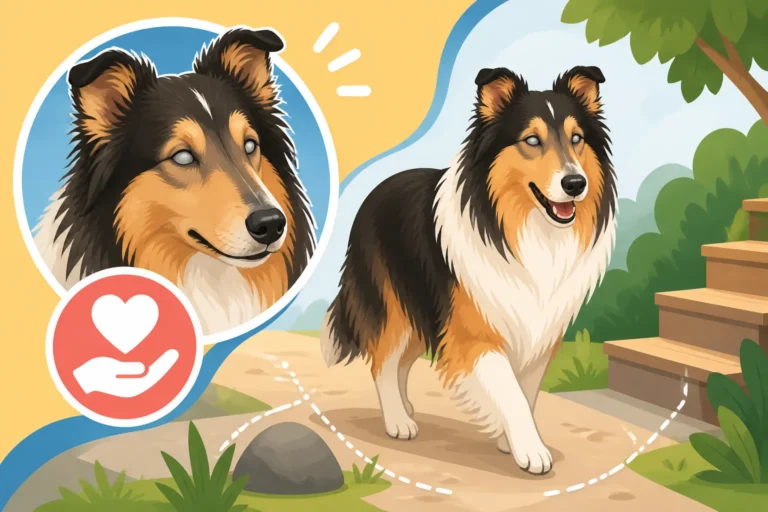
Whether a Collie’s Dermatomyositis Risk Can Be Bred Down
It's heartbreaking to watch your beloved Collie develop painful skin lesions, muscle atrophy, and scarring, knowing it's a condition rooted deep in their genetics. The question that haunts every responsible Collie owner and breeder is whether we can actually do something to stop this cycle. This guide will delve deep into Dermatomyositis (DMS) in Collies and explore the complex, often frustrating, journey of breeding down the risk for this inherited disease.
Understanding Dermatomyositis in Collies
Dermatomyositis, or DMS, is a devastating autoimmune disease that primarily affects the skin, muscles, and sometimes blood vessels in Collies and Shetland Sheepdogs. It's a condition that can manifest in varying degrees of severity, from mild skin lesions that clear up quickly to debilitating muscle wastage and severe scarring, profoundly impacting a dog's quality of life. The reality is, if you own a Collie, understanding DMS is crucial, as the breed has a known predisposition.
The Clinical Manifestations of DMS
When DMS shows up in a Collie, it's typically a sight that can cause significant distress. The first signs often appear around the face, especially the eyelids, lips, and ear tips, as well as on pressure points like the elbows, hocks, and tail tip. You might notice thinning hair, redness, crusting, and even open sores. These lesions can be incredibly itchy and painful, leading your dog to scratch or rub, which only exacerbates the problem and can lead to secondary bacterial infections. I've seen dogs with raw, weeping patches around their eyes that made them look absolutely miserable.
Beyond the skin, DMS is also a disease of the muscles. In more severe cases, Collies can experience muscle atrophy, particularly in the head and limbs. This can make simple acts like chewing or walking difficult. Imagine your dog struggling to eat their favorite kibble or stumbling during their daily walk; it's a grim picture. This muscle involvement is why early diagnosis and management are so important, as long-term inflammation can lead to irreversible damage and scarring. It's not just a "skin problem"; it's a systemic issue that impacts their overall well-being. Knowing The Weeks a Collie Puppy First Shows Dermatomyositis can help in early identification.
What Makes Collies Prone to DMS
Collies, both Rough and Smooth, carry a genetic predisposition to DMS, which is why it's such a central concern within the breed community. It’s not just bad luck; it’s woven into their genetic fabric. The research into this condition has identified specific genetic markers that are associated with varying levels of risk. This isn't a simple dominant or recessive gene situation; it's polygenic, meaning multiple genes contribute to the overall risk and expression of the disease. This complexity is what makes breeding out DMS such a monumental task, and why breeders are often left scratching their heads, even when they're trying their absolute best.
The interplay of these genes means that even dogs with certain risk factors might never develop overt symptoms, while others with seemingly lower risk combinations can be severely affected. Environmental factors, like stress and sun exposure, can also act as triggers or worsen existing conditions, adding another layer of complexity. This means a dog’s genetic blueprint sets the stage, but life experiences can sometimes influence the severity and timing of the disease. For owners with affected dogs, managing Whether Sun Makes a Collie's Dermatomyositis Worse and Whether Stress Triggers a Collie's Skin Flare becomes part of daily care.
The Genetic Basis of Dermatomyositis Risk
The scientific community has made significant strides in uncovering the genetic underpinnings of DMS in Collies, moving us beyond mere speculation. We now know that the risk isn't tied to a single, easily identifiable gene but rather a combination of specific markers across different chromosomes. This polygenic inheritance pattern is what makes developing a clear-cut breeding strategy so challenging, yet simultaneously offers hope through targeted genetic testing.
Identifying the Contributing Genes
Current research indicates that Whether a Collie's DMS Risk Comes From Three Genes is a crucial piece of the puzzle. Specifically, three genetic loci (places on the chromosome) have been identified as having a major influence on a Collie's susceptibility to DMS. These are named A, B, and C. Each locus has different variants, and the combination of these variants determines a dog's overall genetic risk score. It’s not about finding one "bad gene" and eliminating it; it's about understanding the intricate dance between these different genetic contributors.
For instance, a dog might have a "low risk" variant at one locus but a "high risk" variant at another. The challenge lies in interpreting these combinations and understanding their cumulative effect. This is precisely why the genetic testing available today provides a risk score rather than a simple "yes" or "no" answer for the presence of the disease itself. It tells us about the potential for the disease, which is incredibly valuable for breeders but also adds a layer of nuance to interpreting results. This complex genetic picture helps explain why Whether Two Low Risk Collies Can Produce an Affected Puppy is indeed a possibility, making risk reduction a continuous, careful process.
Interpreting Risk Scores from Genetic Tests
Once a Collie undergoes genetic testing for DMS, they receive a risk score, typically ranging from low to high, based on the specific combination of alleles they possess at the A, B, and C loci. For example, a dog might be classified as "Low Risk," "Moderate Risk," or "High Risk." Understanding How Dermatomyositis Risk Is Scored in a Collie is vital for any owner or breeder. A "Low Risk" designation means the dog has the least concerning combination of alleles and is statistically less likely to develop DMS. However, it's essential to remember that "low risk" does not mean "no risk." The disease can still manifest, albeit rarely, in dogs with low genetic risk scores, due to incomplete penetrance or the influence of environmental factors.
Conversely, a "High Risk" dog possesses allele combinations that significantly increase their likelihood of developing clinical signs of DMS. These are the dogs that are most likely to show skin lesions, muscle atrophy, and other symptoms. Moderate risk dogs fall somewhere in between, with a noticeable but not overwhelming predisposition. This nuanced scoring system is a tool, not a crystal ball. It empowers breeders to make informed decisions, but it doesn't offer a foolproof guarantee. It's about playing the odds as intelligently as possible to improve the health of future generations.
Breeding Strategies to Reduce DMS Risk
Armed with genetic testing, breeders now have a powerful tool to make more informed decisions when planning litters. The goal is to reduce the incidence of DMS without inadvertently shrinking the gene pool to an unhealthy degree. This requires a balanced, thoughtful approach that prioritizes health while maintaining the breed's overall genetic diversity.
Selecting Breeding Stock Based on Risk Scores
The most direct way to attempt to breed down DMS risk is through careful selection of breeding stock. Breeders can utilize the DMS genetic risk panel, which is part of The Three Genetic Tests a Collie Breeder Owes You, to assess the genetic makeup of potential parents. The ideal scenario would be to only breed "Low Risk" individuals, but in practice, this isn't always feasible or advisable due to the need to maintain other desirable traits and genetic diversity.
A common strategy involves pairing a "High Risk" dog with a "Low Risk" dog, or two "Moderate Risk" dogs, with the aim of producing puppies with lower overall risk scores. For instance, a breeder might have an otherwise exceptional show-quality female with a moderate risk score. To minimize the chances of producing affected offspring, they would seek a stud dog with a very low risk score for DMS. The idea is to dilute the unfavorable genes with more favorable ones, statistically reducing the likelihood of high-risk combinations appearing in the puppies. This isn't about eliminating every single dog with a moderate or high-risk score from the breeding pool immediately, but rather about making educated decisions to gradually shift the breed's overall genetic predisposition towards lower risk.
The Challenges of Polygenic Inheritance
While genetic testing offers hope, the polygenic nature of DMS presents significant challenges. Unlike simple recessive conditions where two carriers can be bred to produce 25% affected offspring, DMS's multiple gene involvement means the outcomes are less predictable. You might breed two "Low Risk" dogs together and still, occasionally, get a puppy with a moderate risk score, or even, rarely, one that develops mild symptoms. This can be incredibly frustrating for breeders who are doing everything right on paper.
Furthermore, focusing solely on DMS risk could inadvertently lead to a bottleneck in the gene pool. If every breeder immediately removed all moderate and high-risk dogs from their programs, even if those dogs are otherwise healthy and possess other valuable traits (like excellent temperament, structure, or freedom from other genetic diseases like Collie Eye Anomaly Affects Most Collies, So Ask How Badly or Assume Your Collie Has the MDR1 Mutation), the genetic diversity of the breed could suffer. A smaller gene pool can lead to other genetic problems becoming more prevalent down the line. Therefore, breeders must consider DMS risk as one piece of a larger health and breed type puzzle, carefully balancing the desire to reduce DMS with the broader health and vitality of the Collie breed.
Tools and Resources for Responsible Breeding
To effectively breed down Dermatomyositis risk, Collie breeders need access to reliable genetic testing, support from breed clubs, and a clear understanding of how to use these tools responsibly. These resources empower breeders to make informed decisions that can gradually improve the health of the breed.
Genetic Testing Panels
The primary tool for assessing DMS risk is the specific genetic test panel developed for Collies. This test, often offered by veterinary genetics laboratories, analyzes a dog's DNA for the key genetic markers (A, B, C loci) associated with DMS susceptibility. Companies like Canine Genetic Diseases Network at Clemson University or OptiGen provide such testing. The process is usually straightforward: a cheek swab or blood sample is collected by a veterinarian and sent to the lab. The results then provide a risk score, classifying the dog as low, moderate, or high risk for developing DMS.
This test is invaluable for any Collie breeder committed to health. It allows them to understand the genetic contribution of each potential parent to their offspring's DMS risk. While it doesn't guarantee a puppy won't develop DMS, it significantly improves the odds of producing lower-risk puppies. Prospective puppy buyers should also ask breeders for proof of these health screenings, including the Dermatomyositis and the Collie Risk Panel results, as part of their due diligence. This transparency helps ensure you're getting a puppy from a responsible program that actively works to reduce inherited disease risk.
Utilizing Health Databases and Registries
Beyond individual testing, breed-specific health databases and registries play a crucial role in collecting and disseminating health information. Organizations like the Orthopedic Foundation for Animals (OFA) maintain public databases where breeders can submit their Collie's health test results, including DMS risk scores, eye certifications, and other genetic screenings. This allows potential buyers and other breeders to research the health clearances of a dog's lineage.
| DMS Risk Score | Likelihood of Developing Symptoms | Breeding Recommendation (General Guidance) |
|---|---|---|
| Low Risk | Very Low | Can be bred to any risk level, ideally Low/Moderate |
| Moderate Risk | Moderate to Low | Breed only to Low Risk dogs |
| High Risk | High | Breed only to Low Risk dogs; consider if valuable traits outweigh risk |
These registries foster transparency and accountability within the breeding community. By making health data publicly accessible, they encourage breeders to test their dogs and to use the results to make responsible breeding decisions. This collective effort, facilitated by transparent databases, is essential for truly breeding down the risk of complex conditions like DMS across the entire breed. It's a testament to the dedication of the Collie community, often supported by organizations like the What the Collie Health Foundation Funds, that such resources exist to improve canine health.
The Long-Term Outlook for Reducing DMS
Breeding down the risk for Dermatomyositis in Collies isn't a quick fix; it's a long-term commitment that requires patience, dedication, and continued scientific advancement. The good news is that with the tools we have now, significant progress can be made.
Gradual Reduction and Monitoring
The goal of breeding programs isn't necessarily to completely eradicate DMS in one generation, which is often impossible with polygenic conditions, but rather to achieve a gradual, sustained reduction in its prevalence and severity. This means that breeders will continue to select breeding pairs based on their DMS risk scores, aiming to produce fewer high-risk puppies over time. It's like slowly steering a large ship; you don't turn it on a dime, but consistent, small adjustments eventually change its course dramatically.
Monitoring is also key. Breeders should maintain open communication with puppy buyers about any health issues that arise, including potential DMS symptoms. This feedback loop is invaluable for assessing the effectiveness of breeding strategies. If a particular pairing consistently produces puppies that develop DMS, even if the parents had theoretically "acceptable" risk scores, it provides crucial data that informs future breeding decisions. This ongoing commitment to data collection and analysis is what truly drives progress in reducing genetic disease.
Future Research and Genetic Discoveries
The scientific understanding of DMS is still evolving, and future research promises even more precise tools. As geneticists continue to explore the canine genome, it's possible that additional genetic markers contributing to DMS risk will be identified, or that our understanding of the existing markers will deepen. This could lead to more refined risk assessments, allowing breeders to make even more accurate predictions and selections.
For instance, ongoing studies might uncover modifier genes that influence the severity of the disease, or genes that offer protection even in the presence of risk factors. This could revolutionize breeding strategies, moving from broad risk categories to highly personalized genetic profiles for each dog. Organizations such as the Collie Health Foundation are often at the forefront of funding this critical research. As an owner, if your Collie needs costly veterinary care for conditions like DMS, having a robust pet insurance plan like those offered by Healthy Paws can provide much-needed financial relief, ensuring you can afford the best treatment for your beloved companion. The future of breeding healthier Collies relies heavily on this continuous scientific exploration and the dedication of breeders to apply new knowledge ethically and effectively.
Living with a Collie Affected by DMS
Even with the best breeding practices, some Collies may still develop Dermatomyositis. For owners of these dogs, understanding how to manage the condition and provide the best quality of life is paramount.
Managing Symptoms and Quality of Life
If your Collie is diagnosed with DMS, the focus shifts to managing their symptoms and ensuring their comfort. This often involves a multi-faceted approach. Topically, your veterinarian might prescribe medicated shampoos, creams, or ointments to soothe skin lesions, reduce inflammation, and prevent secondary infections. For more severe cases, systemic medications, such as corticosteroids or immunosuppressants, may be necessary to control the autoimmune response. It's important to remember Whether a Collie's Dermatomyositis Needs Lifelong Medication is often the case for many affected individuals, and careful management with your vet is key.
Environmental management plays a significant role too. Limiting sun exposure, especially during peak UV hours, can help prevent flare-ups, as direct sunlight is known to exacerbate skin lesions. Soft bedding and protective clothing might also be recommended to prevent trauma to affected skin areas. Regular veterinary check-ups are essential to monitor the disease's progression, adjust medication as needed, and address any secondary issues that arise. Being proactive and working closely with your vet can make a world of difference in your Collie's comfort and well-being. And again, having pet insurance from providers like Healthy Paws can be invaluable when facing ongoing medication costs and specialist visits for a chronic condition like DMS.
Support for Owners and Breeders
Dealing with a Collie affected by DMS can be emotionally and financially challenging. Fortunately, there are support networks available. Breed clubs, online forums, and social media groups dedicated to Collies and their health often provide a platform for owners to share experiences, ask questions, and offer mutual support. Connecting with others who understand the unique challenges of DMS can be incredibly validating and provide practical advice.
Breeders, too, face immense pressure and responsibility. Reputable breeders often remain a resource for their puppy buyers throughout the dog's life, and a diagnosis of DMS in an offspring can be a learning experience that informs future breeding decisions. The Collie Health Foundation is another excellent resource, offering information, supporting research, and sometimes even providing financial aid for specific health conditions. Remember, you're not alone in this journey. Whether it's the frustration of Whether a Collie With Dermatomyositis Loses Muscle or the despair of seeing persistent skin lesions, leaning on your community and professional resources can help navigate the complexities of living with DMS. An early diagnosis and treatment can sometimes prevent Whether a Collie's Skin Lesions Scar Permanently, making prompt vet visits crucial.
Disclaimer
The information provided in this article is for educational and informational purposes only and does not constitute veterinary advice. Always consult with a qualified veterinarian for any health concerns or before making any decisions about your dog's care or breeding program. Genetic testing results should always be interpreted in consultation with a veterinary professional or genetic counselor.