Whether a Collie Breeder Provides an Eye Certificate
Finding a Collie puppy can be an incredibly exciting time, but the joy can quickly turn into anxiety when you start navigating the labyrinth of health clearances. One of the most common points of confusion for prospective owners is whether a breeder should provide an eye certificate for their puppies and what that actually means. It's a valid concern, as eye health is paramount in Collies, and understanding this crucial documentation can protect both your peace of mind and your future furry family member. This guide will meticulously break down why eye certifications matter, what to expect from a responsible breeder, and how to navigate the process to ensure you're making an informed decision.
Understanding the Importance of Eye Certifications for Collies
When you fall in love with a Collie, whether it's their stunning coat, their gentle nature, or their intelligent gaze, you're also taking on the responsibility of understanding their breed-specific health predispositions. Eye conditions, unfortunately, are quite common in our beloved Collies, making eye certifications a non-negotiable part of responsible breeding.
Why Eye Health is Crucial in Collies
Collies are known for their striking eyes, but beneath that beauty lies a genetic predisposition to several eye conditions. The most prevalent and well-known is Collie Eye Anomaly (CEA), also sometimes called Choroidal Hypoplasia (CH). This isn't just a minor issue; CEA is a congenital, inherited condition that affects the choroid, an important layer of tissue beneath the retina. Depending on its severity, it can range from barely noticeable, causing minimal vision impairment, to severe, leading to retinal detachment and blindness. Imagine bringing home a puppy, only to discover later that their vision is deteriorating, or worse, that they're already blind. It's heartbreaking, and entirely preventable with proper screening.
Beyond CEA, Collies can also be prone to conditions like Progressive Retinal Atrophy (PRA), although DNA testing has made significant strides in reducing its prevalence, and other structural abnormalities. These conditions can severely impact a dog's quality of life and lead to significant veterinary expenses down the line. A responsible breeder knows these risks inside and out, and they take proactive steps to minimize them in their breeding program. This isn't just about selling a healthy puppy; it's about the long-term health and integrity of the entire breed. You can learn more about Collie Eye Anomaly Affects Most Collies, So Ask How Badly in our dedicated article.
What an Eye Certificate Actually Means
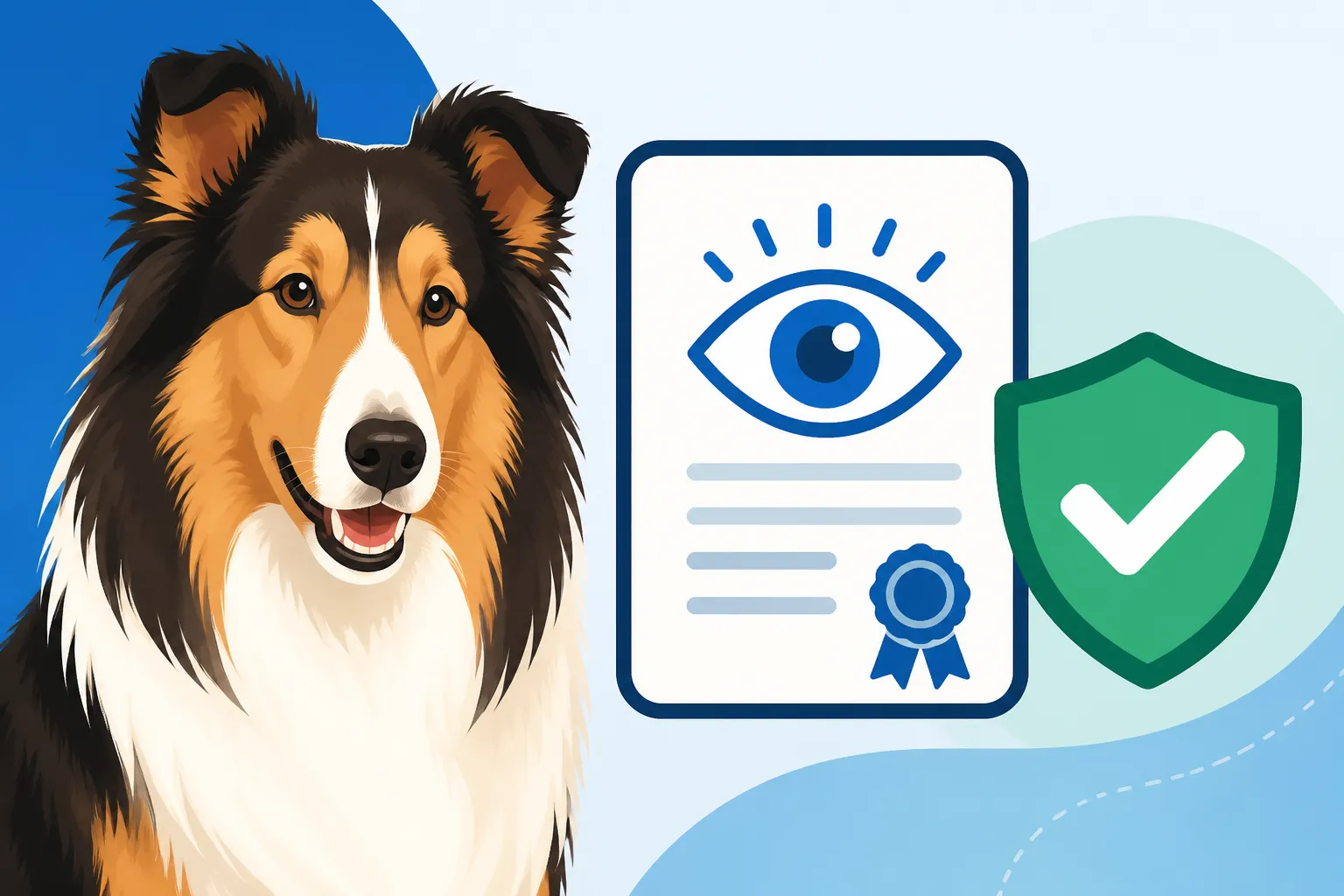
So, what exactly is an eye certificate when we're talking about Collies? It’s not just a general veterinarian glancing at the puppy’s eyes. A true eye certificate is a formal document issued by a board-certified veterinary ophthalmologist. These specialists have undergone extensive additional training beyond veterinary school, specifically focusing on the eyes. They use specialized equipment to conduct a thorough examination of the puppy's eyes, looking for any signs of inherited eye diseases.
In the United States, these examinations are typically conducted as part of the Canine Eye Certification Registry (CAER) program, which is managed by the Orthopedic Foundation for Animals (OFA). Previously, it was often referred to as a CERF (Canine Eye Registration Foundation) exam. Regardless of the acronym, the process involves a qualified ophthalmologist examining puppies between five and eight weeks of age. This specific timeframe is critical because some signs of CEA, for instance, can be masked by retinal pigmentation later in life, a phenomenon known as "going normal." The certificate will detail the findings for each eye, note any abnormalities observed, and provide a clear statement on whether the puppy is "Clear" (meaning no observable inherited eye disease at the time of examination) or "Affected" by any condition. Understanding Why a Collie Puppy Is Eye Checked at Five to Five Weeks is key to appreciating this timeline.
The Role of a Responsible Collie Breeder in Eye Health
When you're looking for a Collie puppy, the breeder is your first and most important line of defense against preventable health issues. A truly responsible breeder goes above and beyond to ensure the health and well-being of their dogs, and providing eye certifications is a cornerstone of that commitment.
Ethical Breeders and Eye Certifications
An ethical Collie breeder understands that health testing isn't just a suggestion; it's a fundamental responsibility. They will ensure that both parent dogs have received regular eye examinations by a board-certified veterinary ophthalmologist and have been deemed free of inheritable eye conditions before breeding. This is not a one-time thing; these exams are usually repeated annually for breeding stock to ensure continued clear health. It's like a family doctor regularly checking on you, but for your dog's eyes.
When you inquire about a puppy, a responsible breeder should readily provide you with copies of these eye certificates for both the parents and the individual puppy you are interested in. They won't just tell you the parents are "clear"; they'll show you the official documentation, often listing the dogs by their registered names and registration numbers with organizations like the AKC (American Kennel Club) and the OFA. This transparency is crucial. They should also be able to explain the certificates in detail, answering any questions you have about the findings, the ophthalmologist's signature, and the date of the exam. This level of detail confirms their dedication to producing healthy puppies. They should be proud to share this information, as it reflects their investment in the breed's future. You should also expect them to provide documentation for The Three Genetic Tests a Collie Breeder Owes You, beyond just eye certificates.
Interpreting Eye Certificate Results
Navigating the jargon on an eye certificate can feel like deciphering an ancient scroll, but a good breeder will guide you through it. For CEA, you might see terms like "Normal," "Choroidal Hypoplasia (CH) – Mildly Affected," "CH – Moderately Affected," or "CH – Severely Affected."
Here's a quick breakdown of what you might see:
| Term on Certificate | Meaning | Implications |
|---|---|---|
| Normal (Go Normal) | This means the veterinary ophthalmologist found no observable signs of inherited eye disease, specifically CEA, at the time of examination. For Collies, this can sometimes be a "Go Normal" designation, meaning signs of CEA were present but masked by pigment. | A puppy designated "Normal" or "Go Normal" has the best prognosis for vision. It's crucial for breeding stock. You can dive deeper into What Go Normal Means in a Collie's Eye Exam. |
| Choroidal Hypoplasia (CH) – Mildly Affected | The choroid layer is thinner than normal, but the condition is subtle. Often, vision is not significantly impacted, or only slightly reduced in low light. | Most mildly affected Collies live a full life with normal vision. However, they should not be bred to other affected dogs to prevent more severe forms. Whether a Mildly Affected Collie Goes Blind is a common concern. |
| Choroidal Hypoplasia (CH) – Moderately Affected | More noticeable thinning of the choroid, potentially with some visible blood vessels or changes to the optic disc. Vision can be slightly to moderately impaired, especially in peripheral fields. | Vision may be reduced, and the dog may struggle in certain lighting conditions. Still, many adapt well. Breeding should be avoided. |
| Choroidal Hypoplasia (CH) – Severely Affected | Significant malformation or thinning of the choroid. This can be associated with colobomas (holes in the optic nerve or retina), retinal detachment, or intraocular hemorrhage. Vision is significantly impaired or the dog may be blind. | These dogs are at high risk for serious vision problems, including blindness, and are usually identified early. Breeding should be avoided entirely. |
| Progressive Retinal Atrophy (PRA) | While less common in Collies than CEA, if present, it means the photoreceptor cells in the retina are degenerating, leading to night blindness and eventually complete blindness. This is often screened via DNA test. | A very serious condition leading to eventual blindness. Affected dogs should never be bred. |
It's important to understand that an eye certificate is a snapshot in time. While it's generally reliable for conditions like CEA, it doesn't guarantee a lifetime free of all eye problems, as some conditions can develop later or be influenced by environmental factors. However, it's the gold standard for identifying inherited issues early. The depth of What Collie Eye Anomaly Does to the Back of the Eye is fascinating but also underscores the seriousness of this condition.
What to Do If a Breeder Doesn't Offer an Eye Certificate
Unfortunately, not all breeders are created equal. You might encounter situations where a breeder is less than forthcoming with health documentation, or even outright dismissive of its importance. This is where your vigilance becomes crucial.
Red Flags and Questions to Ask
If a breeder seems hesitant, makes excuses, or flat-out refuses to provide eye certificates for their breeding dogs and puppies, consider it a major red flag. They might say things like, "My vet says their eyes are fine," or "We don't believe in all that fancy testing." These are not acceptable responses. A general vet exam is not the same as an ophthalmologist's certification. The absence of proper documentation often indicates either ignorance about breed-specific health issues or an unwillingness to invest in the necessary health screening. Both scenarios should give you pause.
Here are some critical questions to ask:
- "Can I see the OFA/CAER eye certificates for both parents, including the report numbers?"
- "At what age were the puppies' eyes examined by the veterinary ophthalmologist?"
- "Will you provide a copy of my puppy's individual eye exam certificate with the purchase?"
- "What are your thoughts on Whether a Collie's Eye Test Can Be Done by DNA Instead for CEA, and do you use it?" (Note: While DNA tests exist for CEA, the physical exam by an ophthalmologist is still the definitive diagnostic for the condition itself, and often preferred by many breeders).
If a breeder cannot provide verifiable documentation from a board-certified ophthalmologist, it is wise to walk away. The potential heartache and financial burden of dealing with severe inherited eye disease are simply not worth the risk. Remember, a good breeder will be an open book about their health testing protocols and outcomes.
Taking Proactive Steps as a Prospective Owner
Even if a breeder provides seemingly impeccable documentation, it's always a good idea to perform your own due diligence. If you're considering a rescue Collie, or a puppy from a breeder whose documentation you want to independently verify, you have options. You can ask for the names of the parent dogs and check the OFA website (offa.org) yourself. Many breeders register their dogs' health clearances directly with OFA, making the results publicly searchable.
For a rescue Collie, especially one without a known history, arranging for a full veterinary ophthalmologist exam is a highly recommended proactive step. This might incur an upfront cost, but it's a small price to pay for peace of mind and to understand any potential challenges. If you're adopting a puppy, you can specifically request that your own veterinarian perform an eye exam during the initial wellness check, though for full certification, you'd still need a board-certified ophthalmologist. Early detection allows for better management, even if a condition is found. Understanding What a Collie Puppy Eye Exam Costs can help you budget for this important step.
Long-Term Implications and Owner Responsibilities
Obtaining an eye certificate at puppyhood is a fantastic start, but eye health for your Collie is an ongoing journey. As a responsible owner, your role continues throughout your dog's life.
Continued Eye Care for Your Collie
Even with a "clear" puppy certificate, it's essential to maintain regular veterinary check-ups for your Collie. Your general veterinarian will typically perform a basic eye exam during annual wellness visits, looking for signs of injury, infection, or developing issues like cataracts (which are often age-related, not inherited). If your vet notices anything concerning, they might recommend a follow-up visit with a veterinary ophthalmologist.
Be observant of your Collie's eyes at home. Look for any changes in appearance, discharge, redness, cloudiness, or any signs that your dog might be experiencing vision problems (e.g., bumping into furniture, hesitating on stairs, increased clumsiness, or difficulty seeing in dim light). Early intervention can often lead to better outcomes for many eye conditions. Protecting their eyes from irritants and injuries is also part of their routine care. Just like you'd get your own eyes checked, your Collie deserves the same proactive attention.
Insurance and Eye Conditions
When considering the long-term health of your Collie, especially with breed-specific conditions like CEA, pet insurance becomes a valuable tool. Many owners find that a good pet insurance policy can help manage the financial burden of unexpected veterinary care, including specialist visits and treatments for eye conditions. For example, a reputable provider like Healthy Paws offers comprehensive coverage that can include hereditary and congenital conditions, provided these conditions aren't pre-existing at the time of enrollment. This means if your Collie is diagnosed with an eye condition after your policy is active, the costs associated with its treatment could be covered, significantly easing your financial stress.
It’s crucial to sign up for pet insurance while your Collie is young and healthy, ideally before any conditions might be diagnosed, to avoid them being labeled as pre-existing. Read policy details carefully to understand what is covered, especially concerning genetic or inherited diseases. Knowing that you have a safety net from a company like Healthy Paws can give you immense peace of mind, allowing you to focus on your Collie's well-being rather than mounting vet bills. While we don't often think about it when getting a puppy, pet insurance can be a game-changer when facing unexpected health challenges, including those related to eye health. You might also want to explore Whether Pet Insurance Is Worth It on a Collie for more insights.
Disclaimer
This article is intended for informational purposes only and does not constitute veterinary advice. Always consult with a qualified veterinary professional for any health concerns or before making any decisions about your Collie's care. Breed health information can change, and individual dogs may present unique circumstances.