Whether a Collie’s Eye Test Can Be Done by DNA Instead
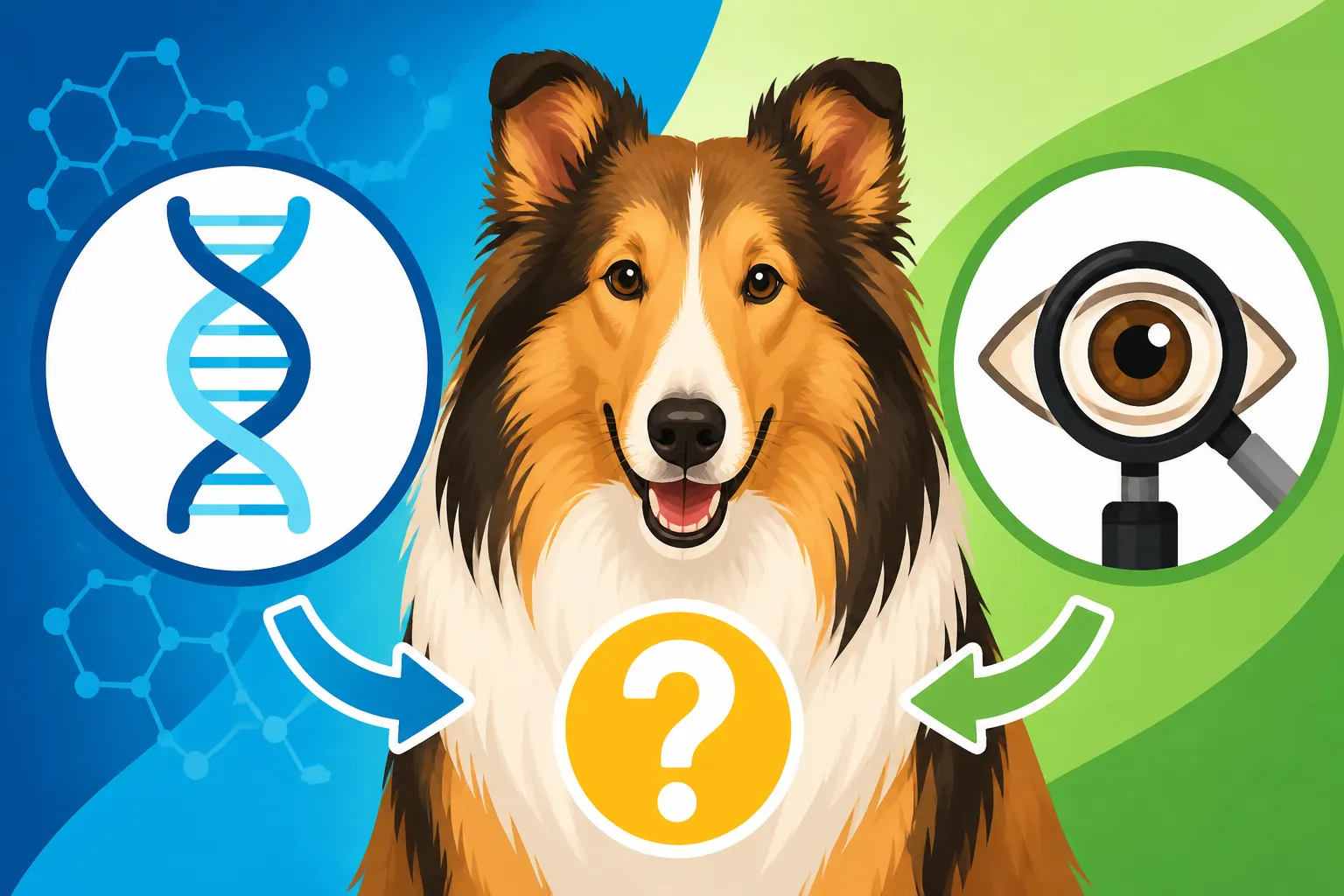
It's completely understandable to wish there was a simpler, less stressful way to check your Collie's eyes than the traditional physical exams. Many Collie owners, myself included, have stood by nervously while a tiny puppy undergoes an ophthalmic exam, or worried about getting an older dog to cooperate. The idea of a simple DNA test that could tell you everything about your Collie's potential eye issues sounds like a dream come true, and it brings up a really valid question: can a Collie's eye health really be fully screened by a DNA test instead of a hands-on examination? This guide will dive deep into the current realities of DNA testing for Collie eye conditions, comparing it with traditional methods and exploring what the future might hold.
Understanding Traditional Collie Eye Exams
When you first bring home a Collie puppy, or even an adult rescue, one of the most critical health checks on the list should be a thorough eye examination by a board-certified veterinary ophthalmologist. This isn't just a routine vet visit where they peer briefly into your dog's eyes; it's a specialized screening designed to catch specific conditions that are unfortunately common in our beloved breed. It can feel like a lot to coordinate, especially if you live in an area without a specialist nearby, but it's genuinely crucial for your dog's long-term well-being.
The Importance of Early Ophthalmic Screening for Collies
For generations, responsible Collie breeders and owners have relied on early ophthalmic screening for puppies, typically done between five and seven weeks of age, before the permanent coat grows in and makes a proper examination much more difficult. This specific window is vital because it allows the specialist to properly evaluate for conditions like Collie Eye Anomaly (CEA). Why a Collie Puppy Is Eye Checked at Five to Seven Weeks is a question frequently asked, and the answer lies in the developmental stage of the eye and the clarity of the puppy's short coat. Catching CEA early is key because while it doesn't always lead to blindness, its severity can vary greatly, from mild choroidal hypoplasia to retinal detachment.
Even if your puppy seems perfectly fine, or if you've adopted an older Collie, a baseline eye exam is invaluable. It establishes a record of their ocular health and can help detect other potential issues that might develop later in life. It's an investment in understanding your Collie's unique health profile, much like getting a comprehensive physical for yourself.
What a Board-Certified Veterinary Ophthalmologist Looks For
During a specialized eye exam, the ophthalmologist isn't just looking for obvious problems. They are meticulously checking for a range of inherited conditions that Collies are prone to. The most common, as mentioned, is Collie Eye Anomaly (CEA), also known as Choroidal Hypoplasia (CH). This condition affects the choroid, a layer of tissue beneath the retina. The vet will dilate your dog's pupils to get a clear view of the fundus (the back of the eye) using specialized equipment like an indirect ophthalmoscope.
They're looking for signs like abnormal blood vessel development, folds in the retina, or even colobomas, which are pits or defects in the optic nerve head or retina. These can range from very mild, where the dog might experience no vision impairment, to severe, potentially leading to blindness or retinal detachments later in life. What Collie Eye Anomaly Does to the Back of the Eye is complex, involving structural changes that only a trained eye can reliably identify. The ophthalmologist also looks for progressive retinal atrophy (PRA), another inherited condition that leads to blindness over time, though it's less common than CEA in Collies.
After the examination, the ophthalmologist provides a certification, often through organizations like the Orthopedic Foundation for Animals (OFA) or previously the Canine Eye Registration Foundation (CERF). This certificate details their findings, giving you and your breeder a clear picture of your Collie's eye health status. Understanding What Go Normal Means in a Collie's Eye Exam can give you peace of mind, as it indicates a clean bill of health regarding inherited eye diseases on the day of the exam.
Limitations of the Physical Eye Exam
While traditional ophthalmic exams are indispensable, they do have their limitations. Firstly, they are a snapshot in time. Some conditions can progress or develop later in life. For example, while early CEA is detectable, issues like glaucoma or cataracts can arise with age and require ongoing monitoring. Secondly, the physical exam relies on the expertise of the ophthalmologist and the cooperation of the dog. A particularly stressed or wiggly puppy can make a thorough examination challenging, although most specialists are incredibly skilled at handling them gently.
Another key limitation, especially regarding CEA, is the "Go Normal" phenomenon. Some puppies with mild CEA will show signs early on, but as they grow, pigment can migrate into the affected area, effectively masking the problem during later exams. This means an adult Collie who tests "clear" might still be genetically affected and could pass the gene on to their offspring if bred. This is a significant frustration for breeders striving for healthy lines, and it highlights why combining tools for screening is so important.
DNA Testing for Collie Eye Conditions: What's Available
The advancements in canine genetics have been nothing short of revolutionary for breeds like the Collie, giving us tools we never had before. The idea of a simple cheek swab replacing a trip to a specialist is incredibly appealing, and for some conditions, it's already a reality. However, it's crucial to understand what DNA testing can and cannot do for Collie eye health right now.
Conditions Currently Detectable by DNA
The most significant breakthrough in DNA testing for Collie eye health has been for Collie Eye Anomaly (CEA). There is a widely available and reliable DNA test for CEA/CH. This test identifies the specific genetic mutation responsible for the condition. This means that with a simple cheek swab, you can determine if your Collie is:
- Clear (homozygous normal): The dog does not carry the mutation and cannot pass it on.
- Carrier (heterozygous affected): The dog carries one copy of the mutation and can pass it on, but typically does not show severe clinical signs.
- Affected (homozygous affected): The dog carries two copies of the mutation and will likely express the condition clinically, though severity can vary.
This DNA test is an absolute game-changer for breeders, allowing them to make informed decisions about breeding pairs to reduce the incidence of CEA. It's often included as part of a comprehensive health panel offered by laboratories like Optimal Selection or Embark, which also screens for other important Collie-specific genetic conditions. What the Collie DNA Health Panel Covers can give you a full picture of the genetic information available.
Beyond CEA, DNA tests are also available for Progressive Retinal Atrophy (PRA), specifically for a form known as rod-cone dystrophy (rcd2-PRA), which is less common but still relevant in Collies. This test similarly identifies clear, carrier, and affected statuses.
How DNA Tests Work and Their Benefits
DNA tests are relatively straightforward. You typically receive a kit with sterile cotton swabs, which you rub inside your dog's cheek to collect cells. These samples are then mailed to a specialized veterinary genetics laboratory. The lab extracts the DNA and analyzes it for the presence of specific mutations linked to inherited diseases. The results are usually provided digitally within a few weeks, sometimes with a fancy certificate.
The benefits of DNA testing are immense:
- Accuracy for specific mutations: When a DNA test targets a known mutation, its accuracy for that specific mutation is nearly 100%. It tells you definitively whether your dog carries the gene.
- Early detection, even before symptoms: You can test puppies or even adult dogs who haven't shown any clinical signs yet. This is especially useful for conditions with late onset or "Go Normal" phenomena.
- Informed breeding decisions: Breeders can use DNA results to avoid breeding two carriers together, which would risk producing affected puppies. This is crucial for improving the overall health of the breed's gene pool. Whether a Clear Tested Collie Can Still Produce Affected Puppies is a complex question, but DNA testing for known mutations significantly reduces that risk.
- Peace of mind: Knowing your Collie's genetic status for these conditions can provide immense relief or help you prepare for potential future health management.
- Convenience: A cheek swab is much less invasive and stressful for the dog than a physical exam, and it can be done from the comfort of your home.
This convenience and certainty are why many owners and breeders consider DNA testing a cornerstone of responsible Collie ownership. Reputable pet insurance providers like Healthy Paws, for example, often emphasize preventative care and understanding your pet's genetic predispositions as part of long-term health planning.
Why DNA Isn't a Full Substitute (Yet)
Despite the incredible advantages, it's critical to understand that DNA testing is not a complete substitute for a physical eye examination by a board-certified veterinary ophthalmologist for all eye conditions. Here’s why:
- It only tests for known mutations: A DNA test can only identify the specific genetic markers that scientists have already discovered and developed tests for. If an eye condition in Collies is caused by a different, as-yet-undiscovered gene, or by multiple genes interacting in complex ways, a current DNA test won't detect it.
- CEA severity: While the DNA test tells you if a Collie is genetically affected with CEA, it doesn't tell you the severity of the physical expression of the disease. A dog that is "affected" by DNA might have anything from a mild CH that doesn't impact vision to a severe coloboma with a high risk of retinal detachment. The physical exam is still necessary to grade the clinical manifestation of CEA. Collie Eye Anomaly Affects Most Collies, So Ask How Badly is a question the DNA test answers about presence, but not severity.
- Other ocular conditions: Many eye conditions, like cataracts (unless a specific genetic mutation is identified and tested for), glaucoma, retinal degenerations not covered by current DNA tests, physical injuries, or infections, have no DNA test available. These can only be diagnosed through a thorough physical examination and specialized diagnostic tools.
- Phenotype vs. Genotype: DNA testing reveals the genotype (genetic makeup), while a physical exam assesses the phenotype (the observable characteristics, i.e., what the eyes actually look like). Both are crucial. A dog could have a clear DNA test but still develop a non-hereditary eye problem, or a problem caused by an unknown genetic factor. Conversely, a dog could be genetically "affected" but clinically "mild," needing only monitoring.
Think of it this way: the DNA test is like reading the instruction manual for a complex machine. It tells you what components should be there and if there are any known design flaws. The physical exam is like taking the machine apart and inspecting its actual working parts. Both provide different, but equally valuable, pieces of the puzzle for understanding your Collie's eye health.
The Future of Collie Eye Health Screening
The landscape of canine health screening is constantly evolving, and for breeds like the Collie, this means a future where comprehensive care increasingly integrates multiple diagnostic tools. It's not about choosing one method over another, but rather about leveraging each for its unique strengths to ensure the best possible outcomes for our dogs.
Combining DNA and Physical Exams for Comprehensive Care
The most responsible and thorough approach to managing Collie eye health today, and likely for the foreseeable future, involves utilizing both DNA testing and physical ophthalmic examinations. They are complementary, not mutually exclusive.
Here’s how a comprehensive approach typically works:
- DNA Testing: All Collies, especially those intended for breeding, should undergo DNA testing for CEA/CH and rcd2-PRA. This establishes their genetic status unequivocally for these known inherited conditions. This information is invaluable to breeders who are working to Whether a Collie's Dermatomyositis Risk Can Be Bred Down or other genetic issues, making informed choices about pairings to avoid producing affected puppies.
- Puppy Ophthalmic Exam: For all puppies, regardless of their parents' DNA status (though especially if parents were carriers or affected, or if DNA results aren't yet available), a physical eye exam by a board-certified veterinary ophthalmologist between 5-7 weeks of age is essential. This catches the clinical expression of CEA, particularly in cases of "Go Normal," and can identify other anomalies. Whether a Collie Breeder Provides an Eye Certificate after this exam is a mark of transparency and good practice.
- Adult Ophthalmic Exams: Even if a Collie was clear as a puppy, periodic physical eye exams as an adult are recommended, particularly if there are any changes in vision or eye appearance. This helps detect conditions that develop with age, like cataracts, or non-genetic issues.
This combined strategy provides the most complete picture of a Collie's eye health. The DNA test provides predictive genetic information, while the physical exam confirms the clinical status and rules out other, non-DNA-testable conditions. This dual approach ensures we catch as many potential issues as possible, giving our Collies the best chance at a lifetime of good vision. You can ask your vet about which organizations, like OFA, offer eye certification, and explore Whether a CERF or OFA Eye Exam Suits a Collie for your specific needs. Healthy Paws and similar pet insurance companies often recognize the value of these comprehensive screenings as part of preventative care.
| Feature | DNA Test (e.g., for CEA/PRA) | Physical Ophthalmic Exam (by specialist) |
|---|---|---|
| Purpose | Identifies specific genetic mutations (genotype) | Assesses physical structure and function of the eye (phenotype) |
| Detects | CEA/CH, rcd2-PRA, other known genetic conditions | Clinical signs of CEA/CH, PRA, cataracts, glaucoma, retinal detachments, injuries, infections, etc. |
| Severity | Does NOT indicate clinical severity of genetic conditions | DOES indicate clinical severity and progression |
| Timing | Can be done at any age (puppy or adult) | Best at 5-7 weeks for CEA; ongoing as needed for other issues |
| Method | Cheek swab, sent to lab | Direct examination by ophthalmologist with specialized tools |
| Cost | ~$50-$150 (often part of a panel) | ~$150-$300+ per exam (varies by region/specialist) |
| Limitations | Only tests for known mutations; no clinical severity | A snapshot; relies on cooperation; doesn't reveal "Go Normal" status genetically |
| Key Benefit | Definitive genetic status; guides breeding decisions; detects hidden carriers | Diagnoses all visible conditions; assesses severity; rules out non-genetic issues |
What to Discuss with Your Breeder and Veterinarian
Open and honest communication with your Collie breeder and your veterinarian is paramount when it comes to eye health.
When choosing a puppy, a responsible breeder will already have performed significant health testing on their breeding stock. They should be transparent about the DNA results of both parents for CEA and PRA, as well as providing eye certificates from a board-certified veterinary ophthalmologist for the puppy and its parents. Don't be shy about asking to see these documents. A breeder who proudly shares these results, perhaps mentioning their adherence to ethical standards supported by organizations like Healthy Paws for optimal health, is demonstrating their commitment to the breed's health. For additional health information, you might inquire about The Three Genetic Tests a Collie Breeder Owes You.
With your veterinarian, make sure they are fully aware of the specific health concerns of the Collie breed, especially regarding drug sensitivities like MDR1 and inherited eye conditions. Share any genetic test results you have for your dog. If your local vet isn't a board-certified ophthalmologist, they can refer you to one for specialized eye exams. Regular wellness checks should always include a basic eye examination, and your vet can advise you on how often more specialized exams are needed, especially if your Collie has a known genetic predisposition or if Whether a Collie's Retina Can Detach Later becomes a concern. Your vet is your partner in navigating your Collie's health journey, and their guidance is invaluable in combining the best of traditional and modern diagnostics.
Disclaimer
This article is intended for informational purposes only and does not constitute veterinary advice. Always consult with a qualified veterinarian or a board-certified veterinary ophthalmologist regarding any health concerns or before making any decisions about your Collie's care.