Whether a Collie Works as a Service Dog
Many of us who adore Collies can't help but wonder if these intelligent, sensitive dogs, so often portrayed as heroes, could actually serve as working assistance animals. It's a valid question, especially given their loyal nature and inherent desire to be close to their people. This guide will dive deep into the specific traits and considerations that determine whether a Collie can truly excel in the demanding role of a service dog, exploring their strengths, potential challenges, and what it truly takes.
Understanding What Makes a Service Dog Truly Exceptional
Before we get into the specifics of our beloved Collies, it's really important to understand the foundational qualities that make any dog suitable for service work. It’s not just about intelligence; it’s about a very specific blend of traits that allows them to perform tasks reliably and consistently, often in challenging public environments. The stakes are incredibly high for their human partners, so stability and aptitude are paramount.
Temperament and Personality Traits are Key
When you're looking for a service dog prospect, temperament is arguably the most critical factor. We're talking about dogs that need to be unflappable. They have to possess a calm, stable demeanor, even when faced with novel situations, loud noises, unexpected movements, or crowds of curious people. A true service dog candidate is rarely startled, recovers quickly if they are, and shows little to no aggression or extreme fear. Think about a dog calmly navigating a bustling airport or a crowded grocery store, ignoring distractions and focusing entirely on their handler.
They also need to be inherently people-oriented and eager to please, but not overly clingy or possessive. This balance ensures they want to work for their handler without becoming a liability. Independence in task performance is vital, but so is a strong bond. Reactive behaviors like excessive barking, lunging, or shying away from strangers are absolute deal-breakers for a service dog in training. For a breed like the Collie, known for its sensitivity, this can be a very fine line to walk.
Trainability and Intelligence Beyond Basic Commands
Yes, Collies are smart! We all know that. But service dog intelligence goes beyond just learning a dozen commands. It involves a capacity for problem-solving, generalization of skills to new environments, and the ability to learn complex task sequences. They need to understand the why behind their actions, not just the what. For example, a medical alert dog isn't just sitting on cue; they are recognizing subtle physiological changes in their handler and then performing a specific, learned alert behavior.
The ability to maintain focus amidst distractions is another hallmark of a highly trainable service dog. This means ignoring tantalizing smells, other dogs, dropped food, and the myriad of stimuli in the world, all while remaining attentive to their handler's needs. Consistency is also key; a service dog must perform their tasks reliably, every single time, regardless of the handler's mood or the environment. This takes thousands of hours of dedicated training and an innate drive to learn and perform. How a Collie Reads a Room Better Than It Reads a Command speaks to their perceptive nature, which can be an asset here.
Physical Attributes and Potential Limitations
Physical suitability is also a major consideration. Service dogs need to be healthy, sound, and have the stamina to work for extended periods. Their size must be appropriate for the tasks they'll perform. For example, a dog assisting with mobility might need to be sturdy enough to brace, while a medical alert dog might just need to be easily visible. While Collies are generally healthy and medium-to-large dogs, their physical structure might lend itself better to some tasks than others.
Another factor often overlooked is their longevity and freedom from chronic health issues that could interrupt their service. A service dog is a huge investment of time, money, and emotional energy. Minimizing the risk of early retirement due to health problems is a priority. This means breeders of service dog prospects often go above and beyond with health testing.
Where Collies Shine as Service Dogs
Given their many wonderful qualities, Collies can indeed excel in certain service dog roles, particularly those that lean into their natural empathy and intelligence, rather than brute physical strength. Their gentle nature and intuitive understanding of human emotions are tremendous assets.
Emotional Support and Psychiatric Tasks
This is arguably where Collies shine brightest. Their deep bond with their human companions, their calm presence, and their often intuitive understanding of emotions make them fantastic candidates for psychiatric service work. They can provide deep pressure therapy (DPP) by leaning against their handler, interrupt anxiety attacks by nudging or licking, or retrieve medication during moments of distress. Their very presence can be incredibly grounding.
Imagine a Collie trained to recognize the early signs of a panic attack – the subtle shift in breathing, the fidgeting hands – and then gently placing their head in their handler’s lap to offer comfort and a tactile distraction. This isn’t just an emotional bond; it’s a trained task. For individuals dealing with PTSD, anxiety, or depression, a Collie’s unwavering loyalty and comforting presence, coupled with specific trained tasks, can be life-changing. Their sensitivity, often considered a challenge, becomes a profound strength in this capacity. Whether a Collie Is Sensitive to Household Tension highlights this very trait.
Alerting and Response Tasks
Collies possess keen senses and a remarkable ability to observe and interpret their environment, including their handler's physical state. This makes them well-suited for various alerting tasks. They can be trained to alert to changes in blood sugar for diabetics, impending seizures for epileptics, or even specific sounds for handlers with hearing impairments. Their natural watchful disposition, often manifesting as an alert bark (which needs careful training to manage in public), can be harnessed effectively.
A Collie's ability to "read" a person can be channeled into noticing subtle cues like a shift in scent, a change in body posture, or a slight tremor. Once they learn to associate these cues with an upcoming medical event, they can then perform a trained alert, such as touching their handler, barking in a specific way, or leading them to a safe place. The challenge here is their natural inclination to bark, which would need to be very specifically directed for alert purposes and controlled in all other situations. The Bark Is the Trait Collie Owners Underestimate is a must-read for anyone considering a Collie.
Mobility and Stability Tasks (with Caveats)
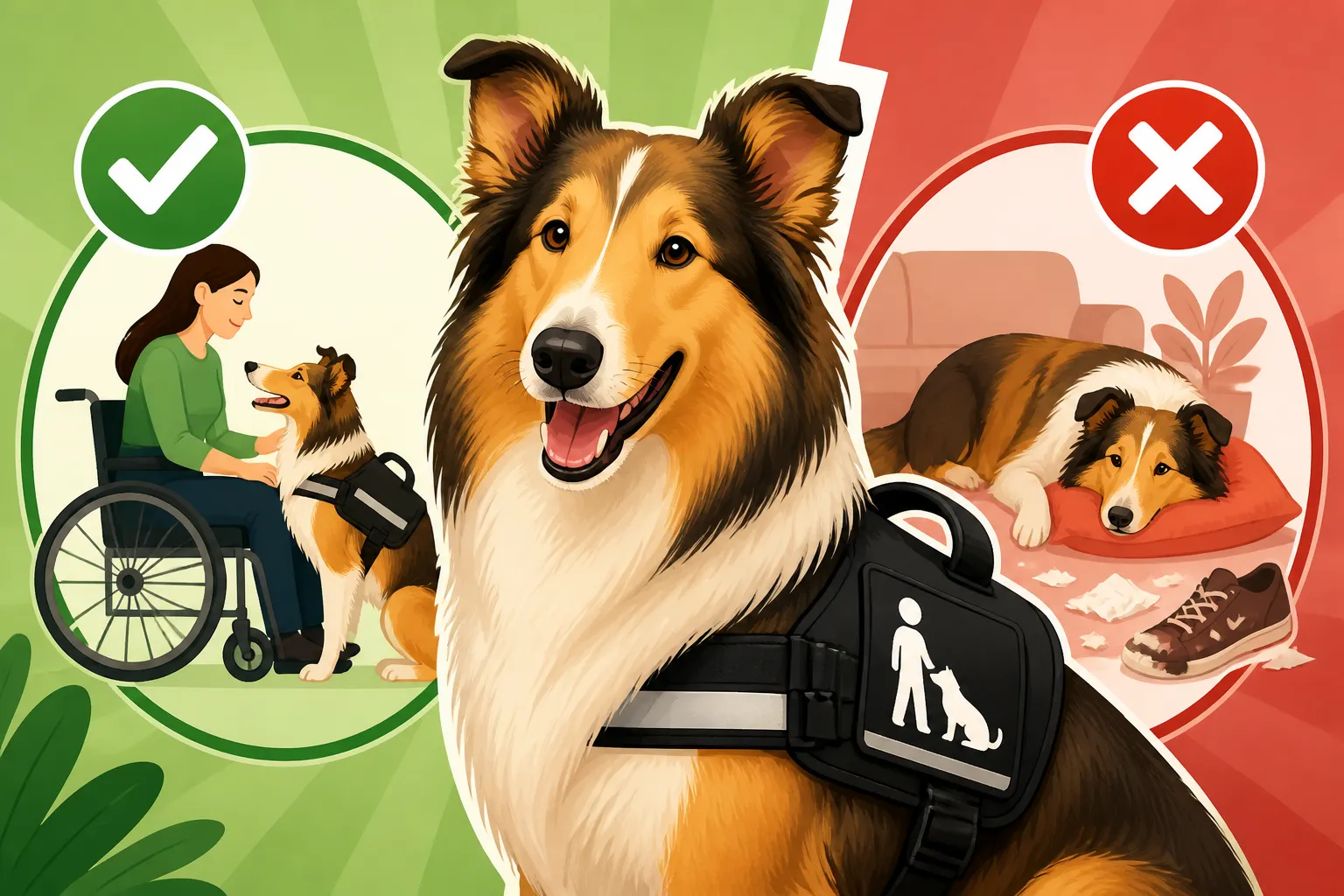
While Collies are not generally considered "heavy-duty" mobility dogs like a Great Dane or a Saint Bernard, they can certainly assist with lighter mobility tasks. For someone who needs help with balance, retrieving dropped items, or opening doors, a well-trained Collie can be invaluable. They are sturdy enough to provide some degree of counterbalance, especially for smaller individuals, and their dexterity with their mouths allows for efficient retrieval.
However, it's crucial to acknowledge their limitations. A Collie is not built for heavy bracing or pulling a wheelchair. Their bone structure and typical weight range make these tasks inappropriate and potentially harmful to the dog over time. For tasks requiring significant physical support, other breeds might be more suitable. But for lighter support, guiding, and retrieving, a Collie can absolutely contribute.
Here's a quick comparison of Collie traits versus general service dog needs:
| Trait / Characteristic | Ideal Service Dog | Collie Suitability | Notes for Collie |
|---|---|---|---|
| Temperament | Calm, stable, confident, non-reactive, friendly but not distractible | Generally good, but can be sensitive or timid | Excellent with careful breeding/socialization; may need extra confidence building. |
| Intelligence | High, able to learn complex tasks and generalize | High, very capable of learning | Excels in complex learning, but can be "too smart" and get bored if under-stimulated. |
| Focus/Work Ethic | Strong drive to work, resilient to distraction | Can be strong, but sensitive to handler mood/stress | Needs consistent, positive reinforcement; sensitive to harsh corrections. Harsh Handling Breaks a Collie and It Does Not Come Back. |
| Physical Size/Stamina | Appropriate for tasks, good health, endurance | Medium-large, generally sound, good stamina | Good for light mobility, retrieving, alerts; not for heavy bracing or pulling. |
| Coat/Grooming | Low maintenance generally preferred for public access | High maintenance (Rough), moderate (Smooth) | Requires significant grooming, especially Rough Collies, for hygiene and professional appearance. Four Tools and Twenty Minutes: Brushing a Rough Collie is essential. |
| Barking Tendency | Minimal or highly controllable, task-specific | Can be prone to alert barking | Requires extensive training to manage and direct barking; can be a challenge in public. |
| Affection/Bonding | Strong bond with handler, people-oriented | Very strong bond, highly people-oriented | Excellent for handler connection, sometimes to the point of "shadowing." Why a Collie Follows You From Room to Room. |
Challenges and Considerations for Collie Service Work
While Collies have undeniable strengths, it wouldn't be realistic to overlook the specific challenges that can arise when training them for service work. Being aware of these upfront allows potential handlers to make informed decisions and prepare accordingly.
Their Sensitivity and Barking Tendencies
One of the most endearing qualities of a Collie can also be their biggest hurdle in service work: their sensitivity. They are incredibly attuned to their environment, their handler's emotions, and even subtle changes in routine. While this makes them wonderful, empathetic companions, it can mean they are more prone to stress in chaotic or unpredictable public environments. A service dog needs to remain stoic and focused, even if their handler is anxious or stressed. This requires a dog with a robust emotional constitution.
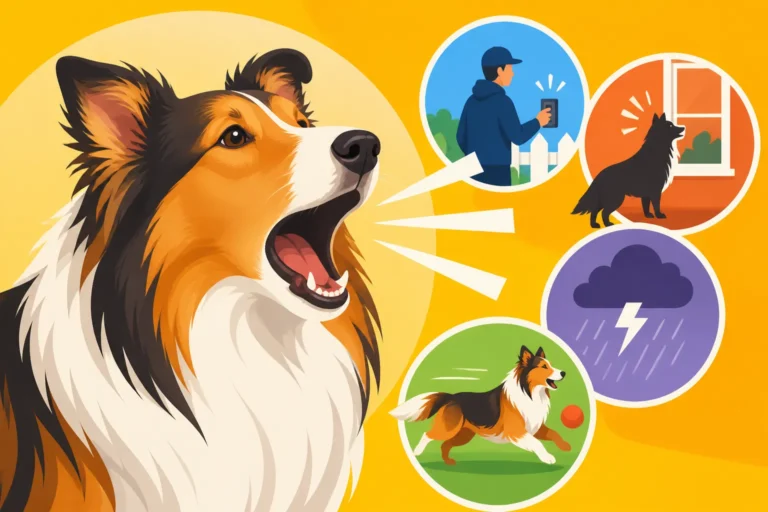
Then there's the barking. Collies are vocal herding dogs, bred to alert. They often have an opinion about everything that happens around them, from the mail delivery to a squirrel in the yard. While training can absolutely mitigate excessive barking, fully suppressing a natural inclination for a dog that needs to work calmly in quiet places (like libraries or doctor's offices) is a huge undertaking. The Bark Is the Trait Collie Owners Underestimate discusses just how pervasive this can be. It's not impossible to train a quiet cue, but it demands consistent, dedicated effort from puppyhood.
Coat Care and Public Access Concerns
Let's face it: a Rough Collie's magnificent coat is a showstopper, but it's also a serious commitment. Service dogs must be impeccably groomed and clean for public access. This isn't just about aesthetics; it's about hygiene and public perception. A matted, dirty, or heavily shedding dog is not going to be welcomed in many public spaces, regardless of its working status.
The sheer volume of shedding, especially during coat blows, can be a challenge. How Long a Collie's Coat Blow Lasts explains the intense periods of shedding. Keeping up with the grooming, even for a Smooth Collie, requires a significant time investment. While an Amazon grooming order can get you the right tools, the regular effort is on the handler. This might not seem like a big deal, but when you're managing a disability, adding intensive grooming to your daily routine can be overwhelming. Some handlers may find a Smooth Collie to be a more practical choice if they want to avoid the extreme coat maintenance.
Finding the Right Temperament and Training
Not every Collie, even from the best lines, will have the inherent temperament required for service work. It's a highly specialized role. You're looking for the unicorn: a dog that is bold yet gentle, independent yet eager to please, stable yet sensitive enough to perform specific tasks. This means selecting a puppy from parents with impeccable temperaments and a long history of health clearances is non-negotiable.
Even with the perfect pup, the training is rigorous and lifelong. Most service dog organizations have very strict wash-out rates because so few dogs truly make the cut. Owner-training is an option, but it requires an immense commitment, deep understanding of dog behavior, and access to qualified professional guidance. Programs like BAXTER & Bella can provide a solid foundation for early puppy training and socialization, but a service dog requires far more specialized instruction. You'll need to work diligently on Whether a Collie Learns From Watching Another Dog and How to Teach a Collie Puppy to Lie Still for Grooming from day one.
The Path to Becoming a Service Dog (Collie Specifics)
If you're convinced a Collie is the right fit for your service dog needs, understanding the journey is crucial. It’s a marathon, not a sprint, and every step from puppyhood to public access needs careful consideration.
Puppy Selection and Early Socialization
This cannot be stressed enough: the foundation for a service dog is laid in puppyhood. When selecting a Collie puppy, you must work with a reputable breeder who prioritizes temperament, health, and responsible breeding practices. Look for puppies who are confident but not pushy, curious but not overly reactive. Observe the parents' temperaments closely; they are often the best indicator of how a puppy will develop.
Early socialization is absolutely paramount. From the moment you bring your Collie puppy home, they need carefully managed exposure to a wide variety of sights, sounds, people, animals, and environments. This isn't just about a few trips to the park; it's about making every new experience positive and neutral, building resilience and confidence. Where to Socialize a Collie Puppy offers great starting points. Programs like BAXTER & Bella can offer structured guidance for this critical period, helping you expose your puppy safely and effectively to the world they'll eventually work in. You want a dog that, by the time it's grown, views novel situations as interesting rather than frightening.
Professional Training vs. Owner-Training a Collie
Once you have a suitable puppy, the training journey begins. There are generally two main paths:
- Professional Service Dog Organizations: These organizations breed or select puppies specifically for service work, conduct extensive training, and then place fully-trained dogs with handlers. This is often the most reliable path to getting a service dog, as these organizations have decades of expertise and resources. However, wait lists can be long, and costs significant.
- Owner-Training: This involves the individual with a disability training their own dog, often with the guidance of a professional trainer specializing in service dogs. While potentially more accessible, it requires an extraordinary amount of time, patience, and expertise. You are responsible for every aspect of public access training, task training, and ensuring your dog meets the stringent behavioral standards. This path can be particularly challenging with a sensitive breed like the Collie, as you must be constantly vigilant about their reactions and comfort levels. Resources for task training and public access can sometimes be found on platforms like Amazon, offering specialized gear and instructional materials.
Regardless of the path, consistency, positive reinforcement, and a deep understanding of Collie behavior are essential. Remember that A Collie Is the Rare Herding Dog That Does Not Need a Job – but a service dog does have a job, and they thrive on that purpose, provided the training is appropriate and humane.
Legal Protections and Certification
In the United States, service dogs are protected under the Americans with Disabilities Act (ADA), which grants them public access rights. It's important to understand that there is no official federal "certification" or registration required for a service dog. Any company or website claiming to offer official certification for a fee is likely a scam. The key is that the dog must be individually trained to perform tasks directly related to the handler's disability.
However, many handlers find value in carrying documentation from their medical provider stating their need for a service animal, or even a vest/harness for their dog that identifies them as a service dog. This can help reduce public encounters and challenges, though legally, businesses can only ask two questions: 1) Is the dog a service animal required because of a disability? and 2) What work or task has the dog been trained to perform? It's crucial for any service dog handler to know their rights and responsibilities.
The journey of having a Collie as a service dog is demanding, but for the right dog and the right handler, it can lead to an incredible partnership built on trust, intelligence, and a deep, empathetic connection.
Disclaimer
This article is for general informational purposes only and does not constitute professional advice. Laws, prices and regulations vary by location and change over time. Consult a qualified professional for guidance on your specific situation.