Four Tools and Twenty Minutes: Brushing a Rough Collie
Ah, the majestic Rough Collie! Their flowing double coat is undeniably beautiful, a true hallmark of the breed that captures hearts. But any Collie owner will tell you that beauty comes with a significant responsibility: regular grooming. The sheer volume of hair, the tendency for mats, and the infamous "coat blow" seasons can feel utterly overwhelming, turning what should be a bonding experience into a dreaded chore. Many of us have been there, staring at a tangled mane, wondering if we're doing it right or if we'll ever get to the bottom of all that fur. This comprehensive guide is here to demystify the process, showing you how just four essential tools and a consistent twenty-minute routine can keep your Rough Collie's coat healthy, beautiful, and mat-free, making grooming a manageable and even enjoyable part of your life together.
Understanding the Rough Collie Coat
Before we even pick up a brush, it's really important to understand what you're working with. A Rough Collie's coat isn't just a thick layer of fur; it's a marvel of canine engineering, designed for function and beauty. Trying to groom effectively without this fundamental understanding is like trying to bake a cake without knowing the difference between flour and sugar – you're just not going to get the results you want, and you might even make a sticky mess. Many new owners, and even some seasoned ones, underestimate the complexity of this magnificent coat.
The Double Coat: What It Is and Why It's There
A Rough Collie possesses what's known as a double coat. This means they have two distinct layers of fur, each serving a vital purpose. The outer coat, often called the guard coat, consists of long, coarse, straight hairs that are somewhat water-resistant. These are the hairs that give your Collie that beautiful, flowing silhouette and the characteristic "rough" texture. This outer layer protects your dog from environmental elements like rain, snow, and sun, and also helps to repel dirt and burrs to some extent. It's the show-stopping part of the coat, the one everyone admires.
Beneath this impressive outer coat lies the true workhorse: the soft, dense, woolly undercoat. This layer is much shorter and incredibly insulating, acting like a natural down jacket in winter and helping to regulate body temperature in summer by trapping cooler air close to the skin. It's this undercoat that sheds in prodigious amounts during seasonal changes, leading to those infamous "coat blows" that can make your house look like a yeti exploded. Without this undercoat, your Collie would struggle to adapt to various climates, making them uncomfortable and potentially unhealthy.
The Beautiful Challenge: Density, Length, and Texture
The sheer volume and density of a Rough Collie's coat are what make it both breathtakingly beautiful and, let's be honest, a bit of a challenge to maintain. The hair is longest and densest around the ruff (mane), chest, belly, and hindquarters, often referred to as the "petticoat" and "frill." These areas are particularly prone to matting because of their length and the constant friction they experience. Imagine trying to comb out a thick, silky curtain that's been dragging on the floor all day – that's often what you're up against!
The texture of the coat also plays a role. While the outer coat is relatively straight and coarse, the undercoat is soft, fine, and prone to tangling. When the undercoat sheds, it can get caught in the longer guard hairs, forming dense mats that pull on the skin and can be quite painful for your dog. Furthermore, the texture can vary slightly from one Collie to another, with some having a silkier, easier-to-manage coat, while others might have a slightly softer, more cottony texture that mats up much faster. Understanding these nuances helps you tailor your grooming approach to your individual dog.
Why Regular Brushing Isn't Optional, It's Essential
Given the intricacies of the Rough Collie's double coat, regular brushing isn't just a cosmetic choice; it's a fundamental part of their health and well-being. Skipping brushing for even a few days, especially in those high-friction areas, can quickly lead to painful mats and tangles. These aren't just unsightly; mats can trap moisture, dirt, and parasites against the skin, leading to skin irritation, hot spots, and even infections. Imagine having a clump of hair pulling constantly on your scalp – that's what a mat feels like to your dog, multiplied.
Beyond preventing mats, brushing distributes natural oils throughout the coat, keeping it healthy, shiny, and vibrant. It also helps to remove loose undercoat, which reduces shedding around your home and allows your Collie's skin to breathe. During seasonal coat blows, regular brushing is absolutely critical to help shed out that dead undercoat, making your dog more comfortable and preventing overheating in warmer weather. Think of it as preventative medicine for their skin and coat – a small investment of time each day or week that pays huge dividends in comfort and health for your beloved companion. You'll be amazed at how much hair comes off a Collie in a session if you're consistent.
The Essential Four Tools
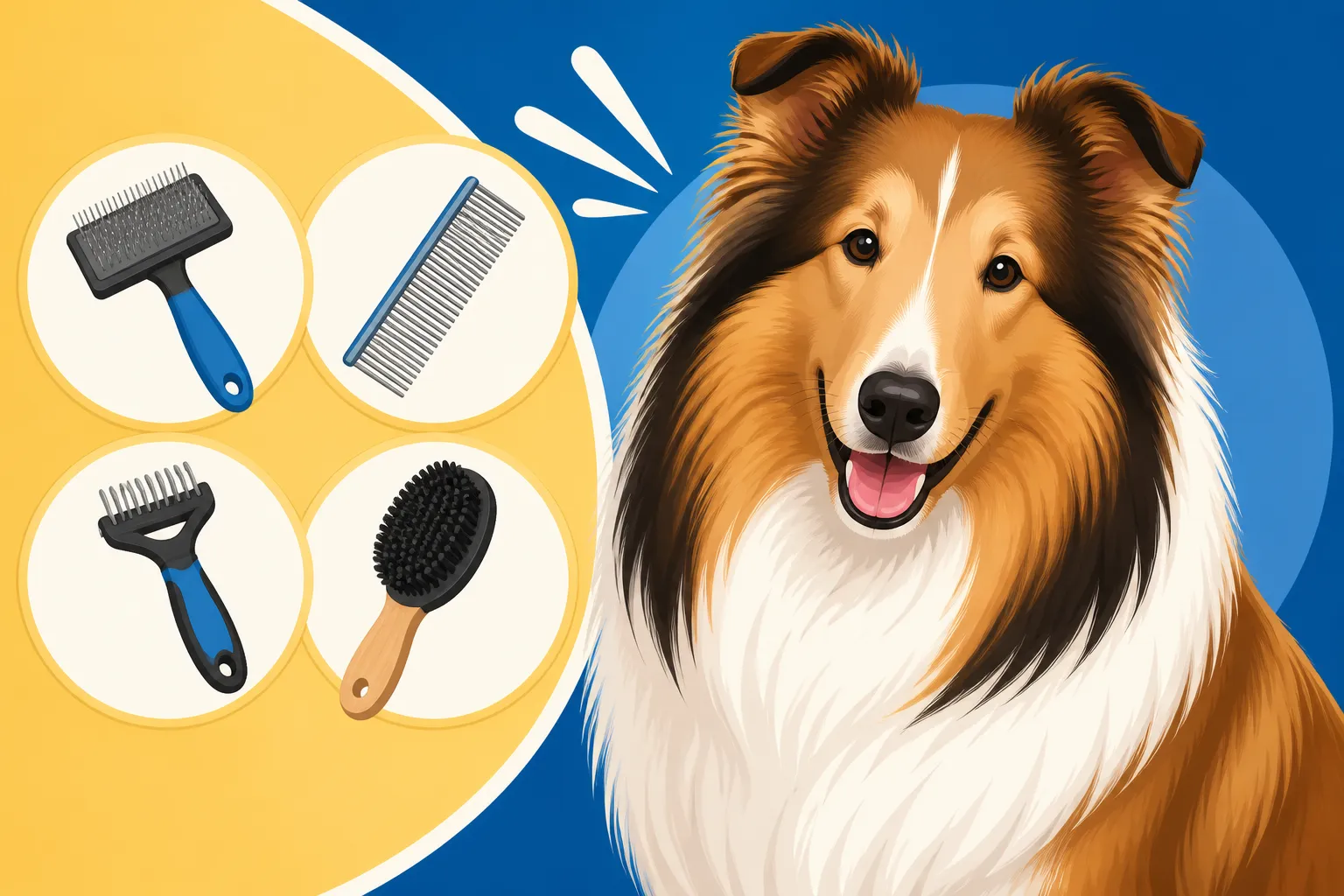
You don't need a whole arsenal of expensive grooming gadgets to maintain a Rough Collie's coat. In fact, sometimes having too many tools can be more confusing than helpful. The key is to have the right tools, and to know how to use them effectively. For a Rough Collie, there are four core tools that every owner should have in their grooming kit. These aren't fancy, but they are absolutely indispensable. Finding quality versions of these tools is important; cheap ones can break or, worse, hurt your dog. Many of these can be found easily on platforms like Amazon or Chewy.
The Pin Brush: Your Everyday Workhorse
The pin brush is probably the most recognizable grooming tool and will be your daily go-to for general brushing and working through the topcoat. It looks a bit like a human hairbrush, with widely spaced metal pins, usually tipped with small plastic or rubber beads. These pins are designed to glide through the longer guard hairs without pulling too much, helping to remove loose hair, surface dirt, and minor tangles. This is where you start most of your brushing sessions, gently working over the entire coat.
When choosing a pin brush, look for one with well-seated pins that don't easily push into the brush head. The tips should be smooth to avoid scratching your Collie's skin. A good quality pin brush can last for years and is essential for maintaining the overall flow and cleanliness of the outer coat. It's particularly useful for the softer, more delicate areas like the ears and feathering on the legs. Think of it as the friendly first pass before you dive deeper into the undercoat. It’s also great for giving the coat a nice fluff and making your Collie look presentable.
The Slicker Brush: For Those Tricky Spots
Next up is the slicker brush, a tool that looks a bit intimidating but is invaluable for tackling finer mats and shedding undercoat. Slicker brushes have a dense bed of fine, bent wire pins, typically without the protective tips found on pin brushes. This design allows them to grab and pull out dead undercoat and gently work through smaller tangles and mats that a pin brush might just glide over. It’s particularly effective in areas where the coat is denser and more prone to matting, such as behind the ears, under the elbows, and around the "petticoat."
It's crucial to use a slicker brush with a very light hand, especially on a Collie. The fine wires can scratch the skin if too much pressure is applied, leading to brush burn. Instead of pressing down, use short, gentle strokes, almost skimming the surface, working layer by layer. This tool is exceptional for removing the dreaded "cotton candy" undercoat during a seasonal blow. If you've got a bit of a mat starting, this is often the tool you'll reach for after the pin brush has handled the surface. You'll also learn When a Pin Brush Is the Wrong Tool for a Collie and why a slicker excels in those situations.
The Undercoat Rake: Getting Down to Business
This is where you truly start to make a dent in the undercoat. An undercoat rake, sometimes called a deshedding rake or a V-rake, features longer, sturdy teeth designed to penetrate through the topcoat and reach deep into the dense undercoat. Its primary purpose is to pull out loose, dead undercoat that would otherwise remain trapped, leading to mats and discomfort for your dog. This is especially vital during shedding season. If you feel like you're brushing and brushing but still getting nowhere with the volume of hair, an undercoat rake is likely the missing piece of your puzzle.
There are various styles of undercoat rakes. Some have rotating teeth, which can be gentler and less likely to pull on the guard hairs. Others have a more solid, comb-like structure. Regardless of the specific design, the principle is the same: to get deep into that insulating layer and remove the dead hair. Use it in the direction of hair growth, working in small sections. You'll be absolutely astonished at the amount of fur this tool can extract, especially from the hindquarters and flanks. It truly helps get to the root of the shedding problem, keeping the coat healthy and reducing the amount of fur floating around your home. You can learn more about What a V Rake Does on a Collie for specific types.
The Steel Comb: The Finishing Touch and Mat Detector
Finally, we have the trusty steel comb. This might seem simple, but it's arguably one of the most important tools in your kit for ensuring a thorough job. A good quality steel comb will have teeth of varying widths, with wider teeth on one end and finer teeth on the other. It's your ultimate mat detector and finisher. After you've gone through the coat with your brushes and rake, use the steel comb to ensure there are no hidden tangles or mats remaining. If the comb glides smoothly through the coat from root to tip, you've done a fantastic job. If it snags, you know exactly where you need to go back and do some more work.
The finer teeth of the comb are particularly useful for delicate areas like the face, behind the ears, and the "feathering" on the legs. It helps to separate and neaten these areas, giving your Collie a polished look. Don't underestimate its power – a steel comb can catch small tangles before they escalate into major matting problems. It also helps to fluff the coat and remove any remaining loose hairs. Keep it handy throughout your grooming session for quick checks and touch-ups.
The "Twenty Minutes" Routine: A Step-by-Step Guide
The idea of "twenty minutes" might sound ambitious when you're looking at a full-coated Rough Collie, but it's completely achievable with consistency and the right technique. This isn't about rushing; it's about efficiency and regular maintenance. Most of us don't have hours to dedicate to grooming every day, and our Collies probably wouldn't tolerate it anyway! The goal is to break down the task into manageable, effective chunks that keep their coat in top condition without turning it into a battle.
Setting the Stage for Success
Before you even touch your Collie with a brush, take a few moments to prepare. First, find a comfortable, well-lit space where you and your dog can both be relaxed. A grooming table is ideal because it saves your back and clearly defines the "grooming zone" for your dog, but a sturdy table covered with a non-slip mat or even a dedicated spot on the floor can work. Gather all your tools – your pin brush, slicker brush, undercoat rake, and steel comb – and have some high-value treats ready. This isn't just about getting the job done; it's about making it a positive experience for your Collie.
Ensure your Collie is relatively clean and completely dry. Brushing a dirty coat can grind dirt and debris into the skin, and brushing a damp coat is a recipe for creating more mats and damaging the hair. A quick walk before grooming can help tire out a high-energy dog, making them more amenable to standing still. Approach the session with a calm, patient attitude. Your dog picks up on your energy, so if you're stressed, they'll be stressed too. Make it a routine, and soon your Collie will anticipate this special bonding time.
Line Brushing: The Technique That Matters
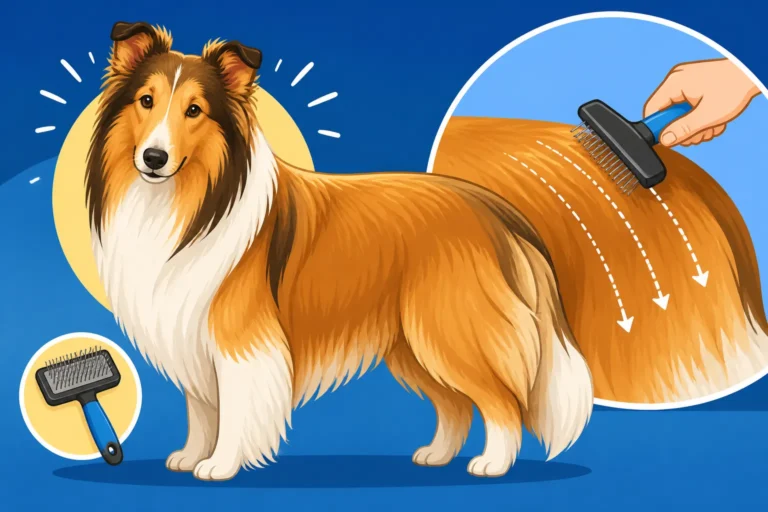
Line brushing is the secret weapon for effectively grooming a Rough Collie's double coat. You can't just brush the top layer and expect to get through to the undercoat – you'll miss vast amounts of shedding hair and potential mats. Line brushing ensures that you work through every single layer of the coat, from the skin out. It involves parting the hair in small sections and brushing the hair upwards and outwards from the skin. It’s a bit like peeling back layers of an onion. Many owners don't realize this technique is crucial, and it’s often why they feel like they’re constantly battling mats.
To line brush, start at the bottom of a leg or flank. With one hand, hold up the top layer of hair, exposing the skin and undercoat beneath. With your other hand, use your slicker brush or undercoat rake to brush a small section of hair upwards and outwards from the skin. Once that section is tangle-free, drop a little more hair from the top layer and repeat, working your way up the body. This methodical approach ensures you're reaching the skin, removing all the dead undercoat, and preventing mats from forming deep within the coat. It’s tedious, yes, but it’s the most effective way, and you'll find it gets much faster with practice. For a more detailed tutorial, look up How to Line Brush a Collie.
Section by Section: A Methodical Approach
Breaking down the grooming into manageable sections makes the twenty-minute routine feel less daunting and ensures you don't miss any critical areas. Don't try to tackle the entire dog at once. Instead, divide your Collie's body into logical zones. A good approach is to start with the areas most prone to matting or that your dog tolerates well first.
Here's a suggested order:
- Legs and Paws: Start with the lower legs and paws. These areas pick up a lot of dirt and can mat quickly, especially between the toes. Use your pin brush and then your steel comb.
- Behind the Ears and Neck Ruff: These are notorious mat magnets. Use your slicker brush very gently, followed by the fine-toothed side of your steel comb. Be extra careful here, as the skin is delicate. This is often Where a Collie Mats First.
- Chest and Armpits: Another high-friction area. Again, slicker and comb are your friends, working in small sections.
- Body and Flanks: Use your undercoat rake to get deep into the undercoat, followed by your pin brush to smooth the topcoat. Remember to line brush here.
- Petticoat and Hindquarters: This is often the densest part of the coat. Take your time with the undercoat rake and slicker brush, making sure to work through all the layers.
- Tail: Gently brush the tail feathering with a pin brush and comb.
By tackling one section thoroughly before moving to the next, you ensure that no area is overlooked, and you can complete the entire dog effectively within your timeframe. Don't forget to reward your Collie with treats and praise after each section to reinforce positive behavior. This systematic approach is key to keeping How Long Brushing a Collie in Full Coat Takes manageable.
Tackling Mats and Tangles
Mats are the bane of every Rough Collie owner's existence. They are painful for your dog, difficult to remove, and can quickly escalate from a small knot to a dense, skin-pulling clump. The best approach to mats is prevention, but even with the most diligent grooming, an occasional tangle can sneak in. Knowing how to handle them gently and effectively is a crucial skill for any Collie parent. Many of us have tried to yank out a mat, only to cause more pain and frustration for both ourselves and our furry friends.
Preventing Mats Before They Form
The golden rule of Collie grooming is simple: prevention is better than cure. Consistent, regular brushing, especially line brushing, is your primary defense against mats. Aim for at least 20 minutes every other day, or daily during heavy shedding seasons. This routine is what stops those loose undercoat hairs from weaving into the guard coat and forming dense tangles. Pay extra attention to those high-friction areas we discussed: behind the ears, armpits, chest, and the "petticoat." These areas are almost guaranteed to mat if neglected.
Consider the environment your Collie lives in. Burrs, stickers, and even certain types of foliage can quickly become entangled in that long coat. A quick check after outdoor adventures can catch these culprits before they become embedded. Even car rides or wearing harnesses and collars for extended periods can create friction points that lead to mats. If your Collie wears a harness, ensure it fits well and isn't rubbing excessively. A quality conditioning spray can also help make the coat silkier and less prone to tangles, making brushing easier. You can find excellent detangling sprays from brands often sold on Chewy.
Gentle Detangling: Working Out Knots Safely
So, you've found a mat. Don't panic, and definitely don't try to rip it out! That will only hurt your dog and make them dread future grooming sessions. The key to detangling is patience and gentle, methodical work. First, try to locate the skin beneath the mat. Mats often pull tightly on the skin, so you need to be very aware of where the skin is to avoid pulling it or cutting it.
Start by gently separating the mat with your fingers. If it's a larger mat, you might try to split it into smaller sections. Apply a detangling spray or a small amount of cornstarch directly to the mat – this can help the hairs slide past each other. Then, using the wide-toothed side of your steel comb or the slicker brush, begin working from the outer edges of the mat, teasing out small strands of hair at a time. Work your way inwards, always brushing away from the skin. It’s a slow process, often just a few hairs at a time. If you hit resistance, stop and try to tease more hairs apart with your fingers. Never pull hard. This is where you might also use a specialized mat splitter tool, but use it with extreme caution to avoid cutting the skin. For detailed steps on removing difficult mats, see How to Work Out a Mat Behind a Mat Behind a Collie's Ear.
When to Resort to Scissors (and How to Do It Right)
Sometimes, a mat is just too dense, too close to the skin, or too painful to detangle safely. In these rare situations, carefully cutting the mat out might be the only humane option. However, this comes with a huge caveat: extreme caution is absolutely paramount. It is incredibly easy to accidentally cut your Collie's skin, which is often pulled tightly up into the mat. Many professional groomers will tell you stories of dogs coming in with gruesome cuts from well-meaning owners who tried to remove mats with scissors.
If you must use scissors, always use blunt-nosed grooming scissors, never sharp-pointed household scissors. First, try to slide a comb between the mat and the skin. This provides a protective barrier. Then, carefully snip into the mat, parallel to the body, rather than across it. Think of it as making small slits to break up the mat, rather than cutting a chunk out. This can help you then tease it apart more easily with a slicker brush or comb. If the mat is very close to the skin and you can't get a comb underneath it, or if you feel at all unsure, stop immediately and call a professional groomer. They have specialized tools and experience to remove even the most stubborn mats safely and without injury to your dog. Remember, A Collie Is Never Trimmed and Never Shaved unless absolutely necessary for health or comfort, and even then, usually by a pro.
Seasonal Shedding and Coat Blows
Ah, the "coat blow." If you own a Rough Collie, you know exactly what I'm talking about. Twice a year, usually in spring and fall, your beautiful dog will shed their entire undercoat in what feels like an explosive, never-ending cloud of fluff. This isn't just regular shedding; it's a full-on seasonal event that can bury your home in hair if you're not prepared. It’s a natural process, but it can certainly test your patience and your vacuum cleaner’s limits.
Understanding the Annual "Undercoat Explosion"
The annual coat blow is a natural physiological process where your Collie sheds their old, dead undercoat to make way for a new, healthier layer. In the spring, they shed their heavy winter undercoat to prepare for warmer weather, aiming for a lighter, more airy insulation. In the fall, they shed their lighter summer coat to grow in a dense, protective winter layer. This process is triggered by changes in daylight hours and temperature, though indoor dogs with consistent temperatures and artificial light might shed more evenly throughout the year, or have less distinct "blows."
During a coat blow, the sheer volume of hair that comes off can be shocking. It's not just a few loose hairs; it's entire handfuls of soft, cottony undercoat. This loose undercoat, if not removed, will quickly get tangled in the longer guard hairs, forming massive mats. Many new Collie owners are caught off guard by the intensity of these shedding periods, often leading them to consider rehoming or drastic measures like shaving, which, as we'll discuss, is almost always detrimental to the coat. You can learn more about When a Collie Blows Its Coat to be better prepared.
Upping Your Grooming Game During Blow Season
When your Collie is blowing coat, your regular twenty-minute routine might need to be extended or performed more frequently. This is the time to really lean on your undercoat rake and slicker brush. Daily brushing, sometimes even twice a day, is not uncommon during the peak of a coat blow. Your goal is to remove as much of that dead undercoat as possible before it has a chance to mat.
Focus on line brushing every single section of your Collie's body, paying particular attention to the densest areas like the ruff, chest, and hindquarters. You'll be amazed at the literal piles of fur you can remove in a single session. Many owners find a high-velocity force dryer invaluable during this time. After a bath (which can help loosen dead hair), a force dryer blasts water and loose fur out of the coat incredibly effectively, significantly reducing brushing time. It might sound like an indulgence, but for many Collie owners, it's a sanity saver during shedding season, and you'll quickly understand How Much Undercoat a Collie Drops. If you don't have one, a good pet blow dryer can also assist in separating the hairs and getting that undercoat out.
Managing Hair in Your Home
Let's be realistic: even with diligent grooming, a Rough Collie blowing coat will leave hair in your home. It’s an unavoidable fact of life with these magnificent dogs. However, there are strategies to minimize the impact. Regular vacuuming is your first line of defense; invest in a good quality vacuum designed for pet hair. Brands like Dyson or Shark often have specific models that cope well with fine, voluminous pet fur. Consider washable couch covers or throws that you can easily toss in the laundry.
Designate a specific area for intense grooming sessions, ideally outdoors or in a garage, where the liberated fur can be easily contained and cleaned up. Some owners even collect the fur, and believe it or not, some spinners will actually turn it into yarn! While you can't eliminate shedding entirely, proactive grooming and smart household management can keep the "fur-nado" from completely taking over your living space. Embracing the occasional tumbleweed of fur as a badge of honor for loving a Collie is also a valid coping mechanism! You'll quickly see The Three Weeks Twice a Year When a Collie Buries Your House.
Common Brushing Mistakes to Avoid
Even with the best intentions and the right tools, it's easy to fall into some common grooming traps when you're caring for a Rough Collie's elaborate coat. These mistakes can range from simply being ineffective to actually causing discomfort or damage to your dog's skin and fur. Learning what not to do is just as important as knowing what you should be doing to keep your Collie looking and feeling their best.
Brushing a Dry Coat: A Recipe for Damage
One of the most frequent mistakes I see, especially with those beautiful, long-coated breeds, is brushing a completely dry coat without any preparation. Imagine trying to comb through your own tangled, dry hair without conditioner or detangling spray – it's going to snag, break, and create static, right? The same applies to your Collie. Brushing a dry coat, particularly when working through tangles or shedding undercoat, can cause breakage of the delicate hair shafts, leading to a dull, damaged, and even frizzier coat over time. It can also generate static electricity, making the grooming experience unpleasant for your dog and potentially making the hair harder to manage.
Before you start any serious brushing session, especially when tackling mats or during a coat blow, always lightly mist your Collie's coat with a detangling spray or a conditioning spray diluted with water. This lubricates the hair, makes it more pliable, and reduces friction, allowing the brushes and comb to glide through more easily. It minimizes breakage, reduces static, and ultimately makes the entire process more comfortable and effective for both of you. You can find excellent conditioning sprays at pet supply stores like Chewy or on Amazon.
Skipping Areas: The Hidden Mat Problem
It's tempting to focus on the easy-to-reach areas or the parts of the coat that look most impressive, but skipping those less obvious or more difficult spots is a guaranteed way to develop hidden mats. These neglected areas, like the armpits, inner thighs, behind the ears, the groin, and the area where the collar or harness sits, are prime real estate for mats to form because they experience a lot of friction and are often overlooked during a quick brush-through.
A mat forming in an armpit, for instance, can quickly become a large, painful clump that restricts movement. Your Collie might try to chew at it, leading to skin irritation or hot spots. The problem with these hidden mats is that by the time you notice them, they're often quite severe and challenging to remove. That's why the section-by-section, line brushing technique is so critical. It forces you to methodically cover every inch of your Collie, ensuring no mat-prone spot is missed. Make it a habit to consciously check these areas every time you groom.
Using the Wrong Tools or Techniques
Using the wrong tool for the job, or using the right tool incorrectly, can lead to frustration and even harm. For example, trying to de-mat a heavily tangled undercoat with just a pin brush will be completely ineffective; the pins will simply glide over the surface, leaving the deeper tangles untouched. Conversely, aggressively using a slicker brush or undercoat rake on the delicate hair behind the ears can easily cause brush burn or break healthy hair.
Another common mistake is brushing against the grain of the fur, especially with tools like the slicker brush or rake. While some gentle back-brushing might be used by professionals for fluffing, for general de-shedding and mat prevention, you should always work in the direction of hair growth. Avoid pressing down too hard with any tool; the goal is to gently pull out dead hair and detangle, not to scrape the skin. Always use your steel comb as the final check to ensure thoroughness. Remember that your Collie's comfort is paramount, and patience with proper technique will always yield better results than rushing with the wrong approach.
Making Grooming a Positive Experience
Grooming isn't just a chore; it's an opportunity to strengthen the bond with your Collie. If you approach it with patience and positivity, it can become a calm, enjoyable ritual for both of you. Unfortunately, many dogs learn to dread grooming because of rough handling, pain from neglected mats, or simply a lack of positive association. It's never too late to turn the tide, but starting on the right paw makes all the difference.
Starting Early: Puppyhood Grooming Introductions
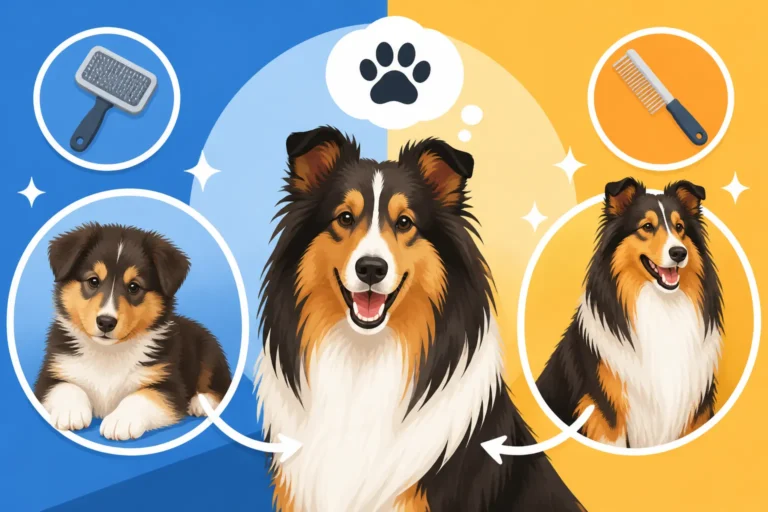
The single best thing you can do to ensure a lifetime of easy grooming is to start early, during puppyhood. A Collie puppy's coat is relatively short and easy to manage, but this is the critical window for desensitization and positive association. Even if they don't need extensive brushing, get them used to being handled, touched all over, and exposed to the grooming tools.
Start with very short sessions – just a few minutes at a time. Let them sniff the brushes, gently touch them with a soft brush, and give them a high-value treat. Gradually increase the duration and intensity. Handle their paws, ears, and tail frequently, even if you're not brushing them, so they become accustomed to these areas being touched. Pair every interaction with praise and delicious treats. If you make grooming a positive, predictable experience from the start, your adult Collie will be much more tolerant and even enjoy their spa time. This early introduction is key to How to Teach a Collie Puppy to Lie Still for Grooming.
Positive Reinforcement: Treats, Praise, and Patience
For Collies of any age, positive reinforcement is your most powerful tool. Every time your Collie tolerates a brush stroke, stands still, or allows you to work on a sensitive area, offer immediate praise and a small, tasty treat. Don't wait until the end of the session; reward them frequently throughout. This teaches them that good things happen when they cooperate during grooming.
Patience is equally important. If your Collie gets antsy, restless, or tries to escape, don't get frustrated or punish them. Instead, take a short break, offer a calming word, and then resume when they're settled. You might need to break sessions into even shorter segments. If you hit a mat, work through it gently and slowly, always prioritizing your dog's comfort over speed. If they associate grooming with pain or scolding, they'll learn to resist, making every future session a battle. Make it a calm, low-stress environment. For example, I've seen owners have great success with treats from Ollie, as many dogs find them highly motivating.
Reading Your Collie's Body Language
Your Collie is constantly communicating with you through their body language. Learning to read these signals is vital for making grooming a positive experience. Look for signs of discomfort or stress, such as:
- Lip licking
- Yawning
- Turning their head away
- Tensing their body
- Tail tucked
- Whining or growling
- Trying to move away or nip
If you see these signs, it's a cue to ease up. You might be applying too much pressure, working on a sensitive spot, or they might simply be reaching their tolerance limit for that session. Back off, give them a break, and reassess your approach. A relaxed Collie will have a soft gaze, a loose body, and might even lean into the brush. By understanding and responding to their cues, you build trust and teach them that you're listening, making them more cooperative in the long run. If your Collie is showing intense anxiety or fear, it might be worth consulting a positive reinforcement trainer or a veterinary behaviorist for guidance.
When to Call in the Professionals
While mastering the art of at-home Collie grooming is rewarding and absolutely essential, there are times when calling in a professional groomer isn't a luxury, but a necessity. Don't feel guilty or like you've failed if you need to seek help; some situations are simply beyond the scope of a home groomer, or require specialized tools and expertise. Knowing when to wave the white flag and hand your beautiful Collie over to a pro can save you stress, prevent injury to your dog, and ensure their coat remains healthy.
Overwhelmed by Mats: When It's Too Much for DIY
This is perhaps the most common reason Collie owners seek professional help. If your Collie's coat has developed extensive, dense, or pelted mats – especially in sensitive areas like the armpits, groin, or behind the ears – trying to remove them yourself can be a recipe for disaster. Pelted mats are those that are so tightly bound and close to the skin that they essentially form a solid shell, pulling painfully on the skin underneath. Attempting to cut these out at home carries a very high risk of accidental injury to your dog.
Professional groomers have specialized tools like high-powered clippers with different blade lengths, and extensive experience in safely removing even the worst matting. They can often do it with less stress and discomfort for your dog than you could at home. They can assess the severity and determine the safest course of action, which sometimes means a full shave-down to the skin (a "strip-down"). While Why a Collie Should Never Be Shaved for aesthetic reasons, a groomer will perform it for health reasons if it's the only way to humanely remove severe matting, allowing the coat to grow back healthy and mat-free.
Specialized Grooming for Show or Senior Collies
If you're involved in showing your Collie, you know that a show-ring-ready coat requires a level of precision and artistry that most home groomers don't possess. Professional show groomers understand the breed standard, how to enhance the Collie's natural lines, and use specific techniques to achieve that flowing, majestic look without trimming or altering the coat unnecessarily. They can also provide expert advice on coat conditioning and maintenance to keep your show dog in prime condition.
For senior Collies, professional grooming can also be a godsend. Older dogs often have less patience for long grooming sessions, may have arthritis or other aches and pains that make standing for extended periods uncomfortable, or might have thinning or more delicate coats that require a gentler touch. A professional groomer can adapt their techniques, use calming approaches, and work quickly and efficiently to minimize stress and discomfort for your elderly companion. They can also spot skin issues or lumps that might be hidden by a dense coat. Caring for a Collie Past Nine often means adapting routines.
The Benefits of a Professional Deshedding Service
Even if your Collie's coat isn't matted, a professional deshedding service can be incredibly beneficial, especially during those intense coat blows. Professional groomers have access to powerful high-velocity dryers, specialized shampoos and conditioners designed to release undercoat, and techniques that can extract an astonishing amount of dead hair in a single session. This is far more effective than what most home tools can achieve alone.
A professional deshedding treatment typically involves a deep cleaning bath with a deshedding shampoo, followed by thorough blow-drying with a high-velocity dryer that physically blasts out loose undercoat. This is then followed by a comprehensive brush-out with professional tools. The result is a coat that is significantly lighter, cleaner, and virtually free of loose undercoat, dramatically reducing shedding in your home for weeks. It's a fantastic way to reset the coat and give yourself a break from the constant battle against fur, making your home life much tidier and your Collie more comfortable. It's also worth investigating Whether a High Velocity Dryer Is Worth It for a Collie if you consider doing this at home.
Coat Health and Nutrition
Just as a healthy diet contributes to radiant skin and hair in humans, what you feed your Collie plays a massive role in the health and quality of their coat. A dull, dry, brittle coat, or excessive shedding outside of seasonal coat blows, can often be a direct indicator of nutritional deficiencies or an imbalanced diet. You can brush all you want, but if the building blocks for healthy hair aren't there, you'll always be fighting an uphill battle.
The Link Between Diet and a Lustrous Coat
Your Collie's coat, skin, and overall health are inextricably linked to their diet. A diet rich in high-quality protein, essential fatty acids (especially Omega-3 and Omega-6), vitamins, and minerals provides the fundamental nutrients needed to produce strong, healthy hair shafts and maintain supple, moisturized skin. Protein is the primary building block of hair, so a diet with sufficient animal-based protein sources is crucial. Without enough quality protein, hair can become weak, brittle, and prone to breakage.
Essential fatty acids are vital for skin health, reducing inflammation and contributing to a shiny, soft coat. They literally give the coat its luster. Look for dog foods that list sources like fish oil, flaxseed, or chicken fat. Vitamins like Biotin and A, along with minerals such as Zinc, also play key roles in cellular regeneration and skin barrier function. A well-nourished Collie will have a vibrant, resilient coat that is easier to manage, sheds less excessively (outside of coat blows), and is less prone to dry, itchy skin or hot spots. If your Collie's coat isn't thriving, taking a hard look at their food is a smart first step. Brands like Ollie often emphasize fresh, whole ingredients which can be beneficial.
Supplements for Coat Support
Even with a high-quality diet, some Collies can benefit from targeted supplements to support optimal coat health, especially during certain life stages or if they have specific skin sensitivities. Fish oil is perhaps the most widely recommended supplement for coat health due to its high concentration of Omega-3 fatty acids (EPA and DHA). These anti-inflammatory powerhouses can significantly improve skin hydration, reduce itching, and promote a soft, shiny coat.
Other supplements to consider include:
- Biotin: A B-vitamin that plays a role in hair growth and skin health.
- Zinc: Essential for skin integrity and immune function. Deficiencies can lead to poor coat quality and skin issues.
- Coconut Oil: While some apply it topically, adding a small amount to food can also contribute healthy fats.
Always consult with your veterinarian before introducing any new supplements to your Collie's diet. They can help you determine the appropriate dosage and ensure there are no interactions with existing medications or underlying health conditions. Remember, supplements are meant to complement a good diet, not replace it. You can learn more about Whether Fish Oil Improves a Collie's Coat.
Hydration and its Impact on Skin and Fur
While often overlooked, adequate hydration is just as crucial for coat and skin health as nutrition. Water is essential for every bodily function, including the health and regeneration of skin cells and the growth of hair. A dehydrated dog can exhibit dry, flaky skin and a dull, brittle coat, making it more prone to tangles and breakage. Think of how your own skin feels when you haven't had enough water – your Collie's skin is no different.
Ensure your Collie always has access to fresh, clean water. If your dog isn't a big drinker, you might try adding a splash of bone broth (without onion or garlic) to their water bowl, using a water fountain, or incorporating wet food into their diet to increase their fluid intake. On hot days or after exercise, they'll naturally drink more, but constant access is key. A well-hydrated dog will have supple skin, a healthy coat, and an overall better ability to withstand the rigors of grooming, shedding, and environmental exposure.
Keeping Your Collie Comfortable in All Seasons
The Rough Collie's magnificent double coat, while beautiful, is also a functional piece of equipment designed to protect them from the elements. However, this thick fur means owners need to be particularly mindful of their Collie's comfort, especially as seasons change. Understanding how their coat works and how to manage it in different temperatures is key to their well-being.
Adapting Grooming for Hot and Cold Weather
In warmer months, while it might seem counterintuitive, your Collie's double coat actually helps to keep them cool. The outer guard hairs reflect sunlight, while the dense undercoat provides insulation that traps cooler air near the skin, much like a thermos. This is why shaving a Collie is almost never recommended unless for medical reasons. Shaving removes this natural insulation, exposing their delicate skin to sunburn and hindering their ability to regulate temperature, often leading to an even worse coat regrowth. Whether a Shaved Collie's Coat Grows Back Correctly is a common concern.
During hot weather, the most crucial grooming step is to ensure the undercoat is thoroughly removed. A dense, matted undercoat will trap heat and prevent air circulation, making your Collie miserable and prone to overheating. Regular, diligent deshedding with an undercoat rake and slicker brush is paramount. In colder weather, while regular brushing is still important to prevent mats and distribute oils, the goal isn't to remove every single undercoat hair, as that insulating layer is vital for warmth. Focus on keeping it tangle-free to allow it to do its job effectively.
Sun Protection for Exposed Skin and Noses
Even with a thick coat, certain areas of your Collie's body, particularly their nose and any lightly pigmented skin, can be susceptible to sunburn. Collies, especially those with lighter pigmentation or "Dudley noses" (pink rather than black noses), can suffer from sun exposure. Over time, repeated sunburns can lead to more serious skin issues, including certain types of skin cancer.
If your Collie spends significant time outdoors, particularly during peak sun hours, it's wise to consider sun protection for their nose. There are dog-specific sunscreens available, often found at pet stores or on Amazon, that can be safely applied to their nose and other exposed, non-haired areas. Alternatively, limiting their sun exposure during the strongest parts of the day, or providing ample shade, is always a good idea. Some Collies develop what's known as "Collie Nose" or discoid lupus erythematosus, a condition exacerbated by sun exposure, making sun protection even more critical. You can learn more about What Collie Nose Actually Is.
Avoiding Matting from Water and Snow
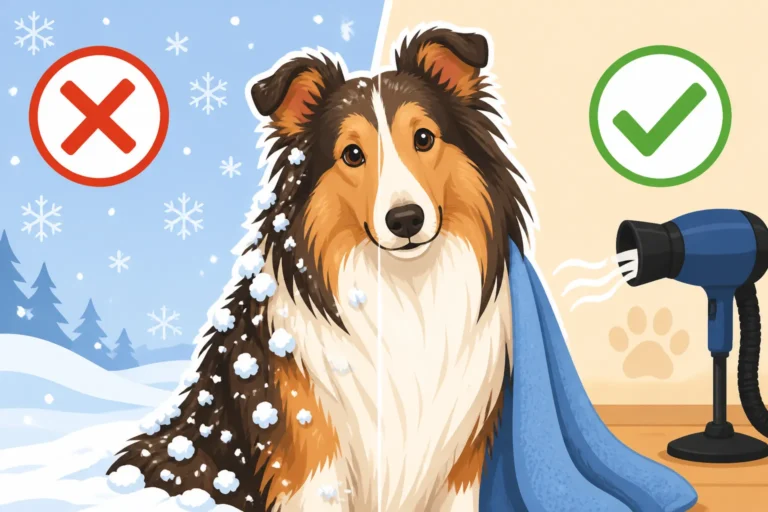
Collies, with their dense coats, are not quick-drying dogs. If their coat gets thoroughly soaked, whether from a bath, swimming, or playing in the rain or snow, it's crucial to dry them thoroughly to prevent matting and skin issues. A damp undercoat can quickly become a breeding ground for bacteria and yeast, leading to hot spots or skin infections. Plus, wet fur mats far more easily than dry fur.
After a bath or any wet adventure, always towel-dry your Collie as much as possible, then use a powerful dog-specific blow dryer on a cool or low-heat setting. Blast air down to the skin, parting the coat in sections to ensure the undercoat is completely dry. If your Collie plays in the snow, check their legs and belly for snowballs that can form in their feathering – these can be incredibly painful and pull on the skin. Carefully remove them (a warm towel can help) and ensure the coat is dry. Never let a wet or damp Collie air dry in a cold environment, as this can lead to chilling. Whether a Collie Should Be Dried After Snow is an important consideration.
Disclaimer
This article is for general informational purposes only and does not constitute professional advice. Laws, prices and regulations vary by location and change over time. Consult a qualified professional for guidance on your specific situation.